

About these posts
These posts grow out of sermons I’ve written for my local church community. You’re welcome to use them—for teaching, small groups, preaching, or personal reflection. If you share them elsewhere, please include a simple attribution. If you’d ever like to share how they’re being used, you’re welcome to reach out through the Contact button.

Last week, we began in a garden—a sacred space where God lived among the people He had created. But when sin entered the world, humanity was driven from the garden and from the regular experience of God’s presence. Generations passed. Abraham’s family eventually made its way into Egypt, where they grew from one extended family into a nation—but also became enslaved. God heard their cries, delivered them through the sea, and led them into the wilderness. And now, at the foot of Mount Sinai, the God who rescued them begins showing them how He intends to live among them once again. We’ve covered a lot of Exodus in years past. This series will cover chapters 25-40, as we look at the Tabernacle.
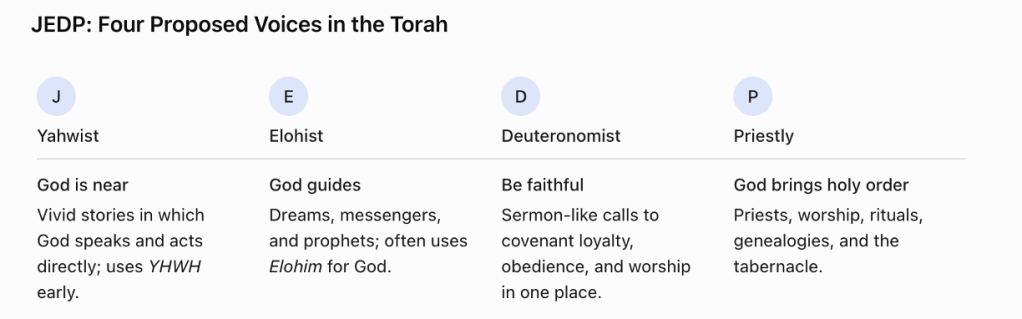
Bear with me for a very brief scholarly moment about text criticism: After lengthy studies done on the first five books of the Bible—the Torah—There is a theory that it was formed by weaving together four major traditions: in short, J, E, D, and P writers. Over time, these voices were brought together into the Torah as we know it. Exodus chapters 25-40 are seen as the work of Priestly writers.[1] This is work in Exodus that is believed to have originated with Moses, and then preserved, organized, and possibly expanded by priestly scribes later, particularly in passages emphasizing worship, holiness, sacred space, and God’s presence among His people.
Some say that the tabernacle traditions are not historical, and just an invention of the priestly writers. However, …there is support for some sort of early portable shrine. AND…worship in tent shrines in the ancient world was normal.[2] This tent may not have been as elaborate as these texts will describe, but it was an important part of Israel’s culture,[3] and holds some great insights for us as God’s people, too!
We’ll only be in the first part of chapter 25 today. As we go through the next few weeks, we’ll be asking the deeper questions of: “What does this tell me about God and how he deals with his people?”[4] God will come down to dwell among His people within the Tabernacle, will sit enthroned on the cherubim carved above the Ark of the Covenant, he will issue divine instruction, and will be accessible through the mediation of the priests.[5] God intends to be present with his people in a way he has not been before.[6] Let’s begin with Exodus 25 then.
The Lord said to Moses, 2 “Tell the Israelites to bring me an offering. You are to receive the offering for me from everyone whose heart prompts them to give. Exodus 25:1-2 NIV
These offerings are separate offerings for a sacred purpose. They can be gifts of produce, or a sacrifice. The specific amount is left up to the individual.[7] Keep in mind that money, as far as coinage, had not been invented yet.[8]
3 These are the offerings you are to receive from them: gold, silver and bronze; 4 blue, purple and scarlet yarn and fine linen; goat hair; 5 ram skins dyed red and another type of durable leather; acacia wood; 6 olive oil for the light; spices for the anointing oil and for the fragrant incense; 7 and onyx stones and other gems to be mounted on the ephod and breastpiece. Exodus 25:3-7 NIV
The colors of blue, purple and scarlet, …or indigo, purple and crimson, were used for royal garments in the eastern part of the Mediterranean.[9] Just for comparison, it took 12,000 murex snails to get 1.4 grams of pure dye.[10] The fine linen was probably Egyptian, imported fabric,[11] which Egypt was famous for.[12] Anything in this list could have been taken from Egypt before leaving, acquired along the way, or purchased from caravans passing through the area.[13]
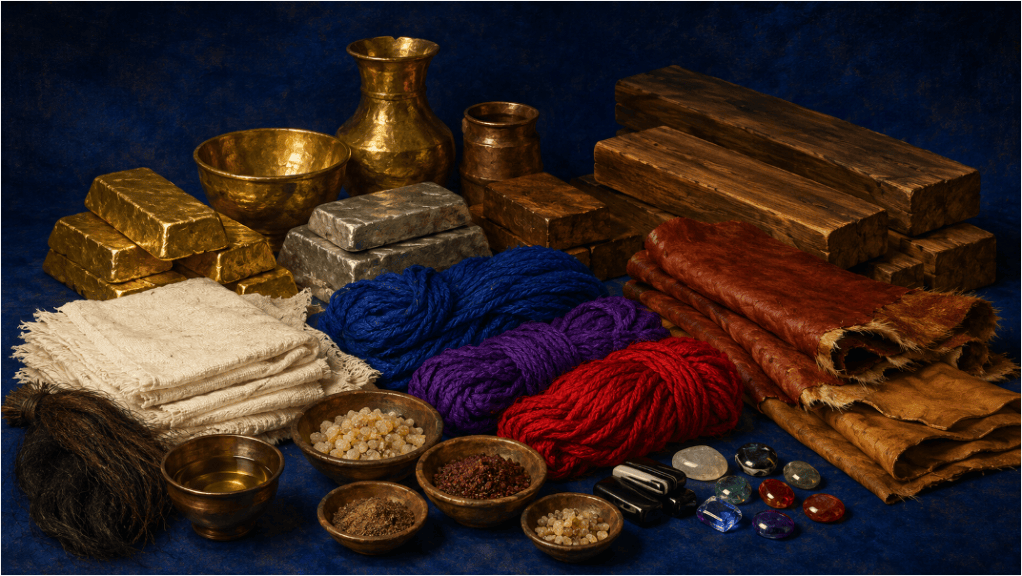
The materials that are specified are the finest and rarest available…nothing but the best for God.[14] The gifts given are a response to God—they are gifts from the heart!—and his presence in their midst is HIS gift to them![15] The Tabernacle is well rooted in the cultural and religious traditions of the ancient Near East.[16] This earthly sanctuary was modelled after a heavenly design.[17] In Egyptian religion, temples are seen as having origins that go back to the beginning of the world, and the gods may specify the area, the dimensions and the enclosure. The Babylon creation story ascribes the building of Marduk’s temple to the gods themselves. There is also an older Sumerian story where the gods communicated how one temple was supposed to be built.[18]
The Bible also has stories like this, where the prophet Ezekiel is shown a model of the future Jerusalem with its renewed Temple and given detail descriptions and specifications.[19] All that said, the directives that are given to Moses are divinely sanctioned. God speaks through forms they recognize—but fills them with the reality of His own presence. But for Israel, there is more to it than that.[20] This is a call to ALL Israel. Every person is to be a part of this building process.[21] God’s desire to dwell among them draws the WHOLE community into making room. This sanctuary will serve the entire community, and its construction is going to be accomplished through the generosity of everyone.[22] And rather than being enslaved by Pharaoh to construct buildings, they are bringing their joyful offerings in order to worship God.[23] God says:
8 “Then have them make a sanctuary for me, and I will dwell among them. 9 Make this tabernacle and all its furnishings exactly like the pattern I will show you. Exodus 25:8 NIV
Just as creation happened through the word of God, the tabernacle was to be built according to a heavenly pattern,[24] directions that God gave to Moses. Its design brought to mind the Garden of Eden, where God was present among his people.[25] Building the tabernacle is an act of recreation.[26] And it was a representation of the realities of heaven—pointing to a greater opportunity to live with God.[27]
God’s desire is to dwell among His people.
When we looked at Genesis 1 and 2, we saw that God is above and beyond creation—he is transcendent. But God is also present and active in creation—he gets his hands dirty—we would call that his Immanence. T. Desmond Alexander would say that verses 8-9 bind the transcendence of God together with his immanence. They belong together. It is the holy God of heaven, creator and sustainer of the universe, who deigned to take up a tented abode in the midst of a nation that he himself called and delivered out of slavery.[28] The God who created a people—wants to live among them! Amazing! And God’s presence in the tabernacle is a statement about God’s intended presence in the entire world![29] But…it does not mean that God can be controlled. God cannot be confined. The tabernacle will always be on the move.[30] God chooses to dwell among the descendants of Abraham, Isaac and Jacob, but Douglas Stuart notes that he will not dwell among them unless they respond to his invitation by properly preparing a house.[31]
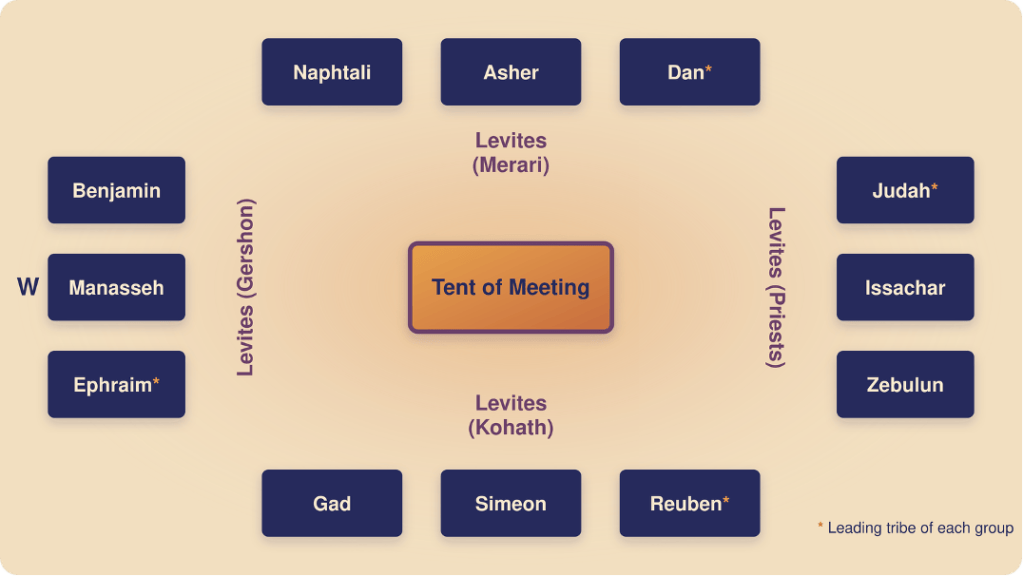
So, God camps in his large house in the midst of his people, and they would encamp around his house according to their tribes in concentric circles.[32] When we look at the other practices of the nations around them, we find similar pictures, which isn’t surprising. God reveals himself to his people in ways that they understand. The people of the ancient world, the patriarchs and matriarchs, all lived in tents. The Canaanites pictured the cosmic dwelling-place of their deities in a tent or tabernacle.[33] Egyptian gods were also said to live in tents.[34] Here are pictures of some Egyptian reliefs depicting the battle of Kadesh, that may line up historically with the first half of the Judges period in the Bible.[35]
In this battle, Ramesses is pictured in his war chariot and fighting against the Hittites.
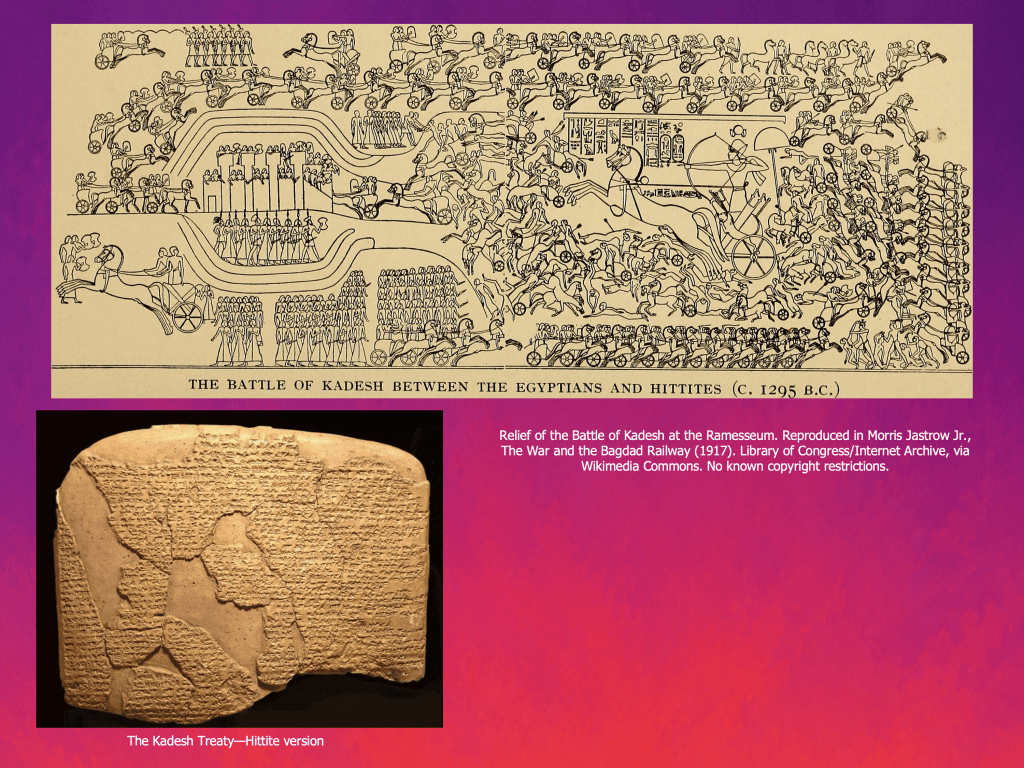
The scenes were all royal propaganda, designed to show his military prowess. There are many other scenes depicted, showing the fortified city, and enemy soldiers pleading for mercy. But what’s fascinating is the military camp layouts. Ramesses likened himself to a divine warrior, and those same Egyptian battle reliefs also imply that the tent dweller, Yahweh, was regarded as a divine warrior who commanded his troops from a military tent.[36]
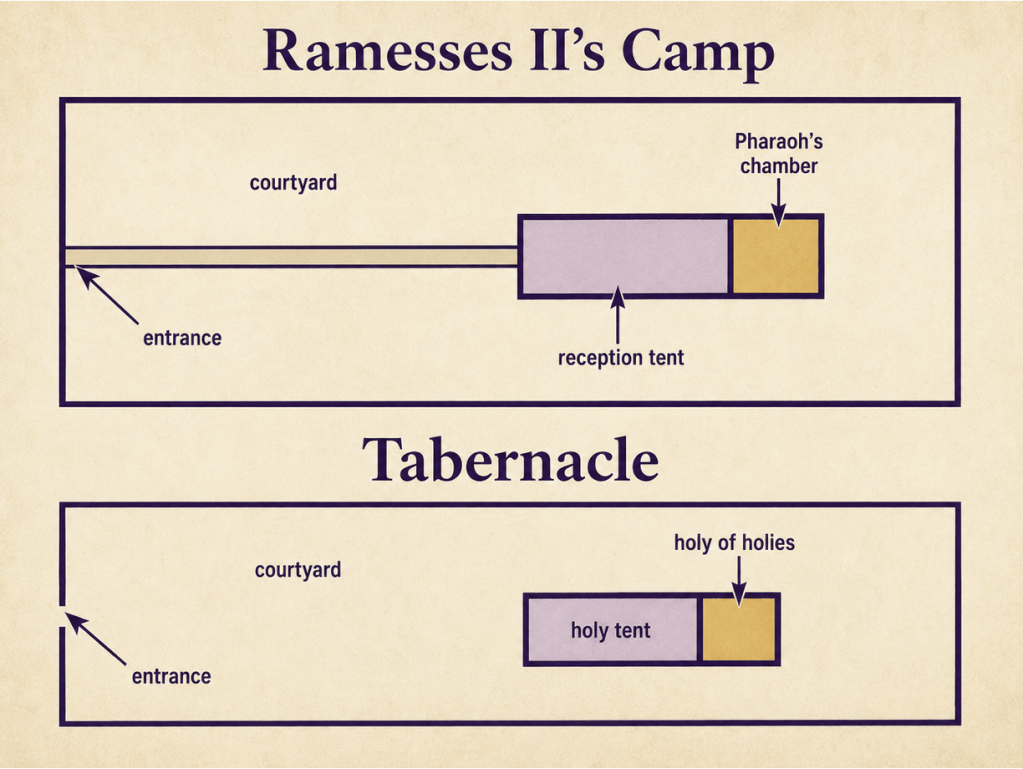
The Kadesh reliefs depict an Egyptian military camp, and there is a resemblance between the design and proportions of Pharaoh Rameses II’s tent used in military campaigns,[37] and the tabernacle, which are fascinating. The Pharaoh’s camp is oriented east, just like the Tabernacle and the courtyard. There are two chambers, just like the Tabernacle. And the inner chamber of Pharaoh looks a lot like the holy of holies as well.[38]
Ramses’ inner room had a place where officers and attendants knelt in obeisance, as he sat on the throne, flanked by representations of gods. The Persian royal camp was set up in a similar way—organized to protect the royal tent at its center.[39] Much later, Alexander the Great notified his troops when to break camp by placing on a pillar—a signal of smoke by day—and of fire by night.[40] All this to say that the imagery shows that the Tabernacle is the traveling headquarters of Yahweh, the divine warrior, who uses his spiritual AND human forces to battle against the enemies of Israel.[41] And the arrangement of the community is a moveable war camp that would travel through the wilderness until it reached, invaded and conquered the land that God had promised to Israel.[42] The tabernacle also resembled a royal palace with its throne room, the holy of holies, right at the heart of the structure. It expressed the idea that the LORD was Israel’s king dwelling among his people.[43] Their King is not distant; He pitches His royal tent in the middle of them. His desire is to live among them. But unlike Pharaoh’s tent, the inner room of the Tabernacle had no physical image or idol. It had something different.
10 “Have them make an ark of acacia wood—two and a half cubits long, a cubit and a half wide, and a cubit and a half high. 11 Overlay it with pure gold, both inside and out, and make a gold molding around it. 12 Cast four gold rings for it and fasten them to its four feet, with two rings on one side and two rings on the other. 13 Then make poles of acacia wood and overlay them with gold. 14 Insert the poles into the rings on the sides of the ark to carry it. 15 The poles are to remain in the rings of this ark; they are not to be removed. 16 Then put in the ark the tablets of the covenant law, which I will give you. Exodus 25:10-16 NIV
PIC[44]
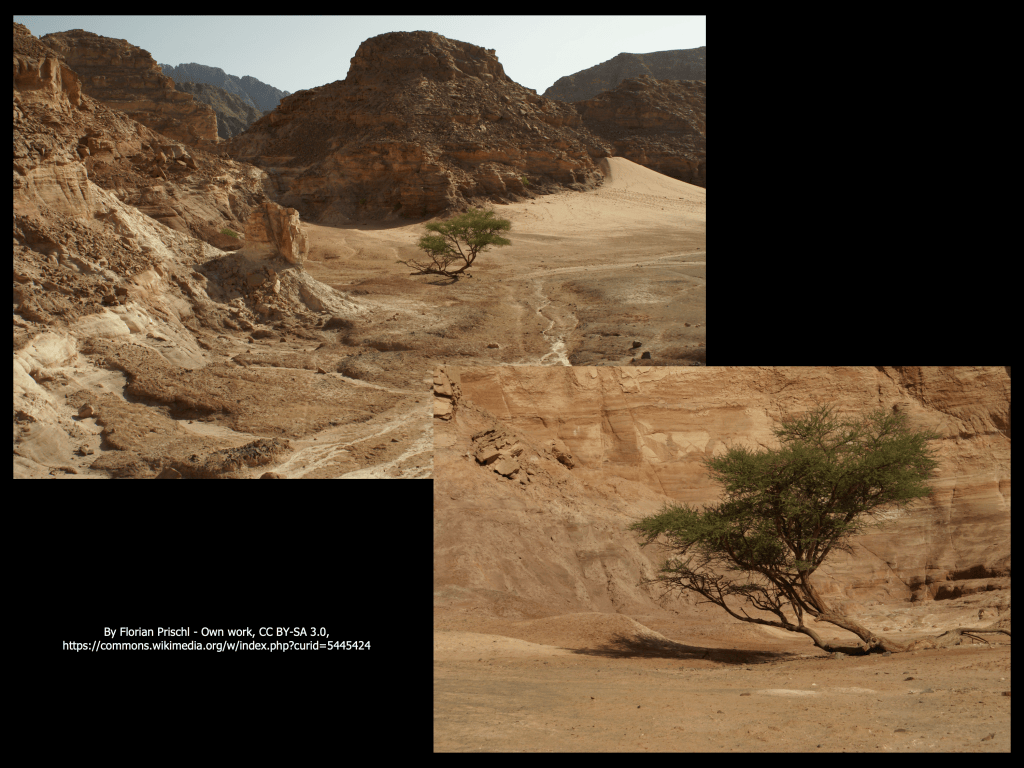
Acacia wood grew abundantly in the Sinai peninsula.[45] It was one of the few sturdy trees available in the wilderness. The ark was a small but very elegant chest.[46]
It will hold the Ten Commandments, or 10 words. Since the tablets will be in the ark, the tabernacle will be a portable Mount Sinai,[47] where any further commands from God to Moses will come.[48] Similar to the tabernacle, the ark also has parallels in the ancient Near East.[49]
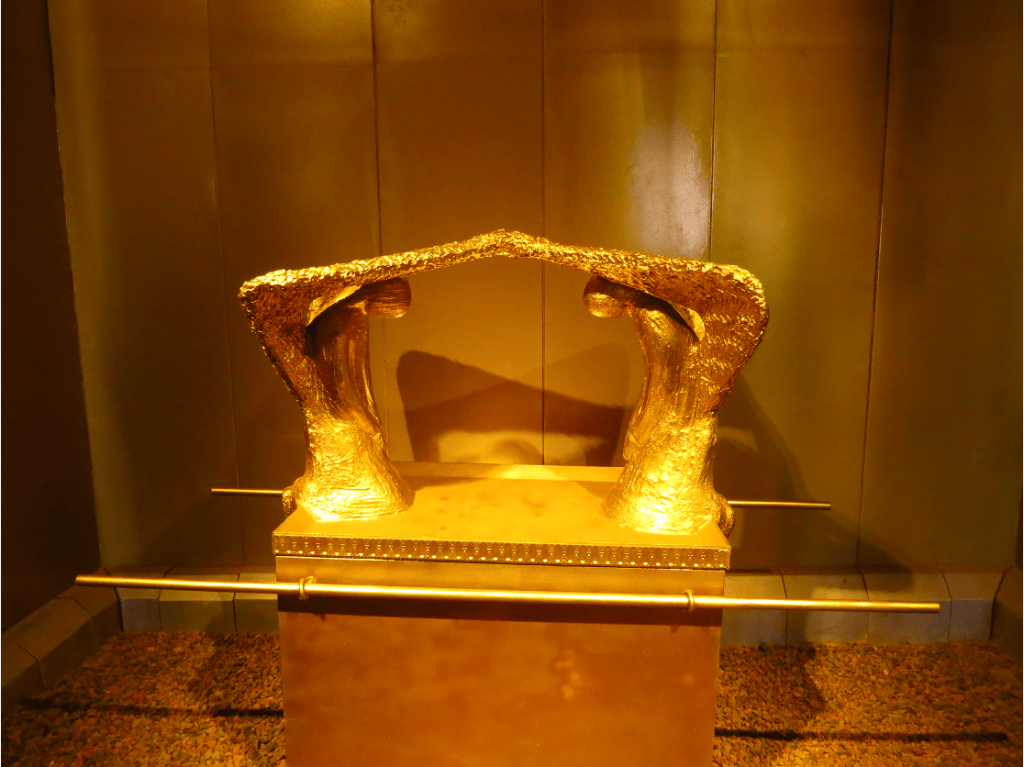
In the Egyptian tent, the Pharaoh would sit. But in the holy of holies, there was no physical image or idol. The empty space between the cherubim’s wings emphasized the invisible, transcendent nature of Yahweh dwelling among His people. In the tabernacle, God’s presence is actually indicated by his absence—God cannot be put in a box. The box actually serves as a footstool for God’s invisible throne.[50] God is enthroned in heaven, but he is present with his people on earth. Some scholars even regard the cover as God’s throne, and the ark as the footstool.[51]
Exalt the Lord our God and worship at his footstool; he is holy, reads Psalm 99:5 NIV
Tutankhamun’s footstool was decorated with images of Egypt’s enemies, so that every time the pharaoh sat upon his throne, he literally placed his feet over them. To have enemies “under your feet” was a vivid symbol of complete victory, domination, and royal authority. The ark also served as God’s royal footstool—the earthly base of His invisible throne—and Israel’s enemies were understood to be beneath His authority.
So, the tabernacle was not just a quiet place of worship; it was the royal tent of the divine Warrior-King who camped among His people and led them forward. In Genesis, God defeats chaos and establishes a safe, ordered space for his people. In Exodus, he defeats Egypt, the superpower of the ancient world. God is the Divine Warrior who fights on behalf of his covenant people.
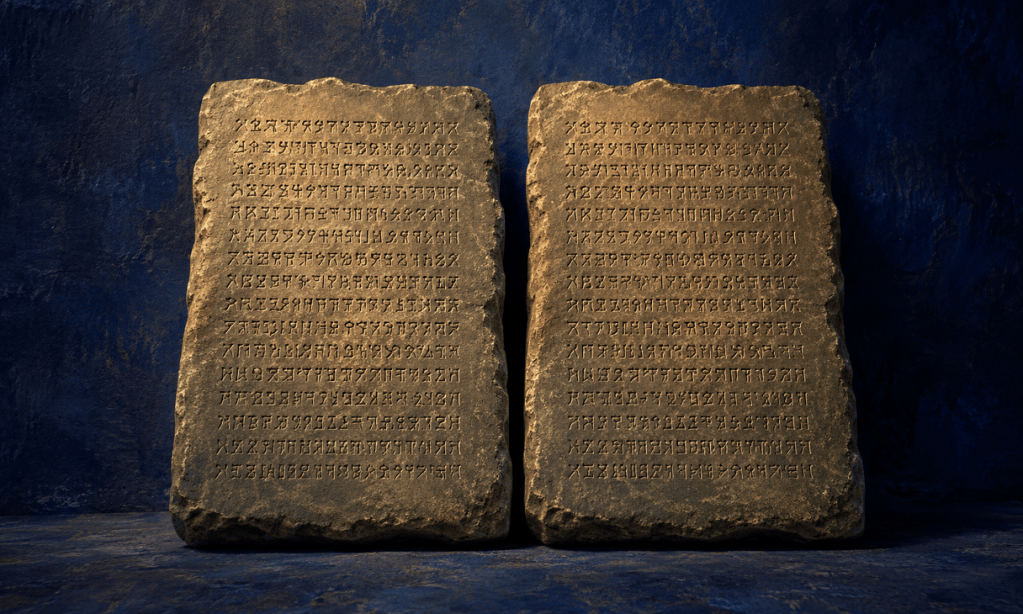
In the desert, God then gives them the terms of life—with Him as their covenant King. The broader Sinai covenant—not merely the Ten Commandments—resembles an ancient treaty, with laws, promises, and covenant ratification. These stone tables were the eternal contract between God and Israel—they were legal documents. Their placement in the Ark, or the footstool[52], is part of the common Ancient Near Eastern practice of putting solemn contracts in sacred places.[53] And from what we know of Ancient Near Eastern treaties, they were usually done in duplicate so that each party could have a copy. The two tablets then, are probably copies of the same thing—and they will BOTH reside in the ark before God, and with the people.[54] The divine King has come to dwell among His people. He leads them, and witnesses and guards the treaty in the ark, and he sees that the covenant is carried out. [55]
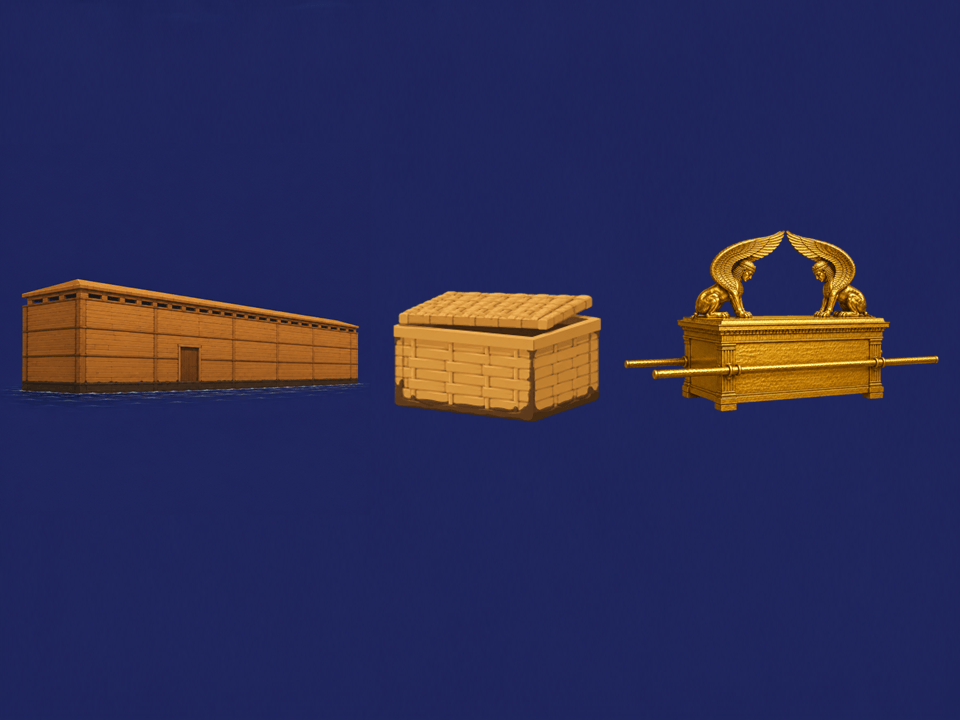
In the Hebrew, Noah’s ark and Moses’ basket, or ‘ark’ are the same words. Now, they are different words than this ark. But there are some parallels with all three. All three arks were covered—one with gold and two with pitch. Noah’s ark and the Ark of the Covenant were specifically covered “inside and out,” using the same phrase in both stories. The Hebrew word for pitch shares a root with the word for ‘atonement’, and those coverings suggest a pattern of covering and preserving.[56] The rain fell from the clouds for forty days and forty nights [Gen. 7:12] while Noah took shelter in the ark. Moses ascends the mountain into the clouds and was on the mountain for forty days and forty nights [Exodus 24:18] and comes down with tablets that need to be sheltered in an ark.[57] All three of the arks absorb or deflect judgment. Noah’s ark bore the brunt of God’s wrath against human sin and kept a family alive. Moses’ ark deflected the genocidal decree of the pagan king—and hid a future deliverer. The Ark of the covenant had the mercy seat, or ‘cover’,[58] which appeased God’s judgment through the ritual of atonement.
And there are shadows of Jesus in all three of these arks as well. Noah’s ark had one door, just as Jesus identifies himself as the door to salvation. God used a fragile basket to save Israel’s deliverer, and Jesus came in human flesh as the deliverer of humankind.
The ark of the covenant was where sacrificial blood was sprinkled to cover the sins of the people, and Jesus’ blood permanently covers our sin. The ark represented God dwelling among his people, and Jesus is called Emmanuel—God with us—the embodiment of God in human form. Let’s continue with the details for building the ark in Exodus.
17 Make an atonement cover of pure gold—two and a half cubits long and a cubit and a half wide. 18 And make two cherubim out of hammered gold at the ends of the cover. 19 Make one cherub on one end and the second cherub on the other; make the cherubim of one piece with the cover, at the two ends. 20 The cherubim are to have their wings spread upward, overshadowing the cover with them. The cherubim are to face each other, looking toward the cover. 21 Place the cover on top of the ark and put in the ark the tablets of the covenant law that I will give you. 22 There, above the cover between the two cherubim that are over the ark of the covenant law, I will meet with you and give you all my commands for the Israelites. Exodus 25:17-22 NIV
Let’s talk about the Cherubim for a moment. Cherubs are not chubby babies with wings.[59] Throughout Egypt, Mesopotamia, Syria, and Canaan, there were ‘weird’ creatures that represented power beyond the ordinary world. They were symbolic of strength, power, and authority. These creatures commonly appeared at entrances and boundaries, like palaces, temples, gardens and throne rooms. And they were also next to or underneath royal thrones, protecting or carrying it.
Egyptians had creatures like the Sphinx, which was their picture of royal power and divine protection. Some of the thrones of Egypt had these creatures on the sidearms, and there were images of the creatures trampling on the fallen enemies of Egypt.[60] The Assyrians had a lamassu, with the head of a human, the body and ears of a bull, and the wings of a bird. When viewed from the side, the creature appeared to be walking; when viewed from the front, it looked like it was standing still. They stood in pairs by palace gateways that protected the entrance and announced that you were entering into the domain of the king.[61] In Ezekiel’s vision, the living throne-bearing creatures are identified as cherubim.
Ancient iconography usually shows three characteristic elements: the body of a lion, (or bull)[62] the face of a human, and wings.[63] Ezekiel also indicates that they had hands.[64] The most we can say for certain is that they were some sort of intelligent, powerful angelic being depicted as winged.[65] Cherubim may have been fearsome winged beasts like the sky god of the old Canaanite stories.[66] The Israelites took that expression and used it in the Psalms.[67] Along with the ancients, they pictured God as needing a vehicle to fly in the sky.
Psalm 18:10 says of God: He mounted the cherubim and flew; he soared on the wings of the wind. Robert Alter writes: they are God’s celestial steeds that serve here as His terrestrial throne.[68] Hezekiah prays: Lord Almighty, the God of Israel, enthroned between the cherubim, you alone are God over all the kingdoms of the earth. You have made heaven and earth.[69]
Ancient kings were seen as mediators between heaven and earth.[70] In Assyrian reliefs, there are images of Sennacherib in a procession of other Mesopotamian gods, who are all standing on their sacred animals. Among others, Ashur is on a dragon, the moon god Sin is on a deluge monster, the sun god Shamash is on a horse, and Ishtar is on a lion.[71] Well, apparently, God has cherubim to ride…and their images are to be rendered on top of the ark of the covenant.
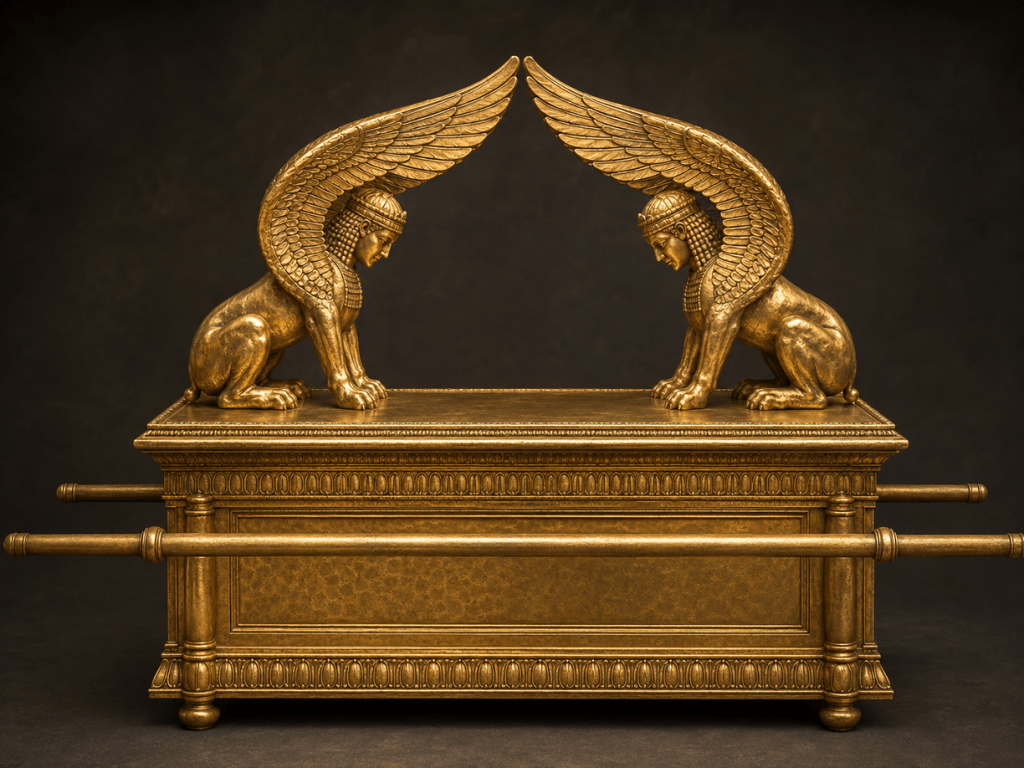
PIC[72]
These cherubim would be facing each other with their heads bent slightly downward—in order not to gaze upon God out of reverence[73]—and their fully outstretched wings turned upward, sheltering the main body of the lid and the Ark below.[74] In the garden of Eden, cherubim guard the gate to the lost sacred space. The doorway to God’s presence was closed. In the tabernacle—where the entrance faces east, just as the cherubim were stationed east of Eden—they NOW mark God’s throne among His people. A mobile throne—that according to Ezekiel much later, can move in every direction without turning, because God rules everywhere—even in exile! These cherubim have no flaming sword as they did in the garden—in the tabernacle, they rest on the atonement cover—the place where God graciously chooses to meet his people—The place where there is now atonement for sin.[75] God’s presence that was once guarded in Eden is now coming to dwell among them—at a throne marked by mercy. God is making a way back in.
The tabernacle becomes the sacred space where the people are represented before God, and find atonement, as sacrifices and offerings are made. It is the place where God meets and speaks with Moses and the people.[76] It is a piece of heaven on earth.[77]
God didn’t need a building, or a special place to meet with people, but THEY did.[78] God doesn’t need a tabernacle. But when the people look at this sanctuary in the middle of their camp, they are conscious of God’s presence.[79] In verse 22, God says, “I will meet with you.” The story of the tabernacle tells us something special about God. God dwells in the MIDDLE of them, not high above them. He is committed to the journey—for the long haul. He travels ahead of them—his people are to follow. His presence is not to be presumed upon. God is the Holy One in midst of his people.[80]
God’s desire is to dwell among His people. We make room for His presence in our life together.
God didn’t need a tabernacle then, and God doesn’t need our building, now. But he DOES want to live among us. John writes that the Word became flesh, and dwelt among us—Jesus literally pitched his tent—he ‘tabernacled’ among us.[81] Jesus also said, “Anyone who loves me will obey my teaching. My Father will love them, and we will come to them and make our home with them.” John 14:23 NIV The apostle Paul writes: “in him you too are [all] being built together to become a dwelling in which God lives by his Spirit.” Ephesians 2:22 NIV
God wants to be present among us today—Not just in a building, but as we gather—On Sundays, at Bible studies, at potlucks, and at baptisms. As God’s people, we are learning to reorder our lives around God’s presence. And so, we make room for Him with willing hearts and open hands. We receive His presence as a gift, not something we control. We meet Him at the place of mercy and atonement. We center our shared life on God rather than ourselves. We remain ready to follow wherever He leads.
PRAYER: Holy God, Creator of heaven and earth, You are far beyond anything we can contain or control—and yet You choose to come near. Thank You for making Your home among Your people. Thank You for meeting us not at a throne of condemnation, but at a place of mercy. Thank You for Jesus, the Word made flesh, who came and pitched His tent among us, and for Your Spirit, who still lives within and among Your people. Forgive us for the ways we crowd You out, for the things we hold too tightly, and for the times we center our shared life on ourselves rather than on You. God, give us willing hearts and open hands. Teach us to receive Your presence as a gift, to meet one another with mercy, and to follow wherever You lead. By Your Spirit, shape us together into a holy people—a living sanctuary where Your love can be seen, Your voice can be heard, and Your presence can be known. Lord, prepare us. Make Your home among us. In the name of Jesus, we pray. Amen.

Bibliography
Books
- Robert Altar, The Five Books of Moses, New York: W.W. Norton & Company, 2004.
- T. Desmond Alexander & David W. Baker, Dictionary of the Old Testament: Pentateuch, Downers Grove: InterVarsity Press, 2003.
- James K. Bruckner, Exodus, Grand Rapids: Baker Books, 2008.
- Umberto Cassuto, A Commentary on the Book of Exodus, Skokie: Varda Books, 2005.
- Brevard Childs, The Book of Exodus, Louisville: The Westminster Press, 1974.
- John I Durham, Word Biblical Commentary: Exodus, Waco: Word Books, 1987.
- Peter Enns, Exodus: The NIV Application Commentary, Grand Rapids: Zondervan, 2000.
- Peter Enns, Exodus for Normal People, Perkiomenville: The Bible for Normal People, 2021.
- Rabbi David Fohrman, Exodus: A Parsha Companion, New Milford: Aleph Beta Press, 2020.
- Terence E. Fretheim, Exodus, Interpretation Bible Commentary, Louisville: Westminster John Knox Press, 1991.
- John Goldingay, Exodus & Leviticus for everyone, Louisville: John Knox Press, 2010.
- Jonathan S. Greer, John W. Hilber, and John H. Walton, Behind the Scenes of the Old Testament: Cultural, Social, and Historical Contexts, Grand Rapids: Baker Academic, 2018.
- Victor Hamilton, Exodus, Grand Rapids, Baker Academic, 2011.
- Victor H. Matthews, Don C. Benjamin, Old Testament Parallels, New York: Paulist Press, 2006.
- Carol Meyers, Exodus, Cambridge: Cambridge University Press, 2005.
- Dr. David McDonald, ed., The Story Lectionary, Portland: Portland Seminary, 2017.
- William H.C. Propp, Exodus 19-40; New York: Doubleday, 2006.
- Nahum M. Sarna, Exodus, Philadelphia: The Jewish Publication Society, 1991.
- Nahum M. Sarna, Exploring Exodus: The Origins of Biblical Israel, New York: Schocken Books, 1986.
- Douglas K. Stuart, Exodus, Nashville: B&H Publishing Group, 2006.
- George J. Wenham, Exploring the Old Testament: A Guide to the Pentateuch, Volume One, Downers Grove: InterVarsity Press, 2003.
Articles
- Bonacossi, Morandi, Daniele, Bekas Jamaluddin Hasan, and Francesca Simi. “Water, Gods and Kings: The Neo-Assyrian Canal and Rock Reliefs in Faida (Kurdistan Region of Iraq).” ArchéOrient—Le Blog. May 19, 2023. Accessed July 31, 2026. https://doi.org/10.58079/bd35
- Eames, Christopher; “Famous Ancient Battles NOT Mentioned in the Bible—Or Are They?,” Armstrong Institute of Biblical Archaeology, May 7, 2022, https://armstronginstitute.org/703-famous-ancient-battles-not-mentioned-in-the-bible-or-are-they Accessed August 3, 2026.
- Homan, Michael M.; “The Divine Warrior in His Tent: A Military Model for Yahweh’s Tabernacle,” Bible Review 16, no. 6 (December 2000): https://library.biblicalarchaeology.org/article/the-divine-warrior-in-his-tent/
Accessed August 3, 2026.
- Homan, Michael M.; “The Tabernacle in Its Ancient Near Eastern Context”, TheTorah.com, 2018. Accessed July 30, 2026. https://thetorah.com/article/the-tabernacle-in-its-ancient-near-eastern-context
- Jaeyoung, Jeon; “Israel’s Wilderness Camp Modeled on the Persian Military Formation”, TheTorah.com., 2025. Accessed July 30, 2026. https://thetorah.com/article/israels-wilderness-camp-modeled-on-the-persian-military-formation
- Torre, Mattfeld y de la, Walter Reinhold Warttig. “God’s ‘Mercy Seat’ atop the Ark of the Covenant.” Last revised September 10, 2010. Bible Origins. Accessed July 31, 2026. http://www.bibleorigins.net/cherubthroneside.html.
- Walton, John; “The Tabernacle and Its Parallels”, Zondervan Academic, March 27, 2009. Accessed July 30, 2026. https://zondervanacademic.com/blog/the-tabernacle-and-its-parallels
Small Group Questions
The God Who Comes Near. Week Two: Making Room for God
Exodus 25:1-22
*Leader’s Guide available on request
Icebreaker
· What is one place—indoors or outdoors—where you find it especially easy to become aware of God’s presence? What is it about that place?
Willing Hearts
Read Exodus 25:1–2 NIV
The Lord said to Moses, 2 “Tell the Israelites to bring me an offering. You are to receive the offering for me from everyone whose heart prompts them to give.
Discussion
· What instructions does God give Moses concerning the offering? What is specified, and what is left to each person to decide?
· Why do you think God wanted the sanctuary built through gifts from people whose hearts prompted them, rather than through a required contribution?
· The Israelites had once been forced to build for Pharaoh. Now they are freely contributing toward a dwelling place for God. How is this different from what they experienced in Egypt?
· When have you given your time, abilities, possessions, or money because your heart genuinely prompted you? What made that offering meaningful?
- Hold your hands tightly closed for a moment, and then open them. What might closed hands and open hands each represent in our relationship with God? What is difficult for you to release or entrust to God?
Bringing What They Have
Read Exodus 25:3–7 NIV
3 These are the offerings you are to receive from them: gold, silver and bronze; 4 blue, purple and scarlet yarn and fine linen; goat hair; 5 ram skins dyed red and another type of durable leather; acacia wood; 6 olive oil for the light; spices for the anointing oil and for the fragrant incense; 7 and onyx stones and other gems to be mounted on the ephod and breastpiece.
Discussion
· Read through the list of materials slowly. Which items would have been practical necessities, and which would have communicated beauty, honor, or value?
· Where might formerly enslaved people traveling through the wilderness have obtained gold, fine linen, valuable dyes, spices, and precious stones? What does this suggest about how God could use what they carried out of Egypt?
· Blue, purple, and scarlet dyes were rare and associated with royalty. What did the use of such costly materials communicate about the One for whom the sanctuary was being built?
· Imagine that each person or family possessed only a few things from this list. What would have happened only when the entire community brought its gifts together?
· If we were creating a symbolic list of what the people in our group or church could offer God, what might be included besides money?
· Which is more challenging for you: recognizing that you have something valuable to contribute, or releasing it for the good of the community? Why?
A Sanctuary Among Them
Read Exodus 25:8–9 NIV
Then have them make a sanctuary for me, and I will dwell among them. 9 Make this tabernacle and all its furnishings exactly like the pattern I will show you.
Discussion
- What does God promise in verse 8? Notice that God says, “I will dwell among them,” rather than merely “I will dwell in it.” Why is that distinction important?
- God initiates the building of the sanctuary, while the people respond by preparing it. What does this reveal about the relationship between God’s grace and human participation?
- The tabernacle echoed the Garden of Eden, where God lived among humanity. In what ways does the tabernacle represent a movement back toward the relationship that was disrupted in Genesis 3?
- The tabernacle was portable and moved with the people. How is traveling with God different from confining God to one sacred location?
- Imagine placing objects on a table to represent the things that fill your typical week—a phone, car keys, a work calendar, a laundry basket, family pictures, or a television remote. What objects would be on your table?
- Where would God’s presence fit into that space? Is there anything you might you want to rearrange?
- What could it mean for a congregation to reorder its shared life around God’s presence? What might change in its worship, relationships, decisions, or priorities?
The Ark and the Covenant
Read Exodus 25:10–16 NIV
Have them make an ark of acacia wood—two and a half cubits long, a cubit and a half wide, and a cubit and a half high. 11 Overlay it with pure gold, both inside and out, and make a gold molding around it. 12 Cast four gold rings for it and fasten them to its four feet, with two rings on one side and two rings on the other. 13 Then make poles of acacia wood and overlay them with gold. 14 Insert the poles into the rings on the sides of the ark to carry it. 15 The poles are to remain in the rings of this ark; they are not to be removed. 16 Then put in the ark the tablets of the covenant law, which I will give you.
Discussion
· What details about the ark stand out to you? What do its materials, design, and portability communicate about its purpose?
· Ancient treaties were often written in duplicate, with a copy for each covenant partner. Some scholars believe each tablet contained the whole covenant, with both copies placed before God. Why would the covenant document belong at the center of Israel’s sacred space? How does this deepen your understanding of the relationship between God and Israel?
· The ark has been described as the footstool beneath God’s invisible throne. How does that image hold together God’s heavenly rule and God’s earthly presence?
· The tabernacle could be understood as the royal tent of Israel’s divine Warrior-King. How might that image have encouraged a vulnerable people traveling through the wilderness?
· Where do you most need to remember that God is not merely present with you, but also reigns over the forces that frighten or threaten you?
The Throne of Mercy
Read Exodus 25:17–22 NIV
Make an atonement cover of pure gold—two and a half cubits long and a cubit and a half wide. 18 And make two cherubim out of hammered gold at the ends of the cover. 19 Make one cherub on one end and the second cherub on the other; make the cherubim of one piece with the cover, at the two ends. 20 The cherubim are to have their wings spread upward, overshadowing the cover with them. The cherubim are to face each other, looking toward the cover. 21 Place the cover on top of the ark and put in the ark the tablets of the covenant law that I will give you. 22 There, above the cover between the two cherubim that are over the ark of the covenant law, I will meet with you and give you all my commands for the Israelites.
Discussion
· What do you notice about the position, posture, and purpose of the cherubim?
· Cherubim guarded the way into Eden after humanity’s exile. Here, they stand over the place where God promises to meet his people. What has changed?
· Why is it significant that the covenant tablets are beneath the atonement cover? What does the placement of law beneath mercy communicate?
· In the ancient world, throne guardians represented power, protection, and royal authority. What do the cherubim communicate about the One who meets Israel at this throne?
· Which image of the ark speaks most powerfully to you: covenant chest, royal footstool, portable Sinai, throne of the invisible King, or place of mercy? Why?
· What is the difference between approaching God on the basis of your own worthiness and meeting God at a place of mercy?
God’s Dwelling Among Us
Read John 1:14 in these different versions:
NIV—The Word became flesh and made his dwelling among us. We have seen his glory, the glory of the one and only Son, who came from the Father, full of grace and truth.
TLV—And the Word became flesh and tabernacled among us. We looked upon His glory, the glory of the one and only from the Father, full of grace and truth.
MSG—The Word became flesh and blood, and moved into the neighborhood. We saw the glory with our own eyes, the one-of-a-kind glory, like Father, like Son, Generous inside and out, true from start to finish.
- What connections do you see between the tabernacle and Jesus “dwelling” or “tabernacling” among us?
Read Ephesians 2:19–22 NIV (*the ‘you’ is plural in these verses.)
Consequently, you [all] are no longer foreigners and strangers, but fellow citizens with God’s people and also members of his household, 20 built on the foundation of the apostles and prophets, with Christ Jesus himself as the chief cornerstone. 21 In him the whole building is joined together and rises to become a holy temple in the Lord. 22 And in him you [all] too are being built together to become a dwelling in which God lives by his Spirit.
- According to this passage, is God’s present dwelling primarily an individual or communal reality? What difference does that make?
God’s desire is to dwell among His people.
We make room for His presence in our life together.
· God’s presence cannot be confined to a church building. Where might others encounter God’s presence through the shared life of God’s people?
· Of these practices, which does your group or church do well: offering with willing hearts, receiving God’s presence as a gift, meeting others with mercy, centering its life on God, or following where God leads? Where is there room to grow?
· End by having everyone sit with open hands. Have someone reread Exodus 25:8: “Have them make a sanctuary for me, and I will dwell among them.
Sit quietly for a moment, asking God to shape you together into a living sanctuary.
[1] Alter, The Five Books of Moses, 460.
[2] Peter Enns, Exodus: The NIV Application Commentary, Grand Rapids: Zondervan, 2000, 520.
[3] Carol Meyers, Exodus, Cambridge: Cambridge University Press, 2005, 220.
[4] Peter Enns, Exodus: The NIV Application Commentary, Grand Rapids: Zondervan, 2000, 508.
[5] Alter, The Five Books of Moses, 460.
[6] Peter Enns, Exodus: The NIV Application Commentary, Grand Rapids: Zondervan, 2000, 509.
[7] Brevard Childs, The Book of Exodus, Louisville: The Westminster Press, 1974, 523.
[8] John Goldingay, Exodus & Leviticus for everyone, Louisville: John Knox Press, 2010, 97.
[9] Robert Altar, The Five Books of Moses, New York: W.W. Norton & Company, 2004.
T. Desmond Alexander & David W. Baker, Dictionary of the Old Testament: Pentateuch, Downers Grove: InterVarsity Press, 2003, 461.
[10] Brevard Childs, The Book of Exodus, Louisville: The Westminster Press, 1974, 354.
[11] Childre, 354.
[12] James K. Bruckner, Exodus, Grand Rapids: Baker Books, 2008, 238.
[13] Umberto Cassuto, A Commentary on the Book of Exodus, Skokie: Varda Books, 2005, 327.
[14] Brevard Childs, The Book of Exodus, Louisville: The Westminster Press, 1974, 355.
[15] Brevard Childs, The Book of Exodus, Louisville: The Westminster Press, 1974, 355.
[16] Nahum M. Sarna, Exploring Exodus: The Origins of Biblical Israel, New York: Schocken Books, 1986, 200.
[17] George J. Wenham, Exploring the Old Testament: A Guide to the Pentateuch, Volume One, Downers Grove: InterVarsity Press, 2003, 75.
[18] Nahum M. Sarna, Exploring Exodus: The Origins of Biblical Israel, New York: Schocken Books, 1986, 201-202.
[19] Nahum M. Sarna, Exploring Exodus: The Origins of Biblical Israel, New York: Schocken Books, 1986, 201.
[20] Nahum M. Sarna, Exploring Exodus: The Origins of Biblical Israel, New York: Schocken Books, 1986, 202.
[21] Nahum M. Sarna, Exploring Exodus: The Origins of Biblical Israel, New York: Schocken Books, 1986, 204.
[22] Nahum M. Sarna, Exodus, Philadelphia: The Jewish Publication Society, 1991, 156.
[23] Terence E. Fretheim, Exodus, Interpretation Bible Commentary, Louisville: Westminster John Knox Press, 1991, 264.
[24] Terence E. Fretheim, Exodus, Louisville: Westminster John Knox Press, 1991, 271.
[25] George J. Wenham, Exploring the Old Testament: A Guide to the Pentateuch, Volume One, Downers Grove: InterVarsity Press, 2003, 76.
[26] Peter Enns, Exodus: The NIV Application Commentary, Grand Rapids: Zondervan, 2000, 507.
[27] Douglas K. Stuart, Exodus, Nashville: B&H Publishing Group, 2006, 566.
[28] The Dictionary of the Old Testament: Pentateuch, 809-810.
[29] Terence E. Fretheim, Exodus, Louisville: Westminster John Knox Press, 1991, 271.
[30] Terence E. Fretheim, Exodus, Louisville: Westminster John Knox Press, 1991, 274.
[31] Douglas K. Stuart, Exodus, Nashville: B&H Publishing Group, 2006, 565.
[32] Douglas K. Stuart, Exodus, Nashville: B&H Publishing Group, 2006, 572.
[33] Umberto Cassuto, A Commentary on the Book of Exodus, Skokie: Varda Books, 2005, 323.
[34] Michael M. Homan, “The Divine Warrior in His Tent: A Military Model for Yahweh’s Tabernacle,” Bible Review 16, no. 6 (December 2000): https://library.biblicalarchaeology.org/article/the-divine-warrior-in-his-tent/
Accessed August 3, 2026.
[35] Christopher Eames, “Famous Ancient Battles NOT Mentioned in the Bible—Or Are They?,” Armstrong Institute of Biblical Archaeology, May 7, 2022, https://armstronginstitute.org/703-famous-ancient-battles-not-mentioned-in-the-bible-or-are-they Accessed August 3, 2026.
[36] Michael Homan, “The Divine Warrior in His Tent: A Military Model for Yahweh’s Tabernacle,” Bible Review 16, no. 6 (December 2000): https://library.biblicalarchaeology.org/article/the-divine-warrior-in-his-tent/
Accessed August 3, 2026.
[37] Alter, 461.
[38] https://library.biblicalarchaeology.org/images/bsbr160602800ljpg/
[39] Jeon, Jaeyoung, Israel’s Wilderness Camp Modeled on the Persian Military Formation. TheTorah.com., 2025. Accessed July 30, 2026. https://thetorah.com/article/israels-wilderness-camp-modeled-on-the-persian-military-formation, 4.
[40] Michael Homan, “The Divine Warrior in His Tent: A Military Model for Yahweh’s Tabernacle,” Bible Review 16, no. 6 (December 2000): https://library.biblicalarchaeology.org/article/the-divine-warrior-in-his-tent/
Accessed August 3, 2026.
[41] Michael Homan, “The Divine Warrior in His Tent: A Military Model for Yahweh’s Tabernacle,” Bible Review 16, no. 6 (December 2000): https://library.biblicalarchaeology.org/article/the-divine-warrior-in-his-tent/
Accessed August 3, 2026.
[42] Dictionary of the Old Testament: Pentateuch, 82`. Numbers 13:1-2.
[43] George J. Wenham, Exploring the Old Testament: A Guide to the Pentateuch, Volume One, Downers Grove: InterVarsity Press, 2003, 75.
[44] By Florian Prischl – Own work, CC BY-SA 3.0, https://commons.wikimedia.org/w/index.php?curid=5445424
[45] Douglas K. Stuart, Exodus, Nashville: B&H Publishing Group, 2006, 563.
[46] Douglas K. Stuart, Exodus, Nashville: B&H Publishing Group, 2006, 568.
[47] Peter Enns, Exodus for Normal People, Perkiomenville: The Bible for Normal People, 2021, 178.
[48] Peter Enns, Exodus for Normal People, Perkiomenville: The Bible for Normal People, 2021, 181.
[49] Peter Enns, Exodus: The NIV Application Commentary, Grand Rapids: Zondervan, 2000, 511.
[50] Brevard Childs, The Book of Exodus, Louisville: The Westminster Press, 1974, 359.
[51] Peter Enns, Exodus: The NIV Application Commentary, Grand Rapids: Zondervan, 2000, 512.
[52] Umberto Cassuto, A Commentary on the Book of Exodus, Skokie: Varda Books, 2005, 331.
[53] Alter, 461.
[54] From my notes on the Exodus class with Dr. Jonathan Greer, 2020.
[55] Nahum M. Sarna, Exodus, Philadelphia: The Jewish Publication Society, 1991, 160.
[56] Rabbi David Fohrman, Exodus: A Parsha Companion, New Milford: Aleph Beta Press, 2020, 139-141.
[57] Rabbi David Fohrman, Exodus: A Parsha Companion, New Milford: Aleph Beta Press, 2020, 150-151.
[58] Meyers, 228.
[59] George J. Wenham, Exploring the Old Testament: A Guide to the Pentateuch, Volume One, Downers Grove: InterVarsity Press, 2003, 76.
[60] Walter Reinhold Warttig Mattfeld y de la Torre, “God’s ‘Mercy Seat’ atop the Ark of the Covenant,” last revised September 10, 2010, Bible Origins, http://www.bibleorigins.net/cherubthroneside.html.
[61] https://en.wikipedia.org/wiki/Lamassu
[62] James K. Bruckner, Exodus, Grand Rapids: Baker Books, 2008, 240.
[63] Douglas K. Stuart, Exodus, Nashville: B&H Publishing Group, 2006, 571.
[64] Douglas K. Stuart, Exodus, Nashville: B&H Publishing Group, 2006, 571.
[65] Douglas K. Stuart, Exodus, Nashville: B&H Publishing Group, 2006, 571.
[66] Alter, 28.
[67] Umberto Cassuto, A Commentary on the Book of Exodus, Skokie: Varda Books, 2005, 333.
[68] Alter, 462.
[69] Isaiah 37:16.
[70] https://archeorient.hypotheses.org/23289
[71] Daniele Morandi Bonacossi, Bekas Jamaluddin Hasan, and Francesca Simi, “Water, Gods and Kings: The Neo-Assyrian Canal and Rock Reliefs in Faida (Kurdistan Region of Iraq),” ArchéOrient—Le Blog, May 19, 2023, https://doi.org/10.58079/bd35
[72] Possible reconstruction of the cherubim, based on Exodus 25:18–22 and ancient Near Eastern imagery; AI-generated.
[73] Umberto Cassuto, A Commentary on the Book of Exodus, Skokie: Varda Books, 2005, 335.
[74] Nahum M. Sarna, Exodus, Philadelphia: The Jewish Publication Society, 1991, 161.
[75] Umberto Cassuto, A Commentary on the Book of Exodus, Skokie: Varda Books, 2005, 335.
[76] Terence E. Fretheim, Exodus, Louisville: Westminster John Knox Press, 1991, 277.
[77] Peter Enns, Exodus: The NIV Application Commentary, Grand Rapids: Zondervan, 2000, 506.
[78] John Goldingay, Exodus & Leviticus for everyone, Louisville: John Knox Press, 2010, 100.
[79] Umberto Cassuto, A Commentary on the Book of Exodus, Skokie: Varda Books, 2005, 327.
[80] Terence E. Fretheim, Exodus, Louisville: Westminster John Knox Press, 1991, 275-276.
[81] John 1:14 TLV.

