
About these posts
These posts grow out of sermons I’ve written for my local church community. You’re welcome to use them—for teaching, small groups, preaching, or personal reflection. If you share them elsewhere, please include a simple attribution. If you’d ever like to share how they’re being used, you’re welcome to reach out through the Contact button.
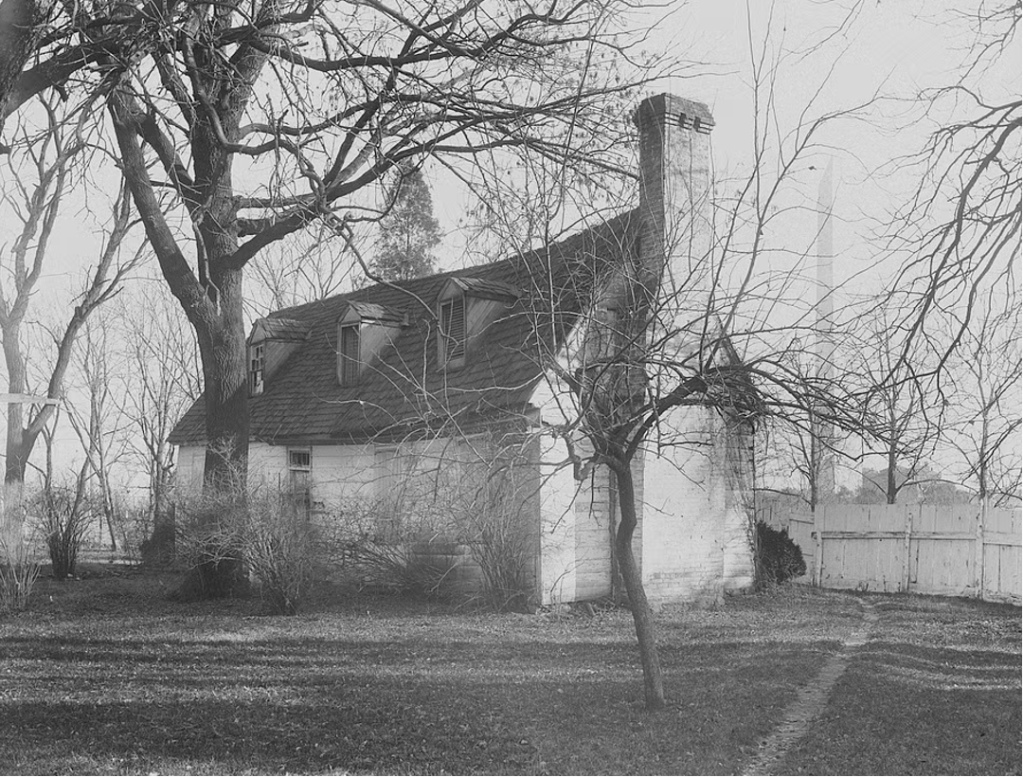
David Burnes. The obstinate David Burnes.[1] That’s what George Washington called him, anyway.[2] David Burnes II was the son of James and Jemima. He was the grandson of David Burnes the first, who purchased a spot of land in 1721. David Burnes the second—inherited that 700 acres of land. It had a cottage on it. The cottage certainly doesn’t look like much.
But George Washington wanted the land. He wanted to build a Capitol City, and this was the perfect spot. But David Burnes, the obstinate David Burnes, would not make a deal. George Washington was able to get every other landowner in the area to sell. But David didn’t want to, because it was everything he owned. It was an inheritance! And he wanted fair price! Tradition says that once when Washington came to visit, the obstinate David Burnes said to him: “I suppose, Mr. Washington, you think people are going to take every grist from you as pure grain; but what would you have been if you hadn’t married the rich widow Custis!” Washington is said to have actually lost his temper—and left the house in indignation. You can’t always get what you want. But Jim Rohn, American entrepreneur, author and motivational speaker says, “When you know what you want, and you want it bad enough, you’ll find a way to get it.” [3]
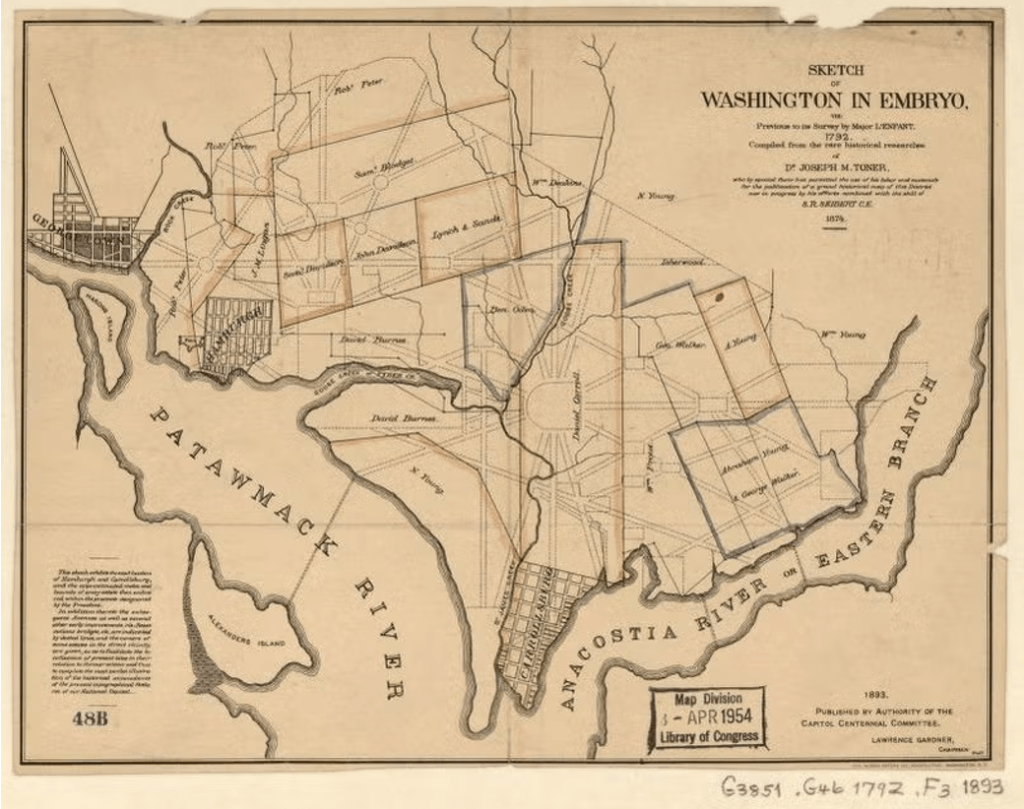
Finally, David agreed to sell his land—prime land, right on the River—for 1.5 million dollars (all the way back in 1790), and it became the Capitol City, where the White House now resides. The man in our story wasn’t so fortunate.
Some time later there was an incident involving a vineyard belonging to Naboth the Jezreelite. The vineyard was in Jezreel, close to the palace of Ahab king of Samaria. 2 Ahab said to Naboth, “Let me have your vineyard to use for a vegetable garden, since it is close to my palace. In exchange I will give you a better vineyard or, if you prefer, I will pay you whatever it is worth.” 3 But Naboth replied, “The Lord forbid that I should give you the inheritance of my ancestors.” 1 Kings 21:1-3
Ahab has multiple palaces. Previously, Elijah came to him at the one in Samaria. This is a place somewhere in Jezreel.
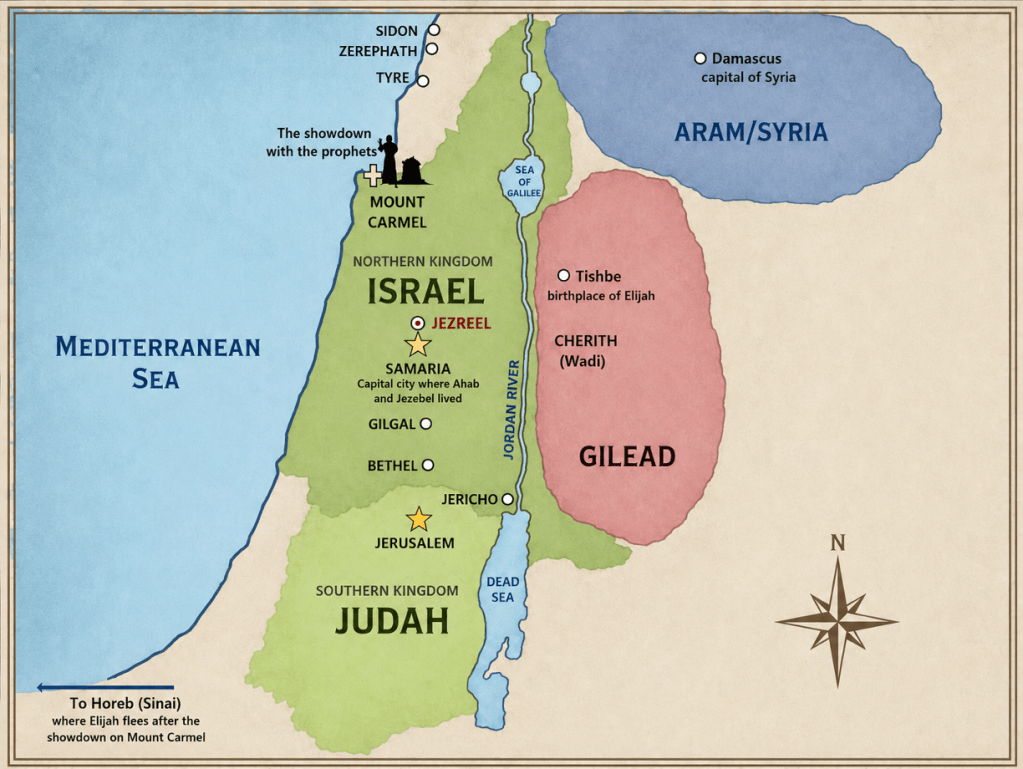
Jezreel was to the North of Samaria. It had a milder climate. The palace near Naboth’s vineyard was probably a winter residence for King Ahab… kind of like having a condo in Florida. Excavations have shown that Jezreel functioned as a military center. It had a moat, a tower[4], and a guarded gate[5]. The road to Samaria started in Jezreel and had to be protected. Norma Franklin writes, “If Jezreel fell, Samaria would fall, and if Samaria fell then the kingdom would fall.”[6]
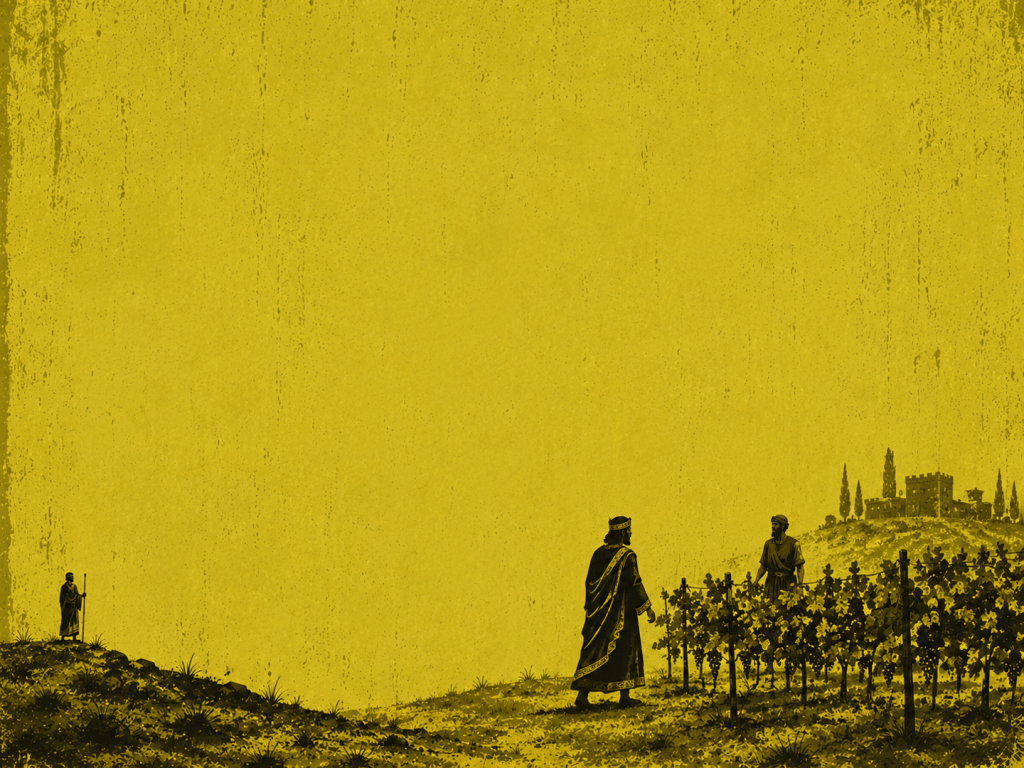
A vineyard, which could produce grapes that could be turned into wine, was a prized commodity in the ancient Near East. It was not just a luxury item but also listed among basic military supplies. This kind of asset would be one that any king would want to control. Ahab says that he wants to turn it into a vegetable garden, but that may have just been a ploy to get Naboth to sell it cheaply. [7]
Naboth is a Jezreelite, and the land is his ancestral inheritance.[8] Land for the Israelites was not just a private possession, but it was a gift from God for the sake of the family. God had said, “…no inheritance shall be transferred from one tribe to another tribe, for the tribes of the sons of Israel shall each hold to his own inheritance.”[9] Some land could be bought and sold normally, but other land was subject to special laws.[10] Ancestral land could only be sold in extreme cases of poverty, and it was only to be a temporary thing.[11] What would have been an indulgence to Ahab was an inheritance to Naboth. Kind of like the land belonging to the “obstinate David Burnes.” This land was a link with Naboth’s ancestors, it was the source of his identity, his livelihood, and it gave him position in the community.[12] Naboth doesn’t want to sell. And he shouldn’t have to. He wasn’t being stubborn or simply protecting real estate. He was being faithful. He was obeying God. He was a man of integrity who would not violate his conscience, even at the risk of offending the king.[13] Ahab doesn’t see it that way.
4 So Ahab went home, sullen and angry because Naboth the Jezreelite had said, “I will not give you the inheritance of my ancestors.” He lay on his bed sulking and refused to eat. 5 His wife Jezebel came in and asked him, “Why are you so sullen? Why won’t you eat?” 6 He answered her, “Because I said to Naboth the Jezreelite, ‘Sell me your vineyard; or if you prefer, I will give you another vineyard in its place.’ But he said, ‘I will not give you my vineyard.’” 1 Kings 21:4-6 NIV
Ahab goes “home”—probably to the palace at Samaria—not to his place in Jezreel.[14] And Ahab…broods. He misremembers Naboth’s words as an outright refusal, rather than as a legal impossibility.[15] He tells the whole thing to his wife, but he says it in such a way that leaves out some important details.[16] Isn’t that just so unfair? You’ve got to hate it when that happens. I recently found out that someone shared a scenario with someone else—where I was there, but clearly, the person telling the story had misremembered intentionally—to make it look as if I didn’t acknowledge them or care about them. When I found out, it was disconcerting, to say the least.
Ahab turns the narrative to make it look like he’s being wronged. Now, he may seem to be very immature, in his pouting and complaining to his wife. But something deeper is also going on. Ahab is green with envy. Envy is the sin of being saddened, grieved, displeased, annoyed, indignant, or resentful when another person comes to have something good. In the Garden depicted in Genesis, Adam and Eve had everything they needed. God, their Creator, told them they could eat from every tree of the garden—EXCEPT the tree of the knowledge of good and evil.[17]
Enter the snake—more cunning than any beast of the field—“Why is God keeping that tree from you? Don’t you want what God has? If you take from the tree…you will be like God!” The seed of envy was planted. Jewish literature in the apocrypha[18] reads:
Through the devil’s ENVY death entered the world, and those who belong to his company experience it. Wisdom 2:24 NRSV
Envy makes us see the good that someone else has—as taking away from our own good. It says, “I want what YOU have!” Ahab already had everything: A palace, power, wealth, servants, a kingdom. Yet he couldn’t enjoy any of it because someone else possessed one vineyard?? The problem wasn’t Naboth. The problem was Ahab’s heart.
Envy is a dangerous business. It changes our attitudes towards other people and makes it hard to love them.[19] Unless envy is dealt with, it will always lead to some kind of hostile speech and action. Envy never stays in the heart. It always spills into our actions. It leads from rumination to reactive behavior. Naboth has become an object instead of a person. Something to circumvent and work around. He is a passive bystander who gets run over by the greed of Ahab. Jezebel hears exactly what Ahab wants her to hear. And she reacts to the unfairness of it, as it was presented to her.
7 Jezebel his wife said, “Is this how you act as king over Israel? Get up and eat! Cheer up. I’ll get you the vineyard of Naboth the Jezreelite.” 1 Kings 21:7 NIV
In the ancient world the king’s rights and powers were absolute. Might made right.[20] Ahab may be king, but Jezebel is the one who holds all the cards. “I” will give you the vineyard, she says. The conversation has a weird parent-to-child overtone. “Don’t cry honey. Mommy will make everything all right.”[21] What we don’t know is whether the king has just got a terrible bad habit of sulking, or whether he is manipulating Jezebel to do his dirty work.[22] Either way:
8 So she wrote letters in Ahab’s name, placed his seal on them, and sent them to the elders and nobles who lived in Naboth’s city with him. 9 In those letters she wrote: “Proclaim a day of fasting and seat Naboth in a prominent place among the people. 10 But seat two scoundrels opposite him and have them bring charges that he has cursed both God and the king. Then take him out and stone him to death.” 1 Kings 21:8-10 NIV
Well, that escalated quickly! Jezebel grasps the reins and writes to the local leaders in Ahab’s name. It is a shrewd combination of ruthlessness and religiosity.[23] She enlists Naboth’s fellow citizens in her conspiracy. This whole thing isn’t just going to hurt Naboth. It will tear apart the community, and the social order.[24]
11 So the elders and nobles who lived in Naboth’s city did as Jezebel directed in the letters she had written to them. 12 They proclaimed a fast and seated Naboth in a prominent place among the people. 13 Then two scoundrels came and sat opposite him and brought charges against Naboth before the people, saying, “Naboth has cursed both God and the king.” So they took him outside the city and stoned him to death. 14 Then they sent word to Jezebel: “Naboth has been stoned to death.” 1 Kings 21:11-14 NIV
Jezebel’s flying monkeys do her dirty work. It is a sad state of affairs when the most powerful and revered classes could be instructed to arrange for corrupt witnesses to destroy a righteous man in their midst…but that’s what happened.[25] Two scoundrels, who are agents of the queen, work with her against their fellow Jezreelite.[26] A fast like this is usually proclaimed as public penance in times of war, plague, or similar disasters.[27] While the people are gathered in an assembly to make amends for a past sin, Naboth is accused of cursing against God and the king.[28] Naboth is blindsided. He is a leading citizen in the community, whose own neighbors misjudge him, and believe the false witnesses enough that they allow him to be killed.[29] As readers, we don’t even get to hear Naboth’s side of the story. And the elders and nobles aren’t the ones who report back, and they aren’t even the ones who do the stoning, according to the verb usage in the Hebrew.[30] All of it is so unfair.
And the contrasts are stark: Naboth has a vineyard, and Ahab wants the vineyard. Ahab fasts, and then Naboth fasts along with the people, but it ends up being a trap. In the end he loses everything, and Ahab gets the vineyard he coveted.[31] This story is a terrible tragedy. Sometimes life isn’t fair. Naboth did everything right. He obeyed Scripture. He refused to compromise. And yet he died.
15 As soon as Jezebel heard that Naboth had been stoned to death, she said to Ahab, “Get up and take possession of the vineyard of Naboth the Jezreelite that he refused to sell you. He is no longer alive, but dead.” 16 When Ahab heard that Naboth was dead, he got up and went down to take possession of Naboth’s vineyard. 1 Kings 21:15-16 NIV
According to Jezebel, she has righted the wrong that was done to her husband. She even frames it as an injustice when she cites the victory. She informs him that Naboth is dead, and Ahab doesn’t even bother to ask how that came about.[32] He gets up and goes to take the thing he wanted. Ahab wants the vineyard; Ahab gets the vineyard.[33] In the case of treason, the deceased offender’s property goes to the crown.[34] Everything on the surface looks legit. But God sees what has really happened…and he isn’t happy.
What does faith do when life isn’t fair? Ahab didn’t think it was fair that he couldn’t get the land he wanted. Naboth didn’t think it was fair that he asked. Each of these men react to what they think is unfair in different ways, and we see a collision between two ways of living. It’s an incredibly powerful contrast. Ahab says: “I want it, no matter what”. Naboth says: “God has spoken”. Ahab lives by grasping. Naboth lives by faithfulness. Ahab protects himself. Naboth obeys God. Ahab doesn’t get what he wants…so he chooses sin. Naboth loses everything…and remains faithful. Naboth did everything right. He obeyed God’s Word. He didn’t compromise his convictions. But from a human perspective…he lost.
The question this story stirs up is: How do I remain faithful when faithfulness costs me? Because—sometimes faith doesn’t look victorious. Sometimes obedience suffers. Sometimes evil appears to win. Life isn’t fair. It doesn’t take long to figure that out. Sometimes it’s the little things: Someone cuts in line. Someone gets the promotion you deserved. Someone takes credit for your work. Sometimes it’s much bigger: A marriage ends. A loved one dies. A diagnosis changes everything. Someone lies about you, and you can’t seem to set the record straight. And every one of us has asked, at one time or another, “God, did You see that?”
In our series so far, we’ve watched God provide for Elijah. We’ve watched God answer by fire. We’ve watched God meet Elijah in the whisper. We’ve watched God answer prayer. But what happens when life isn’t fair? Where is God then?
When life isn’t fair, faith relies on the God who sees.
Naboth was a faithful Israelite. He lost his life anyway. But justice belongs to God.
And now, God sends Elijah to Ahab, because He has seen everything all along.

17 Then the word of the Lord came to Elijah the Tishbite: 18 “Go down to meet Ahab king of Israel, who rules in Samaria. He is now in Naboth’s vineyard, where he has gone to take possession of it. 19 Say to him, ‘This is what the Lord says: Have you not murdered a man and seized his property?’ Then say to him, ‘This is what the Lord says: In the place where dogs licked up Naboth’s blood, dogs will lick up your blood—yes, yours!’” 20 Ahab said to Elijah, “So you have found me, my enemy!” “I have found you,” he answered, “because you have sold yourself to do evil in the eyes of the Lord. 21 He says, ‘I am going to bring disaster on you. I will wipe out your descendants and cut off from Ahab every last male in Israel—slave or free. 22 I will make your house like that of Jeroboam son of Nebat and that of Baasha son of Ahijah, because you have aroused my anger and have caused Israel to sin.’ 23 “And also concerning Jezebel the Lord says: ‘Dogs will devour Jezebel by the wall ofJezreel.’ 24 “Dogs will eat those belonging to Ahab who die in the city, and the birds will feed on those who die in the country.” 1 Kings 21:17-24 NIV
Just as Naboth had died a violent death, so would Ahab.[35] And the manner of death—being eaten by animals, is shameful, and would mean that Ahab and his family would be left unburied, which is a threat amounting to eternal punishment![36]
Notice where the blame lands. Sure, Jezebel is a huge part of this mess. She listens to Ahab, comforts him, speaks cunningly to him, gets him to agree to her wishes, and even calls a fake fast in order to get Naboth convicted of doing ‘something against the gods’ and so has him killed. But Ahab… is the one called into account by God. Elijah’s words transform into a divine speech against Ahab, and then ends with the narrator’s words to us—allowing us to hear both voices.[37] The text says[38]:
However there was none like Ahab
Who sold himself to do evil in Yahweh’s sight,
Whom his wife Jezebel induced,
And He committed great abomination by going after idols like everything
which the Amorites did,
whom Yahweh dispossessed in favor of the children of Israel
1 Kings 21:25-26
Who did this? Ahab. Who was induced? Ahab. Who committed great abomination? Ahab. Jezebel may have influenced him, but Ahab is held accountable for his actions. And not only Ahab, but his dynasty, his wife, and his entire household fall under Yahweh’s condemnation.[39] Yikes.
If we can take this and apply it for a minute—it means that we can’t get away with our sin, either. We may be influenced by commercials, reels, online groups, and the voices that bombard us from every corner of the internet. We may listen to the whispers of our friends, and buy in to the lies of societal norms, but if we act on it—if we let it happen, if we want something so badly…If we live like the Jim Rohn quote at the beginning of our time that says, “When you know what you want, and you want it bad enough, you’ll find a way to get it.” …If we live like THAT…we will suffer the consequences. We are still responsible before God.
God comes to Ahab through Elijah and tells him that he will die. Now, God doesn’t usually talk to us like that…we don’t have personal prophets to deliver holy post-it-notes. But we do have a word from God—and we are told that: The wages of sin is death…(Romans 6:23)
We like to hate Ahab. He was a wicked king. He did so many evil things, it makes us want to vomit. After this story that is so, so unfair, we want to haul him out to the quarry and stone him. We want to hang him on gallows or burn him at the stake. You get what you deserve, Ahab! But Ahab does something remarkable:
It came about when Ahab heard these words, that…
—he tore his clothes
—and put on sackcloth
—and fasted,
—and he lay in sackcloth
—and went about meekly (or quietly, like tiptoeing around)
1 Kings 21:27
He acted almost the same way he did when he didn’t get what he wanted. He lay down, he stopped eating, …and he was quiet. Ahab was sorry. And he acted like it. And God listened…and modified his punishment…
28 Then the word of the Lord came to Elijah the Tishbite: 29 “Have you noticed how Ahab has humbled himself before me? Because he has humbled himself, I will not bring this disaster in his day, but I will bring it on his house in the days of his son.” 1 Kings 21:28-29 NIV
The punishment that God decrees on Ahab made us feel satisfied at first. We value the idea of divine justice: eye for eye, tooth for tooth, life for life.[40] But for some reason, God doesn’t consider Ahab’s repentance trivial or insincere.[41] God showed mercy—in the face of true repentance. It’s very difficult to understand that, after hearing the text say that Ahab is guilty of evil that is unparalleled in the history of Israel…and yet, now, Ahab also grieves and repents.[42]
I might not think I’m not as bad as Ahab. You might think you’re not even close to his pouty, immature behavior. But I can assure you—and so can God—and so can your family—and so can your friends—and deep down, your heart can assure you too—that we are sinners. That we want what we want. And when we don’t get it, we often sin—either by taking it anyway, by bending the truth to tell the story our way, by letting it consume our thoughts, or by ignoring God’s desires for us in loving our neighbor. We might be lied to by the world. We might even be content to let someone else do what we know is wrong while we quietly benefit from it. But we all sin. God’s mercy to Ahab is simply a small taste of the mercy that he now gives us through Jesus Christ. Because:
If we say that we have no sin, we are deceiving ourselves and the truth is not in us. (BUT) If we confess our sins, He is faithful and righteous to forgive us our sins and to cleanse us from all unrighteousness. 1 John 1:8-9 and The Lord is… patient with you, not wanting anyone to perish, but everyone to come to repentance. 1 Peter 3:9 NIV
Ahab experienced a postponement of judgement. Through the cross—we experience a cancellation of God’s judgment.[43] Thanks be to God!
Now, mercy for Ahab didn’t mean injustice didn’t matter. God is both merciful…and just. Ahab may have had his sentence revoked, or at least postponed, but Jezebel—she WAS eaten by dogs.[44] And repentance doesn’t erase what happened to Naboth.
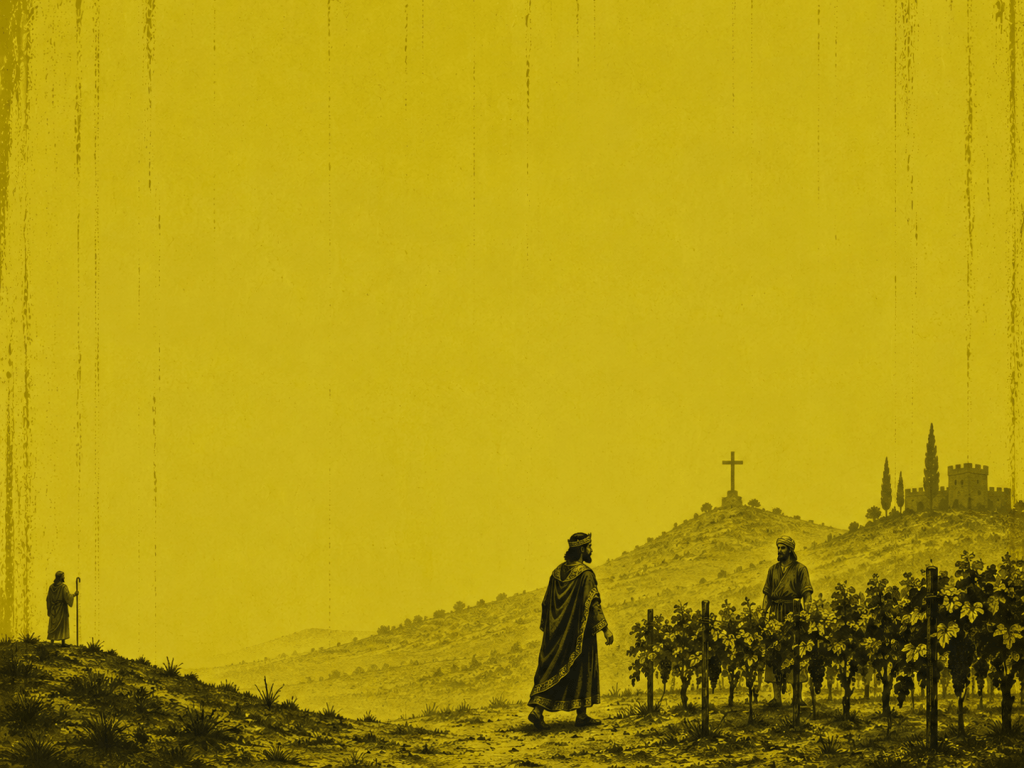
There is another story in the gospels of an innocent man. False witnesses, a corrupt trial, political power, a ruler who knew the accused was innocent, an execution outside the city. From every human perspective, evil won. For a moment it looked like life wasn’t fair. But God wasn’t absent then either. And ultimately, in Jesus, He showed that injustice never gets the last word. Unlike Naboth—Jesus’ death wasn’t the end. It became salvation. In this story, Naboth was treated unjustly. And God doesn’t prevent Naboth’s death, but He is not absent from it. He sees, He speaks, and He acts in His time.
If life doesn’t feel fair this week…don’t be surprised. We live in a fallen world. But we must be committed to God’s standards and refuse to go along to get ahead.[45] We must be committed to God’s Word…even when faithfulness costs us. Maybe this week you’ll experience something that isn’t fair. Someone will say something that isn’t true. Someone else will get the recognition. Someone else’s choices will affect your life. And you’ll be tempted to wonder, “God, did You see that?” From what we’ve been learning so far, the answer is ‘yes.’
When life isn’t fair, faith relies on the God who sees.
And that truth cuts both ways. For those who are suffering, like Naboth, that’s a comfort. You may be ignored by everyone else. You may lose. You may never see justice in this life. But God sees. For those who are hiding sin, like Ahab, it’s a warning. You may have power. You may manipulate. You may think you’ve gotten away with it. But God sees. It’s the same truth. That doesn’t mean He always acts immediately. It doesn’t mean life suddenly becomes fair. But it does mean that injustice is never invisible to Him.
God saw the widow’s empty jars. God saw Israel on Mount Carmel. God saw Elijah under the juniper tree. God heard Elijah’s quiet prayer. God saw Naboth. He saw His Son. And He sees you. And because He sees…we…can keep being faithful. Let’s pray.
Prayer: Almighty God, you are the great king over all. You see the world and its kingdoms, and all the grasping for power, control, and stuff. And nothing escapes Your notice. You see every act of injustice, every hidden motive, every quiet act of faithfulness, and every tear that no one else notices. Guard our hearts from becoming like Ahab—grasping for what is not ours, justifying our sin, or believing the lie: that our desires matter more than Your Word. Instead, make us like Naboth—and even more—like Jesus. Holy Spirit, give us the courage to remain faithful, even when obedience is costly and life doesn’t seem fair. And when we begin to wonder if You see what is happening, remind us that You are the God who sees, you are the God who is both merciful and just, and the God who proved Your love for us through Jesus Christ. Help us to trust You, to follow You, and to remain faithful until the day You make all things right. In the name of Jesus we pray, Amen.
Bibliography
- Beal, Lissa M. Wray, Apollos Old Testament Commentary, 1 & 2 Kings, Downers Grove: InterVarsity Press, 2014.
- Brueggemann, Walter; John H. Hayes, editor, 1 Kings, Atlanta: John Knox Press, 1982.
- Brueggemann, Walter, 1 & 2 Kings, Macon: Smyth & Helwys Publishing Inc., 2000.
- DeVries, Simon J., Word Biblical Commentary, 1 Kings, Second Edition, Nashville: Thomas Nelson, Inc, 2003.
- Fritz, Volkmar, 1 & 2 Kings, Minneapolis: Fortress Press, 2003.
- House, Paul R., The New American Commentary, An Exegetical and Theological Exposition of Holy Scripture, 1,2 Kings, Broadman and Holman Publishers, 1995.
- Inrig, Gary, Holman Old Testament Commentary, 1&II Kings, Nashville: B&H Publishing Group, 2003, 177.
- Provan, Iain W., New International Biblical Commentary, 1 and 2 Kings, Peabody: Hendrickson Publishers, Inc., 1995.
- Rice, Gene, Nations under God (A Commentary on the Book of 1 Kings), Grand Rapids: Wm. B. Eerdmans Publishing, Co., 1990.
- Stanley, Andy; Enemies of the Heart, New York: Multnomah Books, 2006, 2011.
- Walsh, Jerome T., Berit Olam: Studies in Hebrew Narrative & Poetry, 1 Kings, Collegeville, Minnesota: The Liturgical Press, 1996.
Articles
- Brodt, Katherine Brodt, “The Obstinate Mr. Burns” and the First White House”, Boundary Stones, July 13, 2020, accessed July 21, 2026. https://boundarystones.weta.org/2020/07/13/obstinate-mr-burns-and-first-white-house
- Franklin, Norma; Jennie Ebeling, Philippe Guillaume, Deborah Appler, “Have We Found Naboth’s Vineyard at Jezreel?”, Biblical Archaeology Review, 43:6, 2017, 49-54. Accessed July 21, 2026.
- Franklin, Norma, “Why Was Jezreel So Important to the Kingdom of Israel?”, The Zinman Institute of Archaeology, University of Haifa, November 2013. Accessed July 21, 2026.
https://bibleinterp.arizona.edu/opeds/2013/11/fra378006
Other Websites
- http://www.myburnesclan.com/p/test.html
- https://www.goodreads.com/quotes/157247-when-you-know-what-you-want-and-you-want-it
- https://en.wikipedia.org/wiki/Book_of_Wisdom
—
Small Group Questions
Elijah: A Life of Faith
Week 5 – When Life Isn’t Fair
1 Kings 21
*Leader’s Guide available on request
Icebreaker
- Tell about a time when something happened that you thought was unfair. It could be something serious—or something lighthearted. What happened, and how did you respond?
Read 1 Kings 21:1–6 NIV
Some time later there was an incident involving a vineyard belonging to Naboth the Jezreelite. The vineyard was in Jezreel, close to the palace of Ahab king of Samaria. 2 Ahab said to Naboth, “Let me have your vineyard to use for a vegetable garden, since it is close to my palace. In exchange I will give you a better vineyard or, if you prefer, I will pay you whatever it is worth.” 3 But Naboth replied, “The Lord forbid that I should give you the inheritance of my ancestors.”
4 So Ahab went home, sullen and angry because Naboth the Jezreelite had said, “I will not give you the inheritance of my ancestors.” He lay on his bed sulking and refused to eat. 5 His wife Jezebel came in and asked him, “Why are you so sullen? Why won’t you eat?” 6 He answered her, “Because I said to Naboth the Jezreelite, ‘Sell me your vineyard; or if you prefer, I will give you another vineyard in its place.’ But he said, ‘I will not give you my vineyard.’”
Background: Leviticus 25:23–34
God reminded Israel that the land ultimately belonged to Him, and the people were stewards rather than permanent owners. Because of this:
- Land could be sold if a family fell into poverty, but it was meant to be a temporary arrangement.
- A close relative (a kinsman-redeemer) could buy the land back for the family.
- If it was not redeemed earlier, it automatically returned to the original family during the Year of Jubilee (every 50th year).
- Different rules applied to houses in walled cities, while rural land and Levitical property received special protections.
Naboth’s vineyard was not simply real estate—it was a God-given family inheritance that he was called to protect, not permanently give away.
Discussion
- Why did Naboth refuse to sell his vineyard?
- Why do you think Naboth says, “The LORD forbid…” instead of simply saying, “No”? What does that tell us about his relationship with God?
- Naboth valued obedience to God more than pleasing the king. What pressures do Christians face today to compromise their convictions in order to please others?
- What is the difference between wanting something and coveting something?
- How does envy change the way he sees Naboth? Can envy change the way we see other people today?
- Imagine you’re one of Naboth’s neighbors watching this unfold. At this point in the story (before Jezebel’s plot), whose side do you think the average citizen would have taken? Why?
- What details did Ahab leave out when he retold the conversation with Naboth?
- Have you ever experienced someone telling a story about you that wasn’t completely true?
- How can we guard against telling stories in ways that make ourselves look better?
Read 1 Kings 21:7-16 NIV
7 Jezebel his wife said, “Is this how you act as king over Israel? Get up and eat! Cheer up. I’ll get you the vineyard of Naboth the Jezreelite.”
8 So she wrote letters in Ahab’s name, placed his seal on them, and sent them to the elders and nobles who lived in Naboth’s city with him. 9 In those letters she wrote:
“Proclaim a day of fasting and seat Naboth in a prominent place among the people. 10 But seat two scoundrels opposite him and have them bring charges that he has cursed both God and the king. Then take him out and stone him to death.”
11 So the elders and nobles who lived in Naboth’s city did as Jezebel directed in the letters she had written to them. 12 They proclaimed a fast and seated Naboth in a prominent place among the people. 13 Then two scoundrels came and sat opposite him and brought charges against Naboth before the people, saying, “Naboth has cursed both God and the king.” So they took him outside the city and stoned him to death. 14 Then they sent word to Jezebel: “Naboth has been stoned to death.”
15 As soon as Jezebel heard that Naboth had been stoned to death, she said to Ahab, “Get up and take possession of the vineyard of Naboth the Jezreelite that he refused to sell you. He is no longer alive, but dead.” 16 When Ahab heard that Naboth was dead, he got up and went down to take possession of Naboth’s vineyard.
Discussion
- How does Jezebel respond to Ahab’s sulking? What does this tell us about their relationship?
- Jezebel says, “Don’t you govern Israel?” (v. 7). What view of leadership does she seem to have? How does it differ from God’s view of leadership?
- How many people are affected by Ahab’s desire for one vineyard?
- Why do you think the elders and nobles obeyed Jezebel’s instructions instead of refusing? What might it have cost them to refuse?
- What is Ahab’s response when Jezebel tells him Naboth is dead? What doesn’t he ask?
- Who bears responsibility for Naboth’s death?
- Jezebel? Ahab? The elders? The false witnesses? The crowd? Why?
- Have you ever been tempted to stay silent when you knew something was wrong? What made speaking up difficult?
- Which person in this story would have had the greatest opportunity to stop the injustice before it happened? Explain your answer.
- Why is it important that the chapter records all the seemingly “small” steps leading to Naboth’s death instead of simply saying, “Jezebel had Naboth killed”?
- Naboth was condemned through false witnesses and an unjust trial. Where do you see similar themes in Jesus’ trial? What important differences do you notice?
- This story leaves us longing for a King who uses His power differently than Ahab. How does Jesus redefine what it means to be a king?
- Compare Ahab and Naboth. What values seem to guide each man’s decisions?
Which character do you find easier to identify with—and why?
Read 1 Kings 21:17-26 NIV
17 Then the word of the Lord came to Elijah the Tishbite: 18 “Go down to meet Ahab king of Israel, who rules in Samaria. He is now in Naboth’s vineyard, where he has gone to take possession of it. 19 Say to him, ‘This is what the Lord says: Have you not murdered a man and seized his property?’ Then say to him, ‘This is what the Lord says: In the place where dogs licked up Naboth’s blood, dogs will lick up your blood—yes, yours!’” 20 Ahab said to Elijah, “So you have found me, my enemy!” “I have found you,” he answered, “because you have sold yourself to do evil in the eyes of the Lord. 21 He says, ‘I am going to bring disaster on you. I will wipe out your descendants and cut off from Ahab every last male in Israel—slave or free. 22 I will make your house like that of Jeroboam son of Nebat and that of Baasha son of Ahijah, because you have aroused my anger and have caused Israel to sin.’
23 “And also concerning Jezebel the Lord says: ‘Dogs will devour Jezebel by the wall of Jezreel.’ 24 “Dogs will eat those belonging to Ahab who die in the city, and the birds will feed on those who die in the country.”
25 (There was never anyone like Ahab, who sold himself to do evil in the eyes of the Lord, urged on by Jezebel his wife. 26 He behaved in the vilest manner by going after idols, like the Amorites the Lord drove out before Israel.)
Discussion
- What specific sins does God accuse Ahab of in verse 19?
- What judgments does God pronounce on Ahab, Jezebel, and Ahab’s household?
- According to verses 25–26, how does the narrator summarize Ahab’s life?
- Why do you think God holds Ahab primarily responsible, even though Jezebel carried out much of the plot?
- What do you learn about God from these verses? What does He see? What does He value? What does He refuse to ignore?
- Why is it comforting that God sees injustice? Why might that also be unsettling?
- What does it look like to speak truth with courage and humility today?
When life isn’t fair, faith relies on the God who sees.
- What is the difference between trusting God for justice and seeking revenge ourselves? When is that distinction difficult to live out?
Read 1 Kings 21:27-29 NIV
27 When Ahab heard these words, he tore his clothes, put on sackcloth and fasted. He lay in sackcloth and went around meekly.
28 Then the word of the Lord came to Elijah the Tishbite: 29 “Have you noticed how Ahab has humbled himself before me? Because he has humbled himself, I will not bring this disaster in his day, but I will bring it on his house in the days of his son.”
Discussion
- What actions show that Ahab’s repentance was genuine (or at least appeared genuine)? Why do you think God took notice of them?
- What does this teach us about God’s character?
- Have you ever struggled to accept that God could forgive someone who had done something truly terrible? Why is that difficult?
- How is Jesus’ story different than Naboth’s?
Personal Application
Which of these is hardest for you?
- Trusting God when life feels unfair.
- Remaining faithful when obedience is costly.
- Letting go of envy or entitlement.
- Trusting God’s justice instead of taking matters into your own hands.
Optional Group Activity
- Give everyone a blank index card. On one side, write: “God, did You see that?” On the other side, write: “Yes.” Encourage everyone to keep the card in a Bible, wallet, purse, or on a desk this week as a reminder that the God who saw Naboth, saw His Son, and sees us today is never blind to injustice.
- How can this group pray for you this week?
Closing Prayer
Heavenly Father, thank You for being the God who sees. When life feels unfair, help us to trust that nothing escapes Your notice. Guard us from envy, selfishness, and compromise, and give us the courage to remain faithful, even when obedience is costly. Thank You for Your justice, Your mercy, and the forgiveness You offer through Jesus Christ. Strengthen us to walk with You this week. In Jesus’ name, Amen.
[1] David Burns spelled his last name Burnes. Katherine Brodt, “The Obstinate Mr. Burns”
and the First White House”, Boundary Stones, July 13, 2020, accessed July 21, 2026. https://boundarystones.weta.org/2020/07/13/obstinate-mr-burns-and-first-white-house
[2] http://www.myburnesclan.com/p/test.html
[3] https://www.goodreads.com/quotes/157247-when-you-know-what-you-want-and-you-want-it
[4] 2 Kings 9:17
[5] 2 Kings 9:31.
[6] Norma Franklin, “Why Was Jezreel So Important to the Kingdom of Israel?”, The Zinman Institute of Archaeology, University of Haifa, November 2013. Accessed July 21, 2026.
https://bibleinterp.arizona.edu/opeds/2013/11/fra378006
[7] Norma Franklin, Jennie Ebeling, Philippe Guillaume, Deborah Appler, “Have We Found Naboth’s Vineyard at Jezreel?”, Biblical Archaeology Review, 43:6, 2017, 49-54.
Accessed July 21, 2026.
[8] Jerome T. Walsh, Berit Olam: Studies in Hebrew Narrative & Poetry, 1 Kings, Collegeville, Minnesota: The Liturgical Press, 1996, 317.
[9] Numbers 36:12
[10] Leviticus 25:23
[11] Walsh, 318.
[12] Gene Rice, Nations under God (A Commentary on the Book of 1 Kings), Grand Rapids: Wm. B. Eerdmans Publishing, Co., 1990, 176.
[13] Gary Inrig, Holman Old Testament Commentary, 1&II Kings, Nashville: B&H Publishing Group, 2003, 177.
[14] Walsh, 319, footnote 5.
[15] Walsh, 319.
[16] Walsh, 320.
[17] Genesis 2:16-17
[18] https://en.wikipedia.org/wiki/Book_of_Wisdom
[19] Andy Stanley, Enemies of the Heart, New York: Multnomah Books, 2006, 2011, 171.
[20] Inrig, 177.
[21] Walsh, 321.
[22] Walsh, 321.
[23] Inrig, 178.
[24] Walsh, 322.
[25] Simon J. DeVries, Word Biblical Commentary, 1 Kings, Second Edition, Nashville: Thomas Nelson, Inc, 2003, 257.
[26] Walsh, 323.
[27] Walsh, 322.
[28] Volkmar Fritz, 1 & 2 Kings, Minneapolis: Fortress Press, 2003, 213.
[29] Walsh, 325.
[30] Walsh, 324.
[31] Walsh, 338-339.
[32] Walsh, 325-326.
[33] Walsh, 327.
[34] Lissa M. Wray Beal, Apollos Old Testament Commentary, 1 & 2 Kings, Downers Grove: InterVarsity Press, 2014, 275.
[35] Inrig, 179.
[36] Fritz, 214.
[37] Walsh, 331.
[38] Jerome T. Walsh, David W. Cotter, Editor; Berit Olam–Studies in Hebrew Narrative & Poetry
1 Kings, Collegeville: The Liturgical Press, 1996, 332.
[39] Walsh, 335.
[40] Walsh, 336.
[41] Walsh, 337.
[42] Walsh, 335.
[43] Inrig, 180.
[44] 2 Kings 9:30-37.
[45] Inrig, 181.

