

About these posts
These posts grow out of sermons I’ve written for my local church community. You’re welcome to use them—for teaching, small groups, preaching, or personal reflection. If you share them elsewhere, please include a simple attribution. If you’d ever like to share how they’re being used, you’re welcome to reach out through the Contact button.

I’ve had many times in life where I’ve had to learn to rely on God. There were moments, in our early days of marriage, where we struggled to make ends meet, and yet, God came through in one form or another. Maybe it was a side job that was provided, or an extra blessing. One time it was an anonymous envelope in the mail.
Over the years, the ways that God provides have changed. It may be more in circumstances that line up at the right time, a word of encouragement when I’m feeling depleted, or God’s presence that is felt in a really difficult situation. Life can be clicking along well for us, too, and then something happens to make us realize that things are not as solid as we think. You might think, ‘I can depend on my job,’ ‘my friends will always be available for me.’ ‘I have a 401K.’ Those of us who have been around long enough are aware that life can change in an instant. War, stock market crash, Covid, health emergencies, a relationship bomb. What happens when provision runs low? Can we trust God to provide what we need? Today we’ll learn that: When our resources run dry, God’s provision remains faithful.
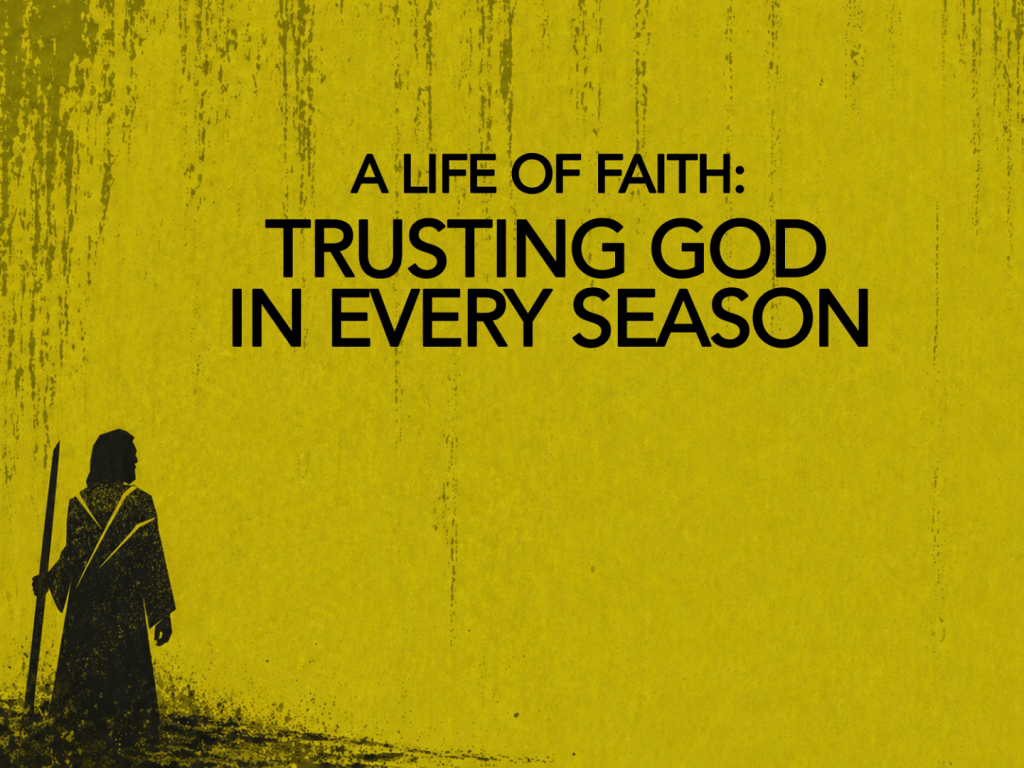
Over the next few weeks, we’ll follow the life of Elijah, a man who learned to trust God in every season of life. Through drought and provision, victory and discouragement, courage and uncertainty, Elijah’s story reminds us that faith is not about having all the answers—it’s about learning to trust the living God one step at a time.
The book of Kings is part of the Former Prophets section of the Hebrew Bible. It tells the story of Israel’s kings, but it isn’t merely interested in politics or military victories. The kings are evaluated based on one question: Were they faithful to the Lord?
When King Solomon died, the Kingdom of Israel was divided into two groups: the northern tribes and the southern tribes. The northern tribes came to be known as the Kingdom of Israel, and the southern tribes came to be called the Kingdom of Judah. King Ahab takes over the Northern kingdom about 60 years after Solomon’s death.[1] He is portrayed as the worst Northern king yet.[2]

Ahab marries Jezebel, a daughter of the Sidonian king.[3] That marriage was supposed to help improve Israel’s foreign policy. Tyre and Israel were hoping to neutralize Syria, so they joined forces.[4] A secular historian would be inclined to speak well of the accomplishments of Ahab. But the Bible says that Ahab did more evil than any before him.[5] Ahab allowed his new wife to bring in her foreign worship practices to Israel and even built her a temple of Baal. Baal was the storm god who was a fertility god. He was the “rider of the clouds,”[6] In Phoenicia, he was known as the lord of the heavens.[7] He was said to bring the needed rain for crops to grow. But sometimes that didn’t happen, and the Baal worshipers equated that to battles between the gods, bringing drought or rain, depending on who was winning.[8]
One of the great temptations of every age is to look to something God created and ask it to give us what only God can give. In Elijah’s day it was Baal. In our day it may be achievement, relationships, possessions, or sexuality. But our deepest need is still met only by the God who gives life. Yahweh is going to find a way to show the people that he is the LIVING God! He is the one who ultimately is in charge, despite all that is happening in the world.
Let’s read from 1 Kings 17, beginning at verse 1. Now Elijah the Tishbite, from Tishbe in Gilead, said to Ahab, “As the Lord, the God of Israel, lives, whom I serve, there will be neither dew nor rain in the next few years except at my word.” 1 Kings 17:1 NIV
This is Elijah’s first appearance. Elijah will be later considered THE great prophet.[9] Right now he’s just a guy that shows up and makes a huge claim.[10] His name means Yahweh is my God.

He’s identified in the Hebrew text as a settler of Gilead, which were probably immigrants living north of the Jabbok River.[11] The description does not help in identifying his family, social class, or region.[12]
There are many prophets that have risen up in Israel in this time period. The role of a prophet is supposed to be as God’s messengers to the kings and to the people.[13] The kings who create an atmosphere of rebellion and violence lead to long-term problems in their lives, their family’s lives, and their nation’s life.[14] The prophets of God, the true prophets, are the ones who speak God’s word, oppose idolatry, and refuse to be bribed by the king. They are not popular. False prophets end up supporting the king and were compromised in their loyalty.[15] Rather than speaking God’s truth, the false prophets tell people what they want to hear, reinforcing the values of the culture instead of calling people back to faithfulness. Sin leads to short-term and long-term tragedy. But those who choose to follow God, even if not perfectly, make the community of Israel better in the long run.[16]
Elijah barges into the presence of Ahab and challenges what is at the heart of Baalism, declaring that Yahweh lives, and only he will bring the rain.[17] Everyone needs rain. They need rain to survive. They need rain for the crops to grow. What happens if there is no rain? In an agricultural economy, it shuts everything down.
We might naturally assume that this is a punishment based on Ahab’s sins, but neither the narrator nor Elijah confirms that.[18] The drought will devastate Baal’s territory as well as Israel.[19] The bigger picture is that Yahweh will prove that he is God and Baal is not. If Yahweh withholds the rain and Baal is not able to do anything about it, and then the rain comes again through Elijah’s word-the prophet of God, then Yahweh, will prove to be the one true God,[20] and will show who is actually responsible for the course of nature.[21] Elijah makes his pronouncement to king Ahab and then leaves. Nobody stops him—because they don’t realize the gravity of what is about to happen. But Elijah believes that God will provide.
2 Then the word of the Lord came to Elijah: 3 “Leave here, turn eastward and hide in the brook Cherith, east of the Jordan. 4 You will drink from the brook, and I have directed the ravens to supply you with food there.” 5 So he did what the Lord had told him. He went to the brook Cherith, east of the Jordan, and stayed there. 6 The ravens brought him bread and meat in the morning and bread and meat in the evening, and he drank from the brook. 1 Kings 17:2-6 NIV
The word of God comes to Elijah and tells him where to go.

The wadi was a stream that flowed in the rainy season—a lot like this one—but not a long-term source of water during a drought.[22] We don’t know where the exact location of this wadi was, but the name, Wadi Cherith, means ‘cut off creek.’[23] At ‘Cut Off Creek”, Yahweh will protect Elijah from being killed or ‘cut off’ by Ahab and Jezebel.[24] And the brook provides the water for Elijah, but the supply of food is miraculous.[25]
Ravens are normally scavengers and aggressive birds, but they become the carriers of food. And it’s not just food—it’s meat! Meat was normally eaten only on feast days.[26] Elijah—is living the life! He’s all by himself, he has water to drink, food to eat, and a place to hide. He is free from concerns.[27] At least for the moment. God is providing exactly what Elijah needs.
7 Some time later the brook dried up because there had been no rain in the land. 8 Then the word of the Lord came to him: 9 “Go at once to Zarephath in the region of Sidon and stay there. I have directed a widow there to supply you with food.” 1 Kings 17:7-9 NIV
We might assume that a dried-up brook means that God is not providing. But maybe it was actually the means by which God moves Elijah to the NEXT place of provision. It doesn’t mean God has abandoned him. In fact, the word of the Lord comes to Elijah a second time and tells him to ‘go’ and to ‘live there.’[28] He is about to come face to face with real life. The rainfall shortage isn’t just something that affects the king, it affects the people. And shortage of food leads to famine, which results in death. Those who are poor are suffering the most. And so, in obedience to the word of God, Elijah moves from a wadi to a widow.
10 So he went to Zarephath. When he came to the town gate, a widow was there gathering sticks. He called to her and asked, “Would you bring me a little water in a jar so I may have a drink?” 1 Kings 17:10 NIV
Zarephath is not in Israel. It is in the foreign country of Phoenicia,[29] on the coast between Sidon and Tyre.[30] This was the region where Jezebel’s father ruled, and the heartland of Baal worship.[31] The widow is at the bottom of the social rung. She doesn’t have the means to get what she needs to survive.[32] She is not the person you would expect to go to for help. But God is going to use this widow to meet Elijah’s needs.[33]
11 As she was going to get it, he called, “And bring me, please, a piece of bread.” 1 Kings 17:11 NIV
Now, asking for water was one thing. Asking for food in a famine is another. She is starving. We use that word so lightly: “I’m starving!” But no rain in the ancient culture meant: grain doesn’t grow, olives don’t develop properly, vineyards suffer, the pasture dries up, and the poor immediately lose their food supply. As grass and water disappear, the sheep get weaker, goats die, cattle are sold or slaughtered. Even the wealthy people begin losing assets. Families would start eating their stored grain and oil, and any emergency reserves. When food becomes scarce, debts increase, people start selling land, families become dependent on others, and vulnerable people become desperate. This is one reason widows are repeatedly singled out in Scripture. They often had no husband, no inheritance rights, and limited economic protection. Children and widows suffer first.
12 “As surely as the Lord your God lives,” she replied, “I don’t have any bread—only a handful of flour in a jar and a little olive oil in a jug. I am gathering a few sticks to take home and make a meal for myself and my son, that we may eat it—and die.” 1 Kings 17:12 NIV
This widow recognizes that Elijah is a foreigner, and a worshipper of Yahweh. She is respectful and deferential to Yahweh, even though she is not a worshiper.[34] And she’s not having a bad week or a tight budget, and she’s not being dramatic when she spells out her situation. This isn’t just about her lunch. She is talking about the final portion of the family’s reserves. She is gathering the last sticks for the last meal she knows how to provide. The flour jar is nearly empty. The oil jug is almost gone. When it comes to provision—all she sees is what is in her hands…a little bit of meal to make bread, and a little bit of oil in a jug. The only path forward that she sees is death.[35] “We will eat this—and then we will die.”
13 Elijah said to her, “Don’t be afraid. Go home and do as you have said. But first make a small loaf of bread for me from what you have and bring it to me, and then make something for yourself and your son. 14 For this is what the Lord, the God of Israel, says: ‘The jar of flour will not be used up and the jug of oil will not run dry until the day the Lord sends rain on the land.’” 1 Kings 17:13-14 NIV
Elijah makes an audacious request. [36] When he was at the wadi, the brook, he got rations twice a day.[37] This woman has not had the same experience. But he challenges this woman’s faith and asks her to make him a little cake,[38] and something to drink—BEFORE she makes anything for herself. This woman lives in Baals territory. What if she offends the god by helping this man who claims to be representing the God of Israel? How can she believe his request when there is still drought? Should she trust this man with the last of her remaining food?
15 She went away and did as Elijah had told her. So there was food every day for Elijah and for the woman and her family. 16 For the jar of flour was not used up and the jug of oil did not run dry, in keeping with the word of the Lord spoken by Elijah. 1 Kings 17:15-16 NIV
God stirred up faith in the widow[39] and she did what Elijah asked.[40] Yes, she is a worshiper of Baal, and yet, she makes an explicit profession of faith in God a little later at the end of this chapter when she acknowledges that the word of God in Elijah’s mouth is true.[41] The span of time from when Elijah marched in to Ahab, spent time in the wilderness, and to the end of his stay with this woman and her son was three years! Those three years were preparation for what was coming.[42]
Elijah’s world was very different than ours, but some of the issues he faced are the same.[43] Paul House reminds us that as a community of faith, we have to sort out the worldviews, lifestyles, theologies, and associations that are opposed to the faith,[44] just as the people in Israel’s time needed to. R. Nelson writes “that the real fabric of history is not the interplay of economics or the march of national destiny, but the issue of faithfulness to God.”[45] Our series is called: A Life of Faith: Trusting God in every Season. Elijah stands with courage and conviction in the time of need, trusting in the living God who provides.[46] God met Elijah’s needs just in time every day.[47] He had to rely on the God who provides, one day at a time. ‘Give us this day our daily bread.’ In this story, he is stripped of every normal source of security. The king does not have his back. Elijah has no army, no paycheck, no crop to fall back on, no family network that we know of, and no savings account. He only has God’s word, and God’s provision. So does the widow.
Is there anything that feels like it has been stripped away in your life recently? For the people of the regions in this story, rain is the symbol of what people need to survive. In an agricultural society, you can’t make it without rain. What is it that you can’t make it without right now? When you see your health, a relationship, your job, a dream, a ministry, a certainty…are you thinking: “I will do this last thing and then I will die?”
Many times we live right where the widow is. We evaluate life based on what is in the checking account, what is in the diagnosis, what is in the relationship, what is in our own strength. The question for us becomes then: when everything else is removed, will you trust the living God? Where is God calling you to be obedient to his Word?
Both Elijah and the widow obey even when the outcome doesn’t make sense. Hiding by a drying brook doesn’t make sense. Depending on ravens doesn’t make sense. leaving the brook during a drought doesn’t make sense. Giving away your last meal doesn’t make sense. And yet they obey God’s word—before they see God’s provision.
When our resources run dry, God’s provision remains faithful.
Faith is not merely believing God can provide; it is taking the next step of obedience before we know HOW God will provide. This story doesn’t give us false hope. Everything does not turn out great in the end. No. A lot of things dry up. The nation’s confidence in God has dried up. Elijah’s brook dries up. In fact, he spends three years in hiding, dependent on God one day at a time. The widow’s food supply dries up. The future she imagined for herself and her son. Nobody gets the life they expected. Yet God remains faithful. God provided for Elijah in a time of drought and famine. Sometimes God provides in ways we never expected—like through the ravens, and sometimes God provides through people who feel just as empty as we do, like the widow.
When we hear the word provision, we often think about money. But provision is much bigger than that. Provision is anything God supplies that enables us to keep trusting, obeying, and following him. Provision is God’s supplying what is needed at the moment it is needed. Sometimes it’s food. Sometimes it’s strength. Sometimes it’s wisdom. Sometimes it’s a friend who shows up at just the right moment. Sometimes it’s simply God’s presence in a difficult season. Jobs, health, relationships, plans, ministries, dreams, even people we love deeply can become places where God’s provision flows to us. They are gifts—like the brook. I experienced some of that this week.
And while a brook is a gift from God—it is not God. When the brook dries up, we discover whether we were trusting the gift…or the Giver. The temptation for us, is that when a brook dries up, we focus on the grief, or we think that God has abandoned us. But is God absent? Or is God just moving us? Sometimes the most surprising discovery is that a dried up brook is what moves us to the next place where God will meet us.
In many ways, we are living in a dry and weary land where there is no water—we are living in the in between—where God’s promises haven’t all happened yet—where we are struggling to find answers and hope and provision. But we trust that Yahweh is the giver of life. In the beginning he breathed life into his creatures. In Egypt, he sustained his people and then provided for them as they wandered in the wilderness. Moses reminds the people that God’s covenant is for life, and he calls Israel to choose life! Obedience to God’s ways brings life, and disobedience brings death. In this story, the people have turned to another god and have credited that god with the power of life, of rain, of provision. Their consequence…is famine. But even in a time of famine and threat of death, God provides for Elijah and for a foreign woman and her son.
Lissa M. Wray Beal points out that God’s commitment to life comes through his WORD. Yahweh’s word sends Elijah to the wadi, and it is God’s Word that provides the sustenance there. His Word sends Elijah to the widow, his Word assures that there will be enough for every day. Later this Word of God becomes human—incarnate as a human being. Jesus later says, ‘this is eternal life, that they may know you, the only true God, and Jesus Christ whom you have sent…and now, glorify me with the glory I had with you before the world began. (John 17:3) The means of his glorification…is the crucifixion. But even that is not the final word. The resurrection of Jesus proves that Yahweh is truly the Lord of life.[48]
The same God who sustained Elijah at the brook, the same God who kept flour in the jar and oil in the jug, has now revealed himself fully in Jesus Christ. Elijah learned—that Yahweh was the God of life—in the middle of a drought. We know that God is the God of life—because Jesus walked out of the tomb. That doesn’t mean every drought ends immediately. It doesn’t mean every prayer is answered the way we hoped. But it does mean that death, loss, famine, failure, and even the grave itself does not get the final word. God does! Famine was not the final word. The desert was not the final word. The cross was not the final word. And whatever dry place you find yourself in today is not the final word either.
When our resources run dry, God’s provision remains faithful.
Even during times of doubt and uncertainty, God can and does provide.[49] Faith grows as we trust God’s word and see his faithfulness to his promises.[50] We have testimonies from the ancients, from the disciples, from the church fathers and mothers, and from those in our own faith tradition—stories that remind us again that Yahweh is God alone, and he alone is faithful.
Elijah stayed in hiding for three years before the next confrontation came with Ahab. Next week we’ll look at one of the most famous stories of the battle of the gods on top of Mount Carmel.
Prayer: God, we acknowledge that you are the Creator—the one who gives breath, and who sustains life. We very easily put our trust and our hope in what is visible and concrete: our friends, our jobs, our stuff, our economy, our health…And yet, for many of us, those things are like the wind that passes through our fingers. We’re reminded in this story, that YOU are the one who provides. Just as you went with your people in the wilderness, you go with us, too. And we declare that you are God, and no one else—we believe that you will provide. Give us eyes to see where the crucial battles are being waged, give us wisdom to see your truth, courage to speak your word, and patience to allow you to shape us into effective servants for your glory.[51] We ask these things in the name of Jesus, our Way Maker, our Savior, our Friend…who taught us to pray saying:
Our Father in heaven, hallowed be your name. Your kingdom come, Your will be done on earth as it is in heaven. Give us today our daily bread. Forgive us our debts, as we also have forgiven our debtors. And lead us not into temptation but deliver us from the evil one. For yours is the kingdom and the power and the glory forever. Amen.

Bibliography
Beal, Lissa M. Wray, Apollos Old Testament Commentary, 1&2 Kings, Downers Grove: InterVarsity Press, 2014.
DeVries, Simon J., Word Biblical Commentary, 1 Kings, Second Edition, Nashville: Thomas Nelson, Inc., 2003.
Fritz, Volkmar, 1 & 2 Kings, A Continental Commentary, Minneapolis: Fortress Press, 2003.
House, Paul R., 1,2, Kings, Vol. 8, The New American Commentary, Nashville: B&H Publishing Group, 1995.
Inrig, Gary, Max Anders, general editor, Holman Old Testament Commentary, I&II Kings, Nashville: B&H Publishing Group, 2003.
Walsh, Jerome T., Berit Olam, I Kings, Collegeville: The Liturgical Press, 1996.
Articles and Online sources
https://www.britannica.com/topic/Baal-ancient-deity, accessed June 24, 2026.
Song used after sermon: Desert Song (Brooke Ligertwood)
—
Small Group Discussion Guide
*Leader helps available on request
A Life of Faith: Trusting God in Every Season
Week 1: When You Don’t Have Enough
Text: 1 Kings 17:1-16
Icebreaker
- What is something you always seem to run out of? Time? Patience? Energy? Money? Something else?
Read 1 Kings 17:1-6 NIV
Now Elijah the Tishbite, from Tishbe in Gilead, said to Ahab, “As the Lord, the God of Israel, lives, whom I serve, there will be neither dew nor rain in the next few years except at my word.”
2 Then the word of the Lord came to Elijah: 3 “Leave here, turn eastward and hide in the Kerith Ravine, east of the Jordan. 4 You will drink from the brook, and I have directed the ravens to supply you with food there.”
5 So he did what the Lord had told him. He went to the Kerith Ravine, east of the Jordan, and stayed there. 6 The ravens brought him bread and meat in the morning and bread and meat in the evening, and he drank from the brook.
Discussion
- Why would a drought be especially devastating in an agricultural society?
- How many times do you see God’s Word directing Elijah’s actions in verses 1-6?
- Ravens were considered unclean birds in Israel. Imagine being told: “Go hide by a brook. Ravens will feed you.” What questions would you have for God?
- Which do you think required more faith: Standing before Ahab? Leaving for Cherith? Trusting ravens to bring food every day?
- How long do you think it took Elijah to stop worrying about where his next meal would come from?
- Which part of verses 1-6 encourages you the most:
- Elijah’s courage before Ahab?
- God’s control over nature?
- God’s command and guidance?
- Elijah’s obedience?
- God’s surprising provision through ravens?
Read 1 Kings 17:7-16 NIV
7 Some time later the brook dried up because there had been no rain in the land. 8 Then the word of the Lord came to him: 9 “Go at once to Zarephath in the region of Sidon and stay there. I have directed a widow there to supply you with food.” 10 So he went to Zarephath. When he came to the town gate, a widow was there gathering sticks. He called to her and asked, “Would you bring me a little water in a jar so I may have a drink?” 11 As she was going to get it, he called, “And bring me, please, a piece of bread.” 12 “As surely as the Lord your God lives,” she replied, “I don’t have any bread—only a handful of flour in a jar and a little olive oil in a jug. I am gathering a few sticks to take home and make a meal for myself and my son, that we may eat it—and die.” 13 Elijah said to her, “Don’t be afraid. Go home and do as you have said. But first make a small loaf of bread for me from what you have and bring it to me, and then make something for yourself and your son. 14 For this is what the Lord, the God of Israel, says: ‘The jar of flour will not be used up and the jug of oil will not run dry until the day the Lord sends rain on the land.’” 15 She went away and did as Elijah had told her. So there was food every day for Elijah and for the woman and her family. 16 For the jar of flour was not used up and the jug of oil did not run dry, in keeping with the word of the Lord spoken by Elijah.
Discussion
- What do you think Elijah may have been feeling when the brook dried up?
- Have you ever experienced a “dried-up brook” in your life—something you depended on that suddenly disappeared? How did you respond?
- Why do you think God sends Elijah from a wadi to a widow instead of a wealthy merchant or influential leader?
- What are some ways scarcity affects our thinking, decision-making, or faith?
- What does the widow risk by obeying Elijah?
- Both Elijah and the widow obeyed before they saw God’s provision. Why do you think God often calls people to trust Him before they can see the outcome?
- The brook was a provision from God—but it was not God. What are some things in our lives that can tempt us to trust in the provision instead of the Provider?
- In this chapter, God’s Word does not remove uncertainty; it gives direction in the middle of uncertainty. How is that different from the way we often want God to work?
- God’s Word eventually became flesh in Jesus Christ. How does seeing Jesus as the living Word deepen your understanding of God’s guidance, provision, and faithfulness?
Read Luke 12:24-26, where Jesus said: 24 Consider the ravens: They do not sow or reap, they have no storeroom or barn; yet God feeds them. And how much more valuable you are than birds! 25 Who of you by worrying can add a single hour to your life? 26 Since you cannot do this very little thing, why do you worry about the rest?
- How does Jesus’ reminder about the ravens challenge or encourage you?
- In both Luke 12 and 1 Kings 17, God’s provision does not eliminate uncertainty. What is the difference between trusting God and demanding certainty from God?
- When you hear the word “provision,” what comes to mind first? How did this story of Elijah expand or challenge your understanding of God’s provision?
- What does daily dependence teach us that abundance often does not?
Personal Application
- Which is harder for you: Trusting God when you don’t know what will happen? Obeying God when you don’t understand why? Why?
- Where do you find it easiest to hear God’s voice today? Why? (Scripture, Prayer, Worship, Other believers, Silence and solitude)
- Is there an area of your life where God may be calling you to take the next step of obedience before you know how things will work out?
Closing
- What is one “jar of flour” area in your life right now—an area where resources, energy, hope, patience, or strength feel dangerously low?
How can the group pray for you this week?
Prayer/All: Our Father in heaven, hallowed be your name. Your kingdom come, Your will be done on earth as it is in heaven. Give us today our daily bread. Forgive us our debts, as we also have forgiven our debtors. And lead us not into temptation but deliver us from the evil one. For yours is the kingdom and the power and the glory forever. Amen.
*This week, pay attention to the ways God provides. At your next gathering, come prepared to share one example—big or small—of God’s faithfulness in the middle of an ordinary week.
[1] https://lifehopeandtruth.com/learning-center/youth-development/people-of-the-bible/elijah-the-drought-the-widow/
[2] Paul R. House, 1,2, Kings, Vol. 8, The New American Commentary, Nashville: B&H Publishing Group, 1995, 203.
[3] 1 Kings 16:31.
[4] Based on House, 210-211.
[5] Gary Inrig, Max Anders, general editor, Holman Old Testament Commentary, I&II Kings, Nashville: B&H Publishing Group, 2003, 131.
[6] Inrig, 133.
[7] https://www.britannica.com/topic/Baal-ancient-deity
[8] Based on House, 210-211.
[9] House, 209.
[10] Lissa M. Wray Beal, 231.
[11] Lissa M. Wray Beal, Apollos Old Testament Commentary, 1&2 Kings, Downers Grove: InterVarsity Press, 2014, 231.
[12] Jerome T. Walsh, Berit Olam, I Kings, Collegeville: The Liturgical Press, 1996, 226.
[13] Paul R. House, 1,2, Kings,, 206.
[14] Paul R. House, 1,2, Kings, Vol. 8, The New American Commentary, Nashville: B&H Publishing Group, 1995, 208.
[15] Paul R. House, 1,2, Kings, Vol. 8, The New American Commentary, Nashville: B&H Publishing Group, 1995, 204.
[16] House, 208.
[17] Based on Paul House, 213.
[18] Jerome T. Walsh, Berit Olam, I Kings, Collegeville: The Liturgical Press, 1996, 227.
[19] Walsh, 262.
[20] Simon J. DeVries, Word Biblical Commentary, 1 Kings, Second Edition, Nashville: Thomas Nelson, Inc., 2003, 216.
[21] Fritz Volkmar, 1 & 2 Kings, A Continental Commentary, Minneapolis: Fortress Press, 2003, 182.
[22] Inrig, 134.
[23] Jerome T. Walsh, Berit Olam, I Kings, Collegeville: The Liturgical Press, 1996, 228.
[24] Jerome T. Walsh, Berit Olam, I Kings, Collegeville: The Liturgical Press, 1996, 262.
[25] Fritz Volkmar, 1 & 2 Kings, A Continental Commentary, Minneapolis: Fortress Press, 2003, 183.
[26] Fritz Volkmar, 1 & 2 Kings, A Continental Commentary, Minneapolis: Fortress Press, 2003, 183.
[27] Fritz Volkmar, 1 & 2 Kings, A Continental Commentary, Minneapolis: Fortress Press, 2003, 183.
[28] Walsh, 228.
[29] Volkmar Fritz, 183.
[30] Walsh, 229.
[31] Inrig, 134.
[32] Fritz Volkmar, 183.
[33] Inrig, 134.
[34] Walsh, 229.
[35] Walsh, 229.
[36] Inrig, 135.
[37] Beal, Lissa M. Wray, 232.
[38] DeVries, Simon J., Word Biblical Commentary, 1 Kings, Second Edition, Nashville: Thomas Nelson, Inc., 2003, 217.
[39] DeVries, Word Biblical Commentary, 218.
[40] Inrig, 135.
[41] Walsh, 263.
[42] Inrig, 133.
[43] Based on Gary Inrig, Max Anders, general editor, Holman Old Testament Commentary, I&II Kings, Nashville: B&H Publishing Group, 2003, 130.
[44] Paul R. House, 1,2, Kings, Vol. 8, The New American Commentary, Nashville: B&H Publishing Group, 1995, 207.
[45] House, 208.
[46] Based on Gary Inrig, Max Anders, general editor, Holman Old Testament Commentary, I&II Kings, Nashville: B&H Publishing Group, 2003, 130.
[47] Inrig, 135.
[48] Lissa M. Wray Beal, 236-237.
[49] https://lifehopeandtruth.com/learning-center/youth-development/people-of-the-bible/elijah-the-drought-the-widow/
[50] Inrig, 136.
[51] Inrig, 137.

