
About these posts
These posts grow out of sermons I’ve written for my local church community. You’re welcome to use them—for teaching, small groups, preaching, or personal reflection. If you share them elsewhere, please include a simple attribution. If you’d ever like to share how they’re being used, you’re welcome to reach out through the Contact button.
*This sermon was preached in three sections, as part of our ten year anniversary service. Feel free to adapt as needed.
PART ONE–CALLED BY NAME
Over the past few weeks, we have watched God give Israel instructions for making room for His presence. He has described the sacred space: the ark, the table, the lampstand, the altar, the curtains, and the courtyard. But God doesn’t just prepare a place. He also prepares people—people who will serve in His presence and carry out the work He has given them. And that makes these chapters in Exodus especially fitting for us today. As we celebrate ten years of The Journey, we’re not just celebrating a building, an organization, or a collection of programs. We are celebrating the people God has called, gathered, and equipped. Exodus 28 begins with some people being called by name. God says to Moses:
Have Aaron your brother brought to you from among the Israelites, along with his sons Nadab and Abihu, Eleazar and Ithamar, so they may serve me as priests. Exodus 28:1 NIV
I want to stop right there for a second. The title of ‘Exodus’ comes from the Septuagint, which is the Greek rendition of the Old Testament, to highlight the deliverance of the Israelites from bondage.
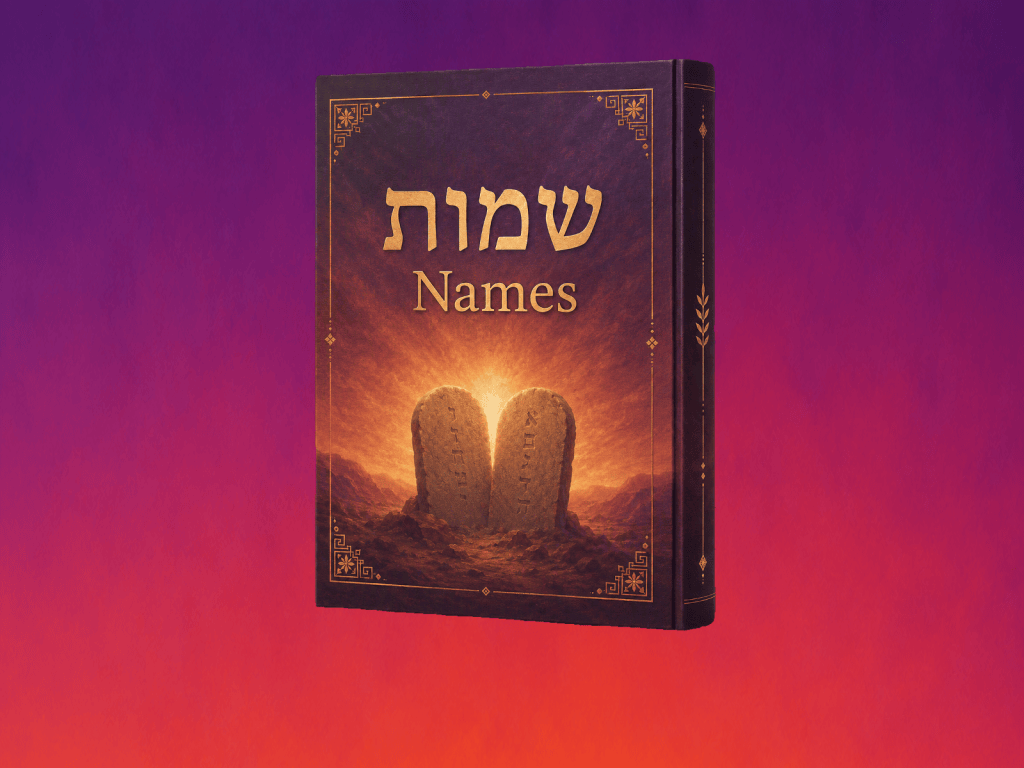
But the name of book of Exodus in Hebrew—is not Exodus. It is—Shemot, or Names.[1] This narrative was put together for those who were learning about their national traditions and their family lineage so that they could understand who they were and what their purpose was on earth.[2] In the early chapters, we learn about Shiphrah and Puah, Jochebed, Miriam, Moses, and Zipporah, while the Pharoah of Egypt is NEVER named! As we look at these chapters today, Aaron, his sons, and later, Bezalel and Oholiab are specifically named. God calls people by name!
And God knows OUR names as well. As we celebrate our church’s anniversary, we remember that God called actual people and brought them together. He called me and Jim. He called the core group of people that were interested in figuring out what church planting was all about. And he called you.
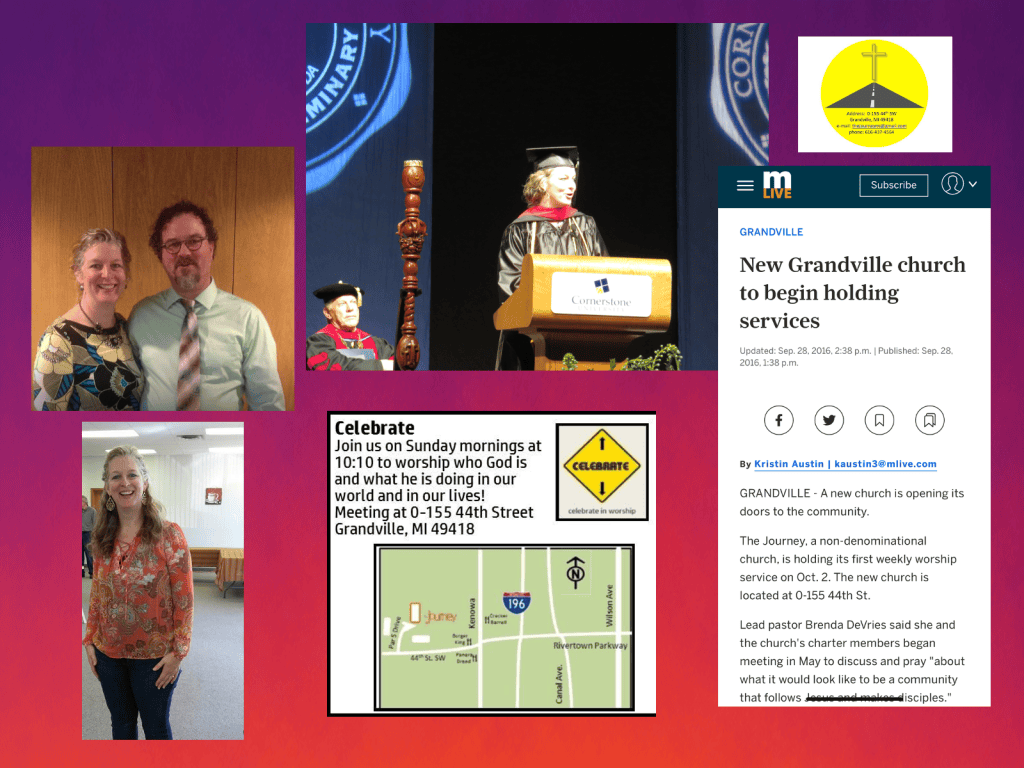
Let me share a few pivotal moments from our first year: In March of 2016, I had quit my job at a church, just before graduating from seminary. It was a hard move, but a necessary one under the circumstances. I had taken a class in church planting but had no first-hand knowledge of what that was all about. I met with various professors and local pastors as I finished my studies, to ask questions about what might be possible.
As Jim and I were praying about what came next, in May, the idea was put in motion to plant a church. A small group of us started visiting other church plants and started a prayer team. I continued to have more conversations with local pastors. One of them put me in touch with a guy he knew—who owned some real estate, so that we could have a service or two as a group.
On June 14, I met with a realtor at the location on 44th street who presented a generous and completely unexpected offer of six months in this space with no rent, just utilities. From there, things moved very fast! Churches began donating sound equipment, chairs, projectors, tv monitor screens and more.
By July 1 we had the keys. We had three preview services that summer. We bought lights, registered as a non-profit with the state, set up a website, and started sending out postcards to the neighborhood apartments. We installed the prayer team as our first elders: Doug, Dawn, and Louise, and then at the end of September the church ordained me as their pastor. Professors, Pastors, and leaders from other churches came to help, to pray, and to celebrate with us. The Journey was born! On October 2, we went full time.
In Exodus 19[3], God called ALL the Israelites to obey him, and to be set apart as a kingdom of priests and a holy nation. The apostle Peter says[4], ‘now that you have tasted that the Lord is good!…remember that you are being built together into a spiritual house—a temple—in which you all are a chosen people, a royal priesthood, a holy nation, God’s special possession, that you may declare the praises of him who called you out of darkness into his wonderful light.
God has called each and every person that has been a part of The Journey. And we’re celebrating that today. There have been people that have come and gone, and people who have stayed—but our purpose remains the same—we are a community of people following Jesus and making disciples.
Part Two: ‘DRESSED FOR DUTY’
Back to Exodus for a moment. As the tabernacle was being established, God called Aaron and his sons to serve as his priests. Aaron was Moses’ older brother—the spokesperson of God to Pharaoh, when Moses had protested that he was slow of speech and tongue.[5] God says:
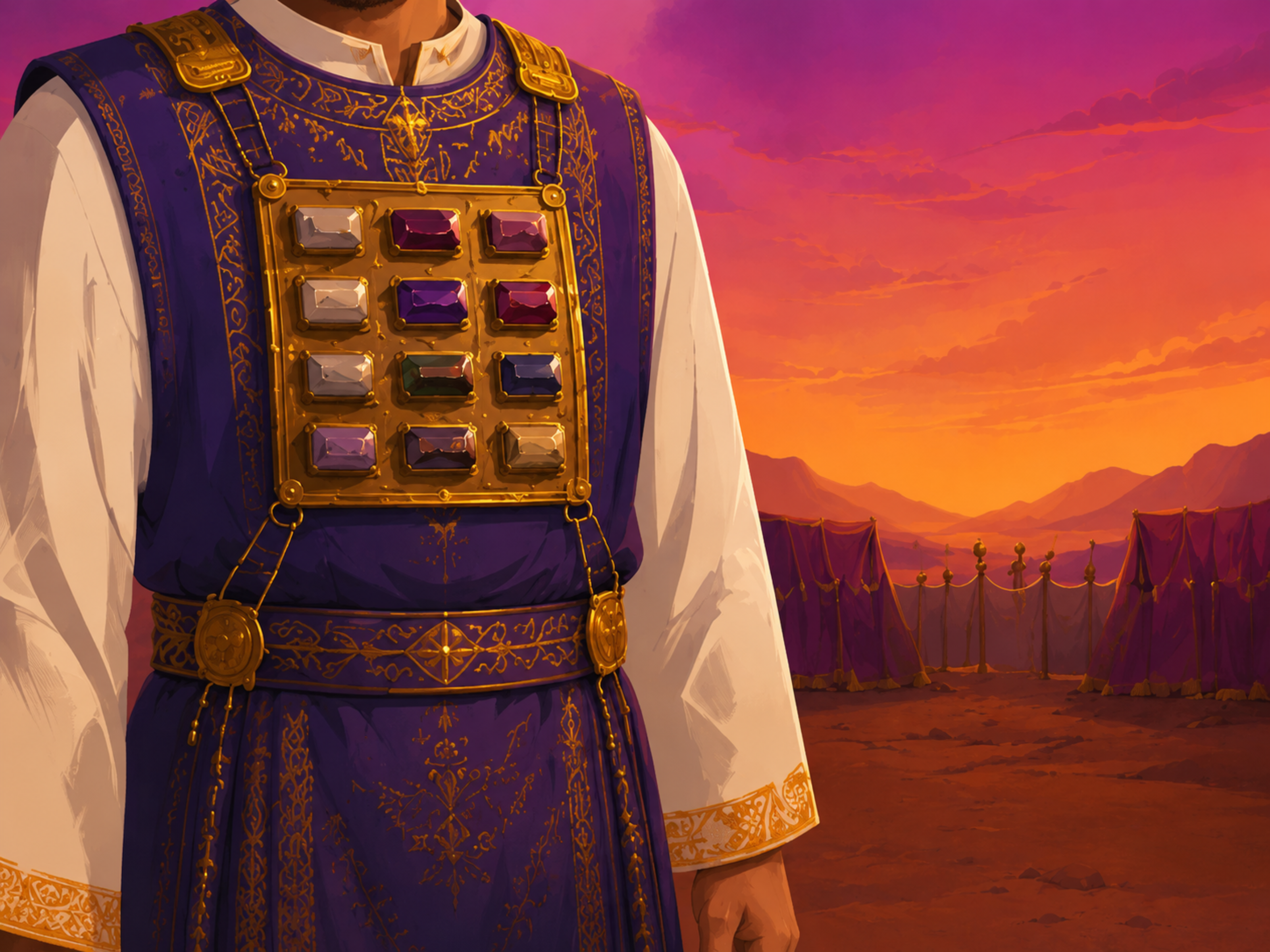
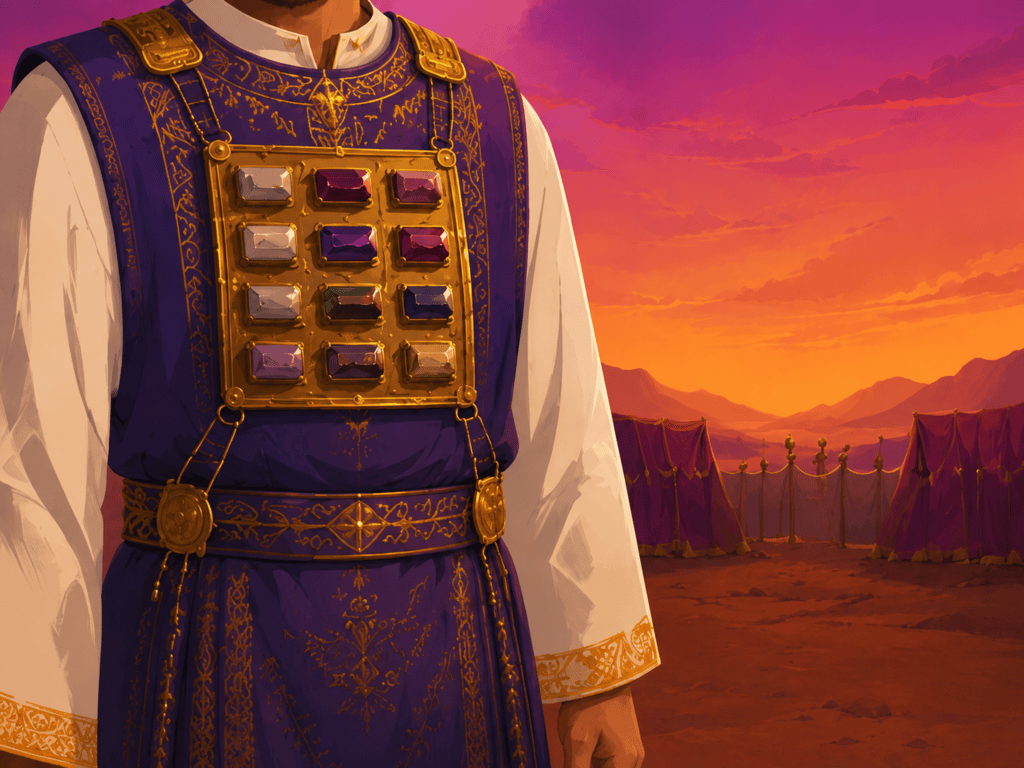
2 Make sacred garments for your brother Aaron to give him dignity and honor. 3 Tell all the skilled workers to whom I have given wisdom in such matters that they are to make garments for Aaron, for his consecration, so he may serve me as priest. 4 These are the garments they are to make: a breastpiece, an ephod, a robe, a woven tunic, a turban and a sash. They are to make these sacred garments for your brother Aaron and his sons, so they may serve me as priests. 5 Have them use gold, and blue, purple and scarlet yarn, and fine linen. Exodus 28:2-5 NIV
We don’t have a good idea about what all these pieces would look like, but the people would have understood these articles of clothing as something special. Aaron was the head priest, and the material used to make his sacred clothing was the same material that some of the expensive fabric that was used to make the Tabernacle.[6] It was clothing that was special—set apart—not something that regular people were permitted to wear.[7] The clothes signified priestly authority.[8]
I’m wearing a stole this morning. It’s not something I typically wear, but it is something that pastors in some denominations wear regularly. It represents that the pastor has been called and ordained to public ministry. It also signifies submission to Jesus and the joyful burden of serving God and the congregation. The flower shape on this one represents life and spiritual growth, as well as creating a pattern of a cross that brings to mind the crucifixion and resurrection of Jesus. The four quadrants like this traditionally signify the four Gospels: Matthew, Mark, Luke, and John, and spreading the Word of God to the four corners of the world. I’m wearing it because it ties in beautifully with our series. This particular stole is purple, which, in the context of Exodus, also fits well in the theme. It is a way of being ‘dressed for duty’ like the Exodus priests were.
Now, wearing this stole does not make me the equivalent of Aaron. The New Testament tells us that Jesus is now our great High Priest, and that all of God’s people together are a royal priesthood. But like Aaron’s garments, a stole makes a calling and its responsibilities visible. It distinguishes a role, but it is not meant to be a badge of personal importance. It represents the work of service, not status, and it reminds the person wearing it that they have been entrusted with work that belongs to God.
Aaron was not dressed to impress people. He was dressed to serve them—and to serve the God who had called him. And the garments themselves showed something about the people he was called to serve. God also said:
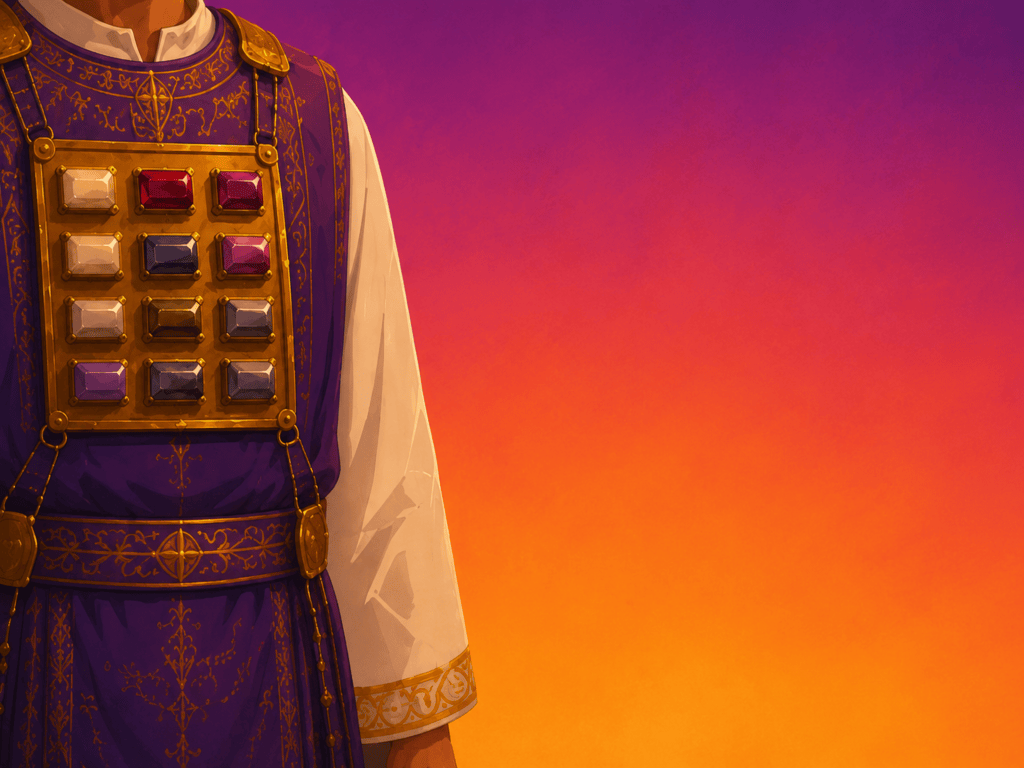
Fashion a breastpiece for making decisions—the work of skilled hands. Make it like the ephod: of gold, and of blue, purple and scarlet yarn, and of finely twisted linen. … There are to be twelve stones, one for each of the names of the sons of Israel, each engraved like a seal with the name of one of the twelve tribes. … Whenever Aaron enters the Holy Place, he will bear the names of the sons of Israel over his heart on the breastpiece of decision as a continuing memorial before the Lord. Exodus 28:15, 21, 29
We don’t know a lot about the Ephod or the Breastpiece—how they were used, or how they were understood. But again, note that Aaron carries the names of the people. He has responsibility for them, he loves and prays for them, and he even is told to wear a plate attached to the turban on his head that says, ‘Holy to the Lord,” reminding him that his life and service belong to God. Aaron carried the names of the tribes on his shoulders and over his heart. On his shoulders, they represented a responsibility he had been given. Over his heart, they represented people he was called to love and carry before God. When Aaron entered the Holy Place, it wasn’t only for himself. Symbolically, he brought the people and their names with him.
That is still at the heart of ministry. The church is never just a bunch of programs, services, or events. It is made up of people with names—people we pray for, teach, encourage, visit, baptize, marry, bury, feed, welcome, and love. Over these ten years, we have carried one another’s names. I have had the privilege of doing that as your pastor, but you have done it for one another too. You have carried names in prayer, in friendship, in classrooms, around tables, through illness and grief, and through seasons of celebration. That’s part of what it means to be dressed for duty: to remember that our service belongs to God and that it is always carried out for the sake of the people He knows by name.
Today our anniversary choir will be wearing robes as they sing the next song. The robes once served the worship of another congregation in Muskegon, and now they are being worn as The Journey celebrates ten years. The robes don’t make this choir more sacred, and this stole does not make me more sacred. But they are visible reminders that God calls ordinary people and clothes them with responsibility for sacred service.
God’s work didn’t begin with us, and it doesn’t belong solely to us. We receive what others have carried. We serve faithfully during the time entrusted to us. And one day, we will pass the work into other hands. The choir is going to sing, “Glorify the Lord with me; let us exalt His name together.” Maybe this is the best picture of our calling: different people, different voices, different gifts—all joining together in service to the same Lord.
When the people in Exodus offered up a burnt offering, it was all burnt up on the altar. But when they offered up a fellowship offering, some of it was given on the altar, some was given to the priest, and the rest—well, it was a barbecue! There was a celebration before God where the people could taste and see that the Lord was good. That’s part of what we’re doing today. And so we’re going to lift up an offering of praise today, as we celebrate our great and mighty God!
PART THREE–Filled for the Work, Exodus 31:1-11
Chapters 29 and 30 walk through the ordination process of Aaron and his sons, and all of that is fascinating and important, but we’re going to move to chapter 31. Because for all of the importance of the priesthood and leaders, God calls other people to sacred work as well.
Then the Lord said to Moses, 2 “See, I have chosen Bezalel son of Uri, the son of Hur, of the tribe of Judah, 3 and I have filled him with the Spirit of God, with wisdom, with understanding, with knowledge and with all kinds of skills— 4 to make artistic designs for work in gold, silver and bronze, 5 to cut and set stones, to work in wood, and to engage in all kinds of crafts. 6 Moreover, I have appointed Oholiab son of Ahisamak, of the tribe of Dan, to help him. Also I have given ability to all the skilled workers to make everything I have commanded you: 7 the tent of meeting, the ark of the covenant law with the atonement cover on it, and all the other furnishings of the tent— 8 the table and its articles, the pure gold lampstand and all its accessories, the altar of incense, 9 the altar of burnt offering and all its utensils, the basin with its stand— 10 and also the woven garments, both the sacred garments for Aaron the priest and the garments for his sons when they serve as priests, 11 and the anointing oil and fragrant incense for the Holy Place. They are to make them just as I commanded you. Exodus 31:1-11 NIV
Notice how personal this calling is. God doesn’t say, “Find somebody who knows how to build things.” No. He names Bezalel, son of Uri, the son of Hur, of the tribe of Judah, and Oholiab, son of Ahisamak, of the tribe of Dan. That’s pretty specific. God knows their names. He knows their families, and where they come from, and God knows what He has been preparing them to do. That brings us back to where we began today. Exodus is the book of names. God calls particular people for particular work.
Bezalel was not a priest. He was not going to wear Aaron’s sacred garments or carry the names of Israel over his heart. His calling looked different. He was an artist and a craftsperson. God says, “I have filled him with the Spirit of God—with wisdom, understanding, knowledge, and all kinds of skills.” Sometimes we think of spiritual work as the things that happen from a platform: preaching, leading worship, praying, or teaching the Bible. But Exodus gives us a much larger picture. Bezalel’s creativity, skill, and careful workmanship, and Oholiab’s skills were all part of creating a place where people could encounter the presence of God.
God calls, shapes, and equips His people for sacred service.
When we look back over ten years at The Journey, we can see that God has done the same thing here. God has brought people who could preach and teach, but also people who could sing and play, run technology, prepare food, teach children, organize events, decorate rooms, repair things, manage finances, welcome strangers, visit the sick, pray faithfully, give generously, set up tables, wash dishes, and do hundreds of other things that may never have been noticed publicly. Some of those gifts have been visible. Many of them have been offered quietly. But ALL of them have helped create a community in which people could experience the presence and love of God. And God doesn’t just call people; He equips the people He calls. Aaron was clothed for his calling. Bezalel was filled with the Spirit for his. Neither of them was expected to manufacture sacred service out of his own strength. And neither of them was asked to do the work alone. God appointed Oholiab to work alongside Bezalel, and then God spoke of “all the skilled workers” whose abilities would contribute to the tabernacle.
The tabernacle was never intended to be a one-person project. And neither is the Church. Every person whose face we will see in the pictures today has been part of this story. Some were with us for a season. Some are still here. Some are now with the Lord. Each brought something of themselves, and God used those gifts to help shape this church. An anniversary is not only a time to ask, “What have we accomplished?” It’s also a time to ask, “Who has God been shaping us to become?” And I believe God has been shaping us into a people prepared to serve in His presence and carry His presence into the world—a people who celebrate in worship, connect in community, and contribute in service. Ten years are behind us, but God is not finished shaping us. There are gifts among us that are still being discovered. There are people God is still preparing, and there is work ahead of us that we can’t yet see. But today, we thank God for everything He has done—and we offer ourselves to Him again for whatever comes next.
PRAYER: God, thank You for calling us by name and bringing us together as Your Church. Thank You for every person who has been part of The Journey—for those whose service has been visible and for those whose faithfulness has been known mostly to You. Thank You that each of us has a place in Your body and a purpose in Your kingdom. Thank You for the many gifts You have given: gifts of wisdom and creativity, leadership and generosity, compassion and hospitality, music and teaching, prayer and practical service. Fill us again with Your Holy Spirit. Teach us to recognize one another’s gifts, to work alongside one another, and to offer what we have with humility and joy. Continue shaping us into a people who celebrate in worship, connect in community, and contribute in service. Prepare us for the work that is still ahead and may everything we do help others encounter Your presence and Your love. May Your Church be a living witness to Your grace until You make all things new. In Jesus’ name we pray, Amen.

Bibliography
Robert Altar, The Five Books of Moses, New York: W.W. Norton & Company, 2004.
John I. Durham, Word Biblical Commentary: Exodus, Waco: Word Books, 1987.
Victor Hamilton, Exodus, Grand Rapids, Baker Academic, 2011.
Douglas K. Stuart, Exodus, Nashville: B&H Publishing Group, 2006.
Small Group Questions
The God Who Comes Near. Week Four: Dressed for Duty
Exodus 28:1-5, 15, 21, 29; 31:1-11
Icebreaker Question
- Have you ever had to wear a uniform, robe, costume, or other special clothing for a job, team, performance, or occasion? What did that clothing communicate about your role?
Called by Name
Read Exodus 28:1 NIV
Have Aaron your brother brought to you from among the Israelites, along with his sons Nadab and Abihu, Eleazar and Ithamar, so they may serve me as priests.
Read 1 Peter 2:4–10 NIV
As you come to him, the living Stone—rejected by humans but chosen by God and precious to him— 5 you also, like living stones, are being built into a spiritual house[a] to be a holy priesthood, offering spiritual sacrifices acceptable to God through Jesus Christ. 6 For in Scripture it says: “See, I lay a stone in Zion, a chosen and precious cornerstone, and the one who trusts in him will never be put to shame.” 7 Now to you who believe, this stone is precious. But to those who do not believe, “The stone the builders rejected has become the cornerstone,” 8 and, “A stone that causes people to stumble and a rock that makes them fall.” They stumble because they disobey the message—which is also what they were destined for. 9 But you are a chosen people, a royal priesthood, a holy nation, God’s special possession, that you may declare the praises of him who called you out of darkness into his wonderful light. 10 Once you were not a people, but now you are the people of God; once you had not received mercy, but now you have received mercy.
Discussion
- Exodus 28:1 names Aaron and his sons, and later Bezalel and Oholiab. Why do you think Scripture is so specific about their names, families, and tribes?
- God did not simply establish an organization called The Journey—or any other church, for that matter. He called actual people and brought them together. How is a church shaped differently when we remember that it is made up of people God knows by name?
- Who has helped you experience the church as a community where you are known, valued, and included?
- First Peter describes all God’s people as “a royal priesthood” and “a holy nation.” What does that tell us about the calling and purpose of ordinary Christians—not only pastors and public leaders?
Dressed for Duty
Read Exodus 28:2–5, 9-12, 21, and 29 NIV
2 Make sacred garments for your brother Aaron to give him dignity and honor. 3 Tell all the skilled workers to whom I have given wisdom in such matters that they are to make garments for Aaron, for his consecration, so he may serve me as priest. 4 These are the garments they are to make: a breastpiece, an ephod, a robe, a woven tunic, a turban and a sash. They are to make these sacred garments for your brother Aaron and his sons, so they may serve me as priests. 5 Have them use gold, and blue, purple and scarlet yarn, and fine linen. 9Take two onyx stones and engrave on them the names of the sons of Israel 10 in the order of their birth—six names on one stone and the remaining six on the other. 11 Engrave the names of the sons of Israel on the two stones the way a gem cutter engraves a seal. Then mount the stones in gold filigree settings 12 and fasten them on the shoulder pieces of the ephod as memorial stones for the sons of Israel. Aaron is to bear the names on his shoulders as a memorial before the Lord. 21 There are to be twelve stones, one for each of the names of the sons of Israel, each engraved like a seal with the name of one of the twelve tribes.
29 Whenever Aaron enters the Holy Place, he will bear the names of the sons of Israel over his heart on the breastpiece of decision as a continuing memorial before the Lord.
Discussion
- Aaron’s garments gave him dignity and authority, but they also reminded him that he had been set apart to serve God and the people. What is the difference between receiving a position as a form of status and receiving it as a responsibility to serve?
- Aaron carried the names of Israel on his shoulders and over his heart. What do those two images—shoulders and heart—suggest about responsibility, love, and prayer?
- What do you notice about the way the twelve tribes are represented on the breastpiece? Why might both the individual stones and the single breastpiece matter?
Filled for the Work
Read Exodus 31:1–11 NIV
Then the Lord said to Moses, 2 “See, I have chosen Bezalel son of Uri, the son of Hur, of the tribe of Judah, 3 and I have filled him with the Spirit of God, with wisdom, with understanding, with knowledge and with all kinds of skills— 4 to make artistic designs for work in gold, silver and bronze, 5 to cut and set stones, to work in wood, and to engage in all kinds of crafts. 6 Moreover, I have appointed Oholiab son of Ahisamak, of the tribe of Dan, to help him. Also I have given ability to all the skilled workers to make everything I have commanded you: 7 the tent of meeting, the ark of the covenant law with the atonement cover on it, and all the other furnishings of the tent— 8 the table and its articles, the pure gold lampstand and all its accessories, the altar of incense, 9 the altar of burnt offering and all its utensils, the basin with its stand— 10 and also the woven garments, both the sacred garments for Aaron the priest and the garments for his sons when they serve as priests, 11 and the anointing oil and fragrant incense for the Holy Place. They are to make them just as I commanded you.”
Discussion
- What does the passage emphasize about Bezalel before describing the work he will do?
- Bezalel did artistic and practical work involving metal, stone, wood, fabric, and other crafts. Does this expand or challenge the way you normally think about spiritual gifts and sacred service? How?
- What do you notice about the language God uses in verses 2, 3, and 6: “I have chosen,” “I have filled,” “I have appointed,” and “I have given”?
- God appointed Oholiab and “all the skilled workers” to serve alongside Bezalel. Why was it important that the tabernacle was not a one-person project? What does that teach us about the Church?
- Where have you seen people working together to help others encounter God’s presence and love?
God calls, shapes, and equips His people for sacred service.
- What do you hope will remain true about your church in its next chapter?
- What might it look like for us to continue becoming people who:
- Celebrate in worship?
- Connect in community?
- Contribute in service?
Invite each person to finish this sentence:
“One thing I thank God for in the life of our church is…”
Looking Back at the Anniversary
- What moment, photograph, song, story, or part of Sunday’s anniversary celebration stayed with you? Why do you think it affected you?
Personal Application
Which of these is God inviting you to do this week?
- Carry someone’s name in prayer and care.
- Offer a gift or skill that God has given you.
- Encourage someone whose quiet service often goes unnoticed.
- Work alongside someone instead of trying to serve alone.
Closing Prayer/Leader
God, thank You for knowing us and calling us by name. Thank You for every person You have brought into your church and for every visible and quiet gift that has been offered in Your service. Teach us to carry one another on our shoulders and over our hearts. Fill us with Your Spirit, and show us how to use the wisdom, abilities, and experiences You have given us. Help us to recognize one another’s gifts and to work faithfully alongside one another. Continue shaping us into people who help others encounter Your presence and love. In Jesus’ name, amen.
[1] Robert Altar, The Five Books of Moses, New York: W.W. Norton & Company, 2004, 307.
[2] Douglas K. Stuart, Exodus, Nashville: B&H Publishing Group, 2006, 57.
[3] Exodus 19:5-6.
[4] 1 Peter 2:2-9.
[5] Exodus 4:10-17.
[6] John I. Durham, Word Biblical Commentary: Exodus, Waco: Word Books, 1987, 385.
[7] Victor Hamilton, Exodus, Grand Rapids, Baker Academic, 2011, 468.
[8] John I. Durham, Word Biblical Commentary: Exodus, Waco: Word Books, 1987, 389.

