
About these posts
These posts grow out of sermons I’ve written for my local church community. You’re welcome to use them—for teaching, small groups, preaching, or personal reflection. If you share them elsewhere, please include a simple attribution. If you’d ever like to share how they’re being used, you’re welcome to reach out through the Contact button.
I have a handful of moments in my life that have cut me to the core. Intense sorrow at losing someone’s physical presence through death. Heartache at leaving a job I loved, sadness at the junction I found myself in, and the misery of dealing with unexpected physical pain. Along with grief can come numbness, anger, guilt, disbelief, and depression. Some people get quiet. Some stay busy. Some try to hold everything together. Sometimes we wonder if things will ever feel normal again. While it can be tempting to avoid or detach from grief, or call it a lack of faith, grief itself is a natural, human response to loss.
Grief has an uncanny way of revealing what we really believe about life, about love, and even about God. Today we come to a story where grief is palpable—a family that is devastated by loss, and look at what we can learn about bringing our pain to Jesus.
We’re going to enter into a story in the gospel of John today. My spiritual formation professor—Sharon Brown, walked through this story with a class I attended during seminary, and it was deeply moving for me. I pray that what spoke to me will touch your heart, too, and that God will be near to us through his Word as we study it together.
John 11 is the familiar story of Lazarus. It’s SO familiar, that we know that it’s a happy ending. But we don’t often linger at the difficult parts—where everything is disheartening and discouraging and no one knows for sure how everything will turn out. So, if you would, let’s walk through this story together a little bit at a time, so that we gain some empathy and understanding for the characters as we put ourselves in their place.
Now a man named Lazarus was sick. He was from Bethany, the village of Mary and her sister Martha.2 (This Mary, whose brother Lazarus now lay sick, was the same one who poured perfume on the Lord and wiped his feet with her hair.) 3 So the sisters sent word to Jesus, “Lord, the one you love is sick.” John 11:1-3 NIV
“Lord, the one you love…” The disciple who wrote this gospel, John, is known as the one Jesus loves. He writes of himself this way, not as arrogant, but understanding that he is the beloved. The disciples understood this. They knew that Jesus loved them. The word for “love” here is phileō—brotherly love—not agape. Jesus was fond of them. He loved them and considered them his friends. That’s a good thing. Mary and Martha knew that Jesus loved them. They were confident of it. Jesus had been to their house many times, and John includes the story of Mary pouring perfume on the Lord–even though that story comes a few chapters after this.
This family is relatively well off—they provide hospitality in their home, Mary has expensive nard, they support Jesus’ ministry.[1] Everyone knows that Mary and Martha and Lazarus are special friends of Jesus. And because they are special friends, they believe in special consideration. They sent word to Jesus through a servant. The one you love is sick… “Of course, Jesus will come. Of course, Jesus will heal Lazarus. We’ve seen him heal the blind and the lame. We’ve heard so many stories about how he’s healed other people, too. He is our friend! Of course he’ll come.”
4 When he heard this, Jesus said, “This sickness will not end in death. No, it is for God’s glory so that God’s Son may be glorified through it.” 5 Now Jesus loved Martha and her sister and Lazarus. 6 So when he heard that Lazarus was sick, he stayed where he was two more days… John 11:4-6 NIV
When he heard that Lazarus was sick, he stayed where he was two more days? Two days! Put yourself in Mary and Martha’s place. They send the servant. They wait. They watch at the window. The servant comes back. Jesus does not. And Lazarus… keeps getting worse.
How many times have you gone through this in your own life? Maybe you go through a trying time. or you get sick, or lose a friend, or your job. And when tough times come, you send out word to God—You pray in anticipation—and you wait. But every time you look up—nothing. And you wonder, ‘where is He?’ Maybe you always deeply believed that if God loves you, he will keep deep suffering far from you. God loves me, and so if I pray, he will come and make everything better. But sometimes you wait—and you don’t see God at all. Because he loved Mary, Martha and Lazarus, he stayed where he was two more days.
…and then he said to his disciples, “Let us go back to Judea.” 8 “But Rabbi,” they said, “a short while ago the Jews there tried to stone you, and yet you are going back?” 9 Jesus answered, “Are there not twelve hours of daylight? Anyone who walks in the daytime will not stumble, for they see by this world’s light. 10 It is when a person walks at night that they stumble, for they have no light.” 11 After he had said this, he went on to tell them, “Our friend Lazarus has fallen asleep; but I am going there to wake him up.” 12 His disciples replied, “Lord, if he sleeps, he will get better.” 13 Jesus had been speaking of his death, but his disciples thought he meant natural sleep. 14 So then he told them plainly, “Lazarus is dead, 15 and for your sake I am glad I was not there, so that you may believe. But let us go to him.” 16 Then Thomas (also known as Didymus) said to the rest of the disciples, “Let us also go, that we may die with him.” John 11:7-16 NIV
Jesus says plainly: “Lazarus is dead. And I am glad I was not there.” Wait, what? He’s not just glad—the verb here is ‘to rejoice’! I REJOICE that I wasn’t there! How can he rejoice? The reference made me think of James 1:2-3
2 Consider it pure joy, my brothers and sisters, whenever you face trials of many kinds, 3 because you know that the testing of your faith produces perseverance. James 1:2-3
Rejoice in the testing of your faith, writes Jesus’ little brother. I rejoice, Jesus says, because this is all so that you may believe.
17 On his arrival, Jesus found that Lazarus had already been in the tomb for four days. John 11:17 NIV
Some Jewish traditions in the ancient world held that for three days after death, the soul lingered near the body[2], hoping to return. But by the fourth day, when decay had begun, death was considered final and irreversible. Lazarus…is definitely dead. Mary and Martha turn to focus on the burial preparations, and they lay him in the tomb. It’s over. After four days, there is no more hope[3], no more prayers, no more watching out the door for Jesus. The reality of death has set in.
18 Now Bethany was less than two miles from Jerusalem, 19 and many Jews had come to Martha and Mary to comfort them in the loss of their brother. 20 When Martha heard that Jesus was coming, she went out to meet him, but Mary stayed at home. John 11:18-20
This is Mary—the one who sat at Jesus’ feet when Martha was busy in the kitchen. Mary, who washed Jesus’ feet with her hair. Mary, who was Jesus’ friend—stayed at home. Was she hurt? Angry? What would YOU feel like? Not only does your friend not show up when your brother is sick, this was the ONLYperson who could do something about the situation. And he didn’t come. Martha does go out, however. Martha—remember- the one not afraid to get in Jesus’ face? The one who has a mouth—who spoke up in front of the disciples and told Jesus to…make her sister help her in the kitchen?
21 “Lord,” Martha said to Jesus, “if you had been here, my brother would not have died. John 11:21
If you had been here, Jesus…Like I thought you would. Like I asked you to. Like I thought you owed me because I was your friend. If you had been here—my brother would not have died. Do you hear disappointment? Anger? Even accusation?
22 But I know that even now God will give you whatever you ask.” John 11:22 NIV
God WILL give you—the verb tenses are important here. I want us to pay attention, because they mean something. Martha is talking future tense. I know that God WILL (in the future) give you whatever you ask.
23 Jesus said to her, “Your brother will rise again.” 24 Martha answered, “I know he will rise again in the resurrection at the last day.” John 11:23-24 NIV
Martha answers in the future tense again. Someday, I know it will be better. It will get better at the last day when the dead are raised and we will be reunited. Some day—in the future. Yes, Jesus. I know. I believe. But Jesus is not just the one who believes in resurrection.[4]
25 Jesus said to her, “I AM the resurrection and the life. The one who believes in me will live, even though they die; 26 and whoever lives by believing in me will never die. Do you believe this?” John 11:25-26 NIV
Jesus says, “I AM”. He uses the same form again that God used to Moses in the burning bush. I AM. Present tense. I am—RIGHT NOW—the resurrection and the life. Yes, in the future, yes in the past, but even more in the present. I AM—right now. He keeps speaking in the present tense. Do you believe it for right now, Martha? Her answer is interesting. Again, the verb tenses mean something.
27 “Yes, Lord,” she replied, “I believe that you are the Messiah, the Son of God, who is to come into the world.” John 11:27 NIV
In the Greek it reads…I HAVE believed (past tense) that you are the Messiah, the Son of God, who is to come (future) into the world. I did believe it. When you came, I believed. A few days ago, I believed. I’m not so sure right now. Martha believes truly, but inadequately.[5]
28 After she had said this, she went back and called her sister Mary aside. “The Teacher is here,” she said, “and is asking for you.” John 11:28 NIV
Martha has said her peace, and she is wrestling with what happened and with what Jesus said to her. She also recognizes that Mary needs to see Jesus. How beautiful it is that she goes to Mary and gets her to go to him. As brothers and sisters in Christ, for the ones who can’t bring themselves to God when it hurts, we need to bring them to him. Sometimes people just need a nudge. And Mary gets one.
When Mary heard this, she got up quickly and went to him. 30 Now Jesus had not yet entered the village, but was still at the place where Martha had met him. 31 When the Jews who had been with Mary in the house, comforting her, noticed how quickly she got up and went out, they followed her, supposing she was going to the tomb to mourn there. 32 When Mary reached the place where Jesus was and saw him, she fell at his feet and said, “Lord, if you had been here, my brother would not have died.” John 11:30-32 NIV
It seems like Mary is always at his feet. She learned at his feet as a disciple, she wiped his feet with her tears…and here she is crying at his feet. And here, at his feet, she lashes out at him. If you had been here…My brother would not EVER have died. This would NEVER happen if you had been here.
Have you ever thought that? God, if you were really with us—the war in Ukraine would never have happened. The attacks in Israel and Gaza would not have happened. Children would not be dying in schools and hospitals. Families would not be fleeing their homes in fear. School shootings would not keep happening. The earthquake in Turkey and Syria would not have buried whole families. The fires in Maui would not have destroyed an entire town. Those hostages would not have been taken. Those children would not have died. If you had been here… WHERE WERE YOU?!!!
33 When Jesus saw her weeping, and the Jews who had come along with her also weeping, he was deeply moved in spirit and troubled. 34 “Where have you laid him?” he asked. “Come and see, Lord,” they replied. John 11:33-34 NIV
Jesus is deeply moved—moved with deepest emotion. The word suggests a ‘thundering in his self.’ He sees the sisters’ pain. He feels the pain, too. He doesn’t ignore it. He is a real human being—the Word of God in the flesh.[6] But he doesn’t excuse his absence, either. He simply asks—’where have you laid him’?
And He asks us, too—where have you laid your grief? Where have you laid your disappointment? Where have you laid your bitterness? Where is your problem that is buried deep? Come and see, Lord. Are you willing to take Jesus to your hurt? To the things that have been long buried and are considered dead?
35 Jesus wept. John 11:35 NIV
The shortest verse in the Bible. Jesus wept. Some say he was weeping in anger and frustration at their lack of faith. And maybe that was part of it. But we mustn’t gloss over the fact that he wept. He knew the punch line—he knows what’s coming next. He came for a reason. But he sees their tears—he feels their sorrow—these are his friends! And they’re hurting and angry and Death has robbed them of their brother. This isn’t the way this earth was supposed to be. Death wasn’t God’s original plan for mankind. Jesus came to defeat Death. It is his enemy. And it is our enemy, too.
Notice, Jesus didn’t say to Mary and Martha, ‘get over it.’ Jesus wept. And we need to weep, too. Look at Job, and David’s Psalms, Lamentations, and more. We are likely to be uncomfortable when people want to vent or grieve, or when they are disappointed with God. We may inadvertently want to jump to the punch line right away. We’d like to quote Romans 8:28 to people in pain—“God works out all things for good”, right?
Yes, but that doesn’t stop us from experiencing grief.[7] or we go too quickly to Job when HE says, ‘the Lord gives and the Lord takes away, blessed be the name of the Lord.’ But that happens in chapter one, and THEN Job has to wrestle with the pain and with his emotions and his experience. The point is not that Job got all his stuff back and more. Rather, he came face to face with the one who could handle his questions and his pain, and who had not abandoned him. In the end, Job’s questions are met not with simple answers, but with the presence of God.
As Christians, we must learn that lament is not weakness, but it can be a faithful way of bringing our grief to God. It’s a way of honestly holding up our sorrow, questions, and pain. Lament lives in the tension between what we believe about God and what we are experiencing in the present moment. We have divine permission to grieve the losses we encounter. God welcomes our lament. We are allowed to bring our anger, grief and disappointment to Jesus. “I hurt! I don’t understand! Why weren’t you here?” Couldn’t you have chosen another way through which to glorify your name?”[8] … Jesus can take it. ‘Where have you laid him?’ Jesus asks. Come and see, Lord.
36 Then the Jews said, “See how he loved him!” 37 But some of them said, “Could not he who opened the eyes of the blind man have kept this man from dying?” 38 Jesus, once more deeply moved, came to the tomb. It was a cave with a stone laid across the entrance.39 “Take away the stone,” he said. “But, Lord,” said Martha, the sister of the dead man, “by this time there is a bad odor, for he has been there four days.” John 11:36-38 NIV
Remember the four day rule—it’s over! There’s no going back. ‘Jesus, it smells bad. Do you really want to open this up?’
40 Then Jesus said, “Did I not tell you that if you believe, you will see the glory of God?” John 11:40 NIV
Martha, is this too hard to believe? Is it really unimaginable that I can raise someone from the dead? Remember, Mary and Martha don’t know what is going to happen. They didn’t get to read the end of the story first. Martha is tired and worn out. Put yourself in her shoes once. Her brother is dead. There is no hope. “You want me to do what, Jesus?”
Is it too hard to believe that Jesus can take YOUR pain and make something good out of it? Is it too hard to believe that Jesus can take what is dead and make it alive again? In your life—what is holding you back from taking away the stone? Can you take the stone off the relationship that is declared dead? Can you take the stone off the doctor’s words that say there is no cure? Can you take the stone off the dream that you once had for doing something great in God’s kingdom, but everyone says it’s over? Do you believe that Jesus CAN raise it from the dead?
Jesus invites us to bring our grief to him—and to see that resurrection life is still possible.
If I’m honest, I DO struggle with doubt about this kind of thing. I read a story last week through Frontier Missions about a woman named Babani. She became very sick, and while her family was taking her to the hospital, she suffered a heart attack and died. In grief, the family brought her body home and called Dan, the missionary church planter, to come pray. When Dan arrived, everyone in the house was crying. He asked the family to leave the room while he prayed over her. During the prayer, she suddenly moved and came back to life. Dan then called the family back into the room. They were shocked and overwhelmed to see her alive…and they began worshipping Jesus. News of the miracle spread throughout the surrounding villages, opening doors for ministry in six new villages and leading to rapid church growth.[9]
As I read it, I had goose bumps. But in the back of my mind, I also doubted. Does God really do that? Today? But there are other stories like that[10] from all over the world.[11] Many times—we doubt the power of God in our own lives. But Jesus says, ‘Where have you laid it?” ‘Take away the stone.’
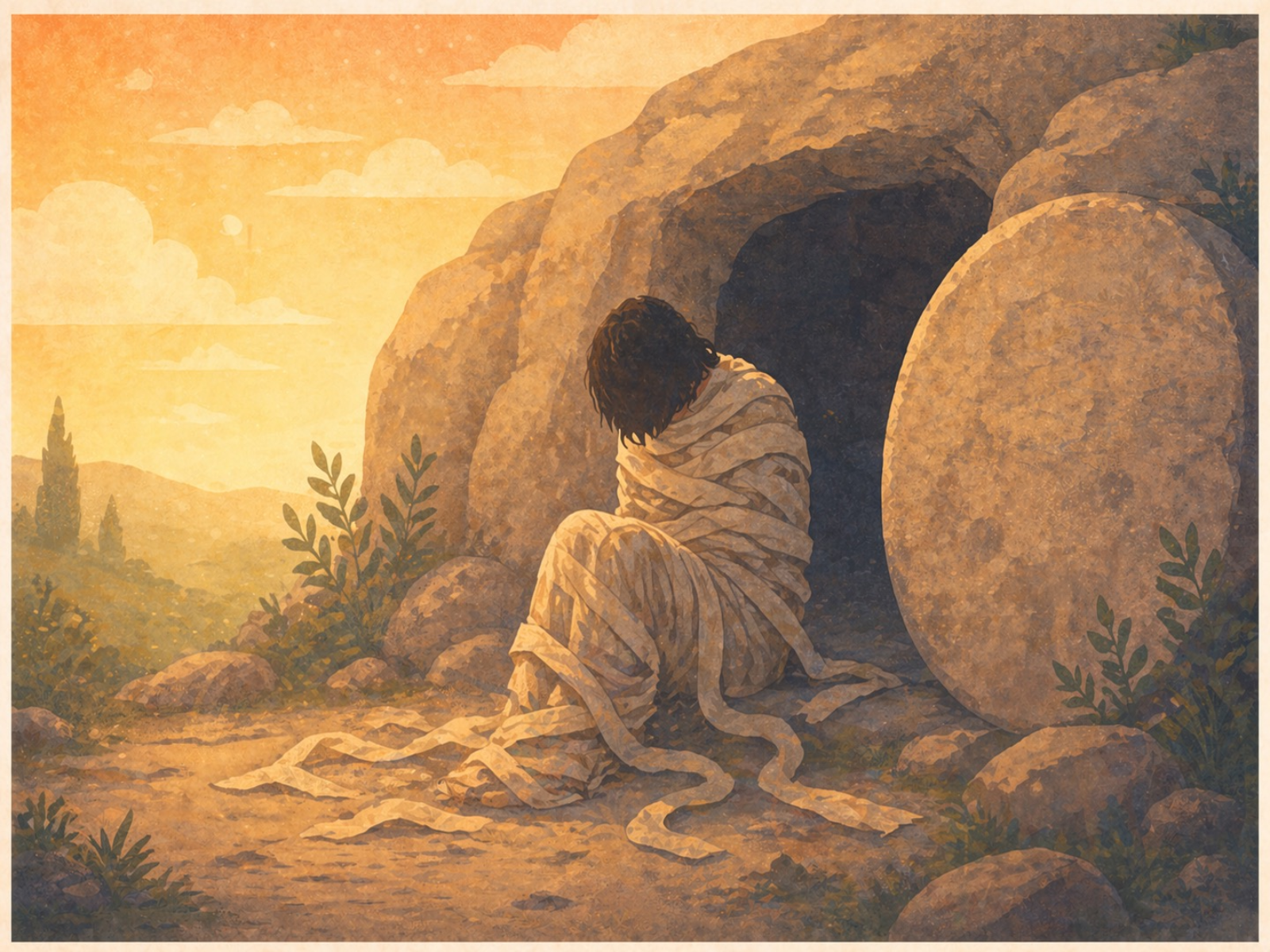
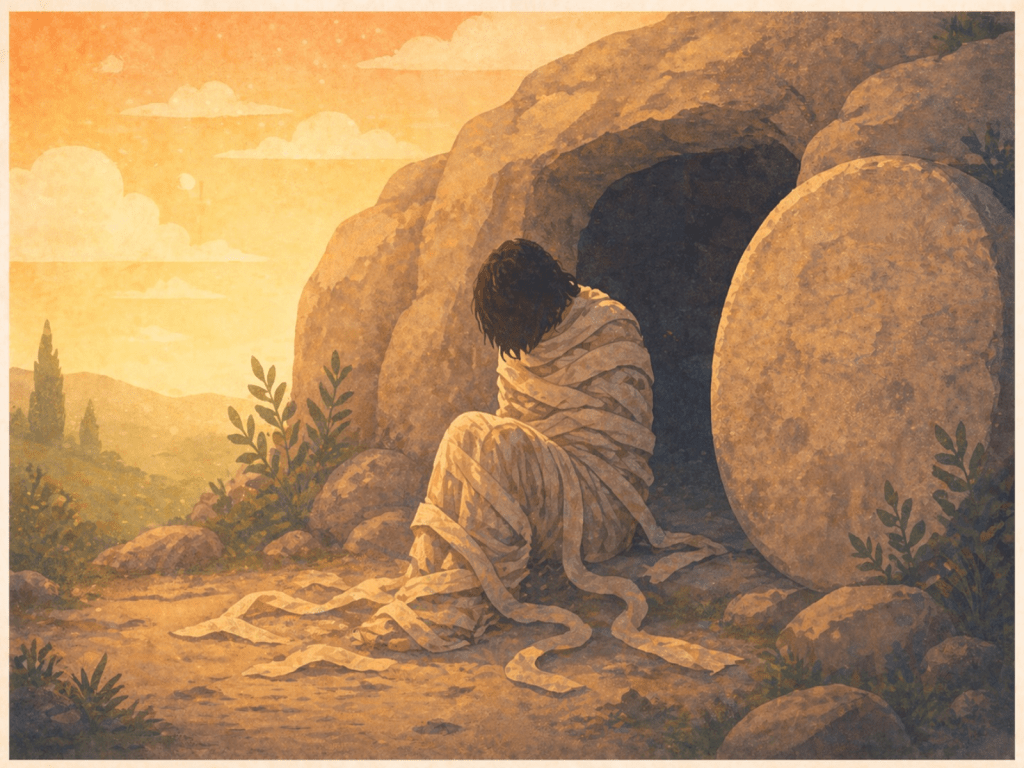
41 So they took away the stone. Then Jesus looked up and said, “Father, I thank you that you have heard me.42 I knew that you always hear me, but I said this for the benefit of the people standing here, that they may believe that you sent me.” 43 When he had said this, Jesus called in a loud voice, “Lazarus, come out!” 44 The dead man came out, his hands and feet wrapped with strips of linen, and a cloth around his face. Jesus said to them, “Take off the grave clothes and let him go.” John 11:41-44
Jesus has the power to give life and overcome death prior to his own resurrection, because he is already the resurrection and the life.[12] And this resurrection power of Jesus is the end of this story. Or—is it just the beginning?
We all go through grief and pain and loss. It’s an ever-revolving door and part of life. And…Lazarus died again—Did you ever think about that? Lazarus did not experience resurrection in the same way that Jesus did.[13] Someone had to go through the entire process again of wrapping him and burying him and going through the mourning process…again. But it was AFTER the resurrection of Jesus, and that makes all the difference. Jesus’ resurrection is our Christian hope! It’s the one thing that we believe in and rely on and stake everything we have on—because Jesus’ resurrection means OUR resurrection. His story is a foundation for OUR story. It’s not that everything will always turn out okay in this life. But we have HOPE for the future, AND we can safely take our grief to a Savior who cares for us.
Jesus invites us to bring our grief to him—and to see that resurrection life is still possible.
Come and see, Lord.
Writer and theologian Ron Rolheiser talks about the Paschal Mystery as a pattern for the grieving and transformation we experience in life[14]—Good Friday, Easter, the Forty Days, Ascension, and Pentecost. I think it gives us language and direction when we go through the grieving process, too. Here’s the simple framework…
GOOD FRIDAY—the day of death. This is when no one knows the outcome. It’s like Mary and Martha when Lazarus was completely dead. There was no hope.
In this first step of grieving, we name what has died—even the subtle losses we experience as part of life. The death of a dream or hoped-for future; a friendship changing or fading; loss of health, energy, or capacity; transitions into aging; financial strain or instability; unanswered prayers over many years…If you had been here—this would not have happened. We had hoped THAT—but THIS has happened instead. We waited for you, God—and you did not come. We lament—It’s Good Friday.
And then there’s EASTER—Jesus has risen. After a process of grief, we may experience new life. God may show up in unexpected ways, new signs of life are showing
But then there is the time after Easter. Ron Rolheiser calls this “the FORTY DAYS”—the difficult in-between season where resurrection has begun, but life still feels unfamiliar. Jesus is risen and he meets with the disciples, but in a totally different way. They can’t hold him in the way that they used to. It’s a new normal for them. Something has died—and something new is being done. You may be going through this in some area of your life. Maybe it’s in your job, or in a relationship. Maybe it’s with a season of life that is coming to an end. Maybe you see the near future and are already preparing yourself for what is to come. This is a grieving process. You don’t know the outcome. Resurrection has happened, but adjustment still needs to happen.
You may want everything to go back to the way it was. But resurrection usually means: something new is emerging, and now we must learn how to live in it. There will be something new, but it will be a new normal. and something we have to adjust to as God brings his resurrection power into our lives. Eventually we must release what was, stop clinging, and trust God into the future.
And that brings us to ASCENSION. This is when Jesus goes into heaven. Afterwards, the disciples stand there wondering what has happened. In our lives, this is the moment where we let go: Let go of what was, and stand there wondering what might possibly come next. It’s where we have to let go of the past and trust God for the future.
And finally, there is PENTECOST. The coming of the Holy Spirit—and the power to walk in the new life he has begun in us. This is when you get a new spirit, new identity, new mission, new empowerment.
These cycles happen: to you as a person, to us as a church. It’s a process. Good Friday, Easter, 40 days, Ascension, and Pentecost. We are always living this cycle as we experience God’s work in us.
Jesus said, I AM the resurrection and the Life. He can take something that we thought has died and bring it to life—or bring us new life, in ways we hadn’t known before. So maybe this week, the invitation is simply this: Come and see, Lord. Come and see the places where we hurt. Come and see what we’ve buried. Come and see the grief we carry, the disappointment we hide, the prayers we thought went unanswered.
Like Mary and Martha, maybe we don’t fully understand what he is doing. Maybe we are still waiting. Maybe we are still grieving. Maybe we still have questions. But we are learning that lament is not the absence of faith. Sometimes lament is faith refusing to let go of God in the middle of pain.
Jesus invites us to bring our grief to him—and to see that resurrection life is still possible.
We are the people Jesus loves. We are the beloved. And even in the places that feel hopeless or unfinished, the “I AM” is still present among us—still meeting us in our sorrow, still calling us forward, and still bringing life where we thought death had the final word. Jesus calls to you now. Take off your grave clothes and go.[15]
PRAYER: Almighty God, we come to you today, in awe of who you are. You are powerful, you are kind, and you are gracious with our grief. We live in a broken world, and we experience death and dysfunction and disappointment, and we don’t always understand why life happens to us the way it does. We grieve for the losses that we have experienced. We mourn for the loss of lives, the relationships that have deteriorated, the sin that we experience, and the hopelessness that we feel. Lord Jesus, we believe that You are the resurrection and the life. Help us in our doubt and unbelief. You see the grief we carry, the questions we wrestle with, and the hurts we try to hide. Thank you that we do not have to pretend before you, and that you welcome us to come honestly—with sorrow, disappointment, fear, anger, and hope. Oh Jesus, come. We ask you to come and see and work your healing in us, to come and be God among us, Emmanuel. Speak life into the places that feel dead or hopeless. Meet us in the places where we feel wounded, weary, or uncertain. Give us courage to trust you even when we do not understand what you are doing. Open our eyes to the ways that you ARE working. Help us to believe that your resurrection power is still at work among us. Through your Holy Spirit, continue forming us into people who carry your compassion, hope, and grace into the lives of others. We pray this in the name of Jesus Christ, who wept with us, walks with us, and gives us life. Amen.

Bibliography
Bruce, F.F., The Gospel of John, Introduction, Exposition, and Notes, Grand Rapids: William B. Eerdmans Publishing Company, 1983.
Jobes, Karen H., John Through Old Testament Eyes, Grand Rapids: Kregel Academic, 2021.
Metzger, Paul Louis, The Gospel of John: When Love Comes to Town, Downers Grove: IVP Books, 2010.
—
Week Three: Come and See: Where we Hurt
Small Group Questions
John 11:1-44
Icebreaker Questions
- Have you ever had to wait a long time for an answer, direction, or resolution? What was that experience like?
- What is one thing that brings you comfort when life feels heavy or overwhelming?
Read John 11:1-7 NIV
Now a man named Lazarus was sick. He was from Bethany, the village of Mary and her sister Martha. 2 (This Mary, whose brother Lazarus now lay sick, was the same one who poured perfume on the Lord and wiped his feet with her hair.) 3 So the sisters sent word to Jesus, “Lord, the one you love is sick.”
4 When he heard this, Jesus said, “This sickness will not end in death. No, it is for God’s glory so that God’s Son may be glorified through it.” 5 Now Jesus loved Martha and her sister and Lazarus. 6 So when he heard that Lazarus was sick, he stayed where he was two more days, 7 and then he said to his disciples, “Let us go back to Judea.”
Discussion
- Why do you think John emphasizes that Lazarus was a person Jesus loved deeply?
- When you think about Mary and Martha waiting for Jesus to come, what emotions do you imagine they experienced?
- John tells us: “Jesus loved Martha and her sister and Lazarus. So…he stayed where he was two more days.” Why does that response feel surprising or difficult?
- Have you ever had a season where you felt like God was absent or late?
- Why do you think suffering and delay can sometimes feel confusing to our faith?
- What does this passage teach us about the difference between trusting God and understanding God?
Read John 11:8-16 NIV
“But Rabbi,” they said, “a short while ago the Jews there tried to stone you, and yet you are going back?” 9 Jesus answered, “Are there not twelve hours of daylight? Anyone who walks in the daytime will not stumble, for they see by this world’s light. 10 It is when a person walks at night that they stumble, for they have no light.”
11 After he had said this, he went on to tell them, “Our friend Lazarus has fallen asleep; but I am going there to wake him up.”
12 His disciples replied, “Lord, if he sleeps, he will get better.” 13 Jesus had been speaking of his death, but his disciples thought he meant natural sleep. 14 So then he told them plainly, “Lazarus is dead, 15 and for your sake I am glad I was not there, so that you may believe. But let us go to him.” 16 Then Thomas (also known as Didymus) said to the rest of the disciples, “Let us also go, that we may die with him.”
Discussion
- The disciples focus on the danger waiting in Judea, while Jesus focuses on what the Father is calling him to do. What fears or risks can sometimes keep us from following where Jesus is leading?
- Thomas says, “Let us also go, that we may die with him.” Does this statement change how you think about him?
- Jesus speaks about Lazarus’ death differently than the disciples do. What does that reveal about Jesus’ perspective compared to ours?
- Where do you most see yourself in this opening section of the story: Mary, Martha, the disciples, Thomas, or someone else? Why?
Read John 11:17-27 NIV
17 On his arrival, Jesus found that Lazarus had already been in the tomb for four days. 18 Now Bethany was less than two miles[b] from Jerusalem, 19 and many Jews had come to Martha and Mary to comfort them in the loss of their brother. 20 When Martha heard that Jesus was coming, she went out to meet him, but Mary stayed at home.
21 “Lord,” Martha said to Jesus, “if you had been here, my brother would not have died. 22 But I know that even now God will give you whatever you ask.”
23 Jesus said to her, “Your brother will rise again.”
24 Martha answered, “I know he will rise again in the resurrection at the last day.”
25 Jesus said to her, “I am the resurrection and the life. The one who believes in me will live, even though they die; 26 and whoever lives by believing in me will never die. Do you believe this?” 27 “Yes, Lord,” she replied, “I believe that you are the Messiah, the Son of God, who is to come into the world.”
Discussion
- Martha says to Jesus, “If you had been here, my brother would not have died.”
How would you describe the tone of her statement—faith, disappointment, accusation, hope, or something else?
- Have you ever found yourself praying or thinking similar words?
- What do we learn from the fact that Jesus receives her honesty?
- Jesus says, “I AM the resurrection and the life.” What do you think it means that resurrection is not only a future promise, but also connected to Jesus’ presence right now?
- Martha believes in a future resurrection “at the last day,” yet she is still grieving and wrestling with disappointment and confusion. What does this reveal about the reality of faith?
- In what ways can suffering challenge or reshape what we believe about God?
- What stands out to you most in Jesus’ interaction with Martha? Why?
Read John 11:28-37 NIV
28 After she had said this, she went back and called her sister Mary aside. “The Teacher is here,” she said, “and is asking for you.” 29 When Mary heard this, she got up quickly and went to him. 30 Now Jesus had not yet entered the village, but was still at the place where Martha had met him. 31 When the Jews who had been with Mary in the house, comforting her, noticed how quickly she got up and went out, they followed her, supposing she was going to the tomb to mourn there.
32 When Mary reached the place where Jesus was and saw him, she fell at his feet and said, “Lord, if you had been here, my brother would not have died.” 33 When Jesus saw her weeping, and the Jews who had come along with her also weeping, he was deeply moved in spirit and troubled. 34 “Where have you laid him?” he asked.
“Come and see, Lord,” they replied. 35 Jesus wept. 36 Then the Jews said, “See how he loved him!” 37 But some of them said, “Could not he who opened the eyes of the blind man have kept this man from dying?”
Discussion
- Mary immediately goes to Jesus when she hears he is calling for her. What does this reveal about her relationship with Jesus?
- Mary falls at Jesus’ feet and says the same words Martha did: “If you had been here…” Why do you think both sisters respond this way?
- How are Mary’s interaction with Jesus and Martha’s interaction with Jesus different?
- John says Jesus was “deeply moved in spirit and troubled.” Jesus knew he was about to raise Lazarus, yet he still wept. Why do you think it matters that Jesus enters into grief emotionally instead of avoiding it or immediately fixing it?
- The people say, “Come and see, Lord.” Why is that phrase especially meaningful in the context of grief and pain?
- What do you think it means, practically, to say: “Come and see, Lord,” in the painful places of our own lives?
The Language of Lament
- Lament can be described as “the bridge between what we believe about God and what we are experiencing right now.” How would you describe lament in your own words?
- What kinds of losses do people often struggle to talk about openly?
- Why do you think Christians are sometimes uncomfortable with grief, questions, or expressions of disappointment toward God?
- How can honest grief and honest faith exist together?
Read John 11:38-44 NIV
38 Jesus, once more deeply moved, came to the tomb. It was a cave with a stone laid across the entrance. 39 “Take away the stone,” he said.
“But, Lord,” said Martha, the sister of the dead man, “by this time there is a bad odor, for he has been there four days.”
40 Then Jesus said, “Did I not tell you that if you believe, you will see the glory of God?”
41 So they took away the stone. Then Jesus looked up and said, “Father, I thank you that you have heard me. 42 I knew that you always hear me, but I said this for the benefit of the people standing here, that they may believe that you sent me.”
43 When he had said this, Jesus called in a loud voice, “Lazarus, come out!” 44 The dead man came out, his hands and feet wrapped with strips of linen, and a cloth around his face. Jesus said to them, “Take off the grave clothes and let him go.”
Discussion
- Jesus is described again as being “deeply moved” as he approaches the tomb. What do you think Jesus is feeling or responding to in this moment?
- Martha hesitates when Jesus tells them to remove the stone. What fears, doubts, or practical concerns might she have been feeling? What does her response reveal about her expectations and limitations?
- Why can it feel risky to let Jesus into the painful places in our lives? What does this miracle teach us about hope in situations that seem completely beyond repair?
- Jesus tells the people, “Take off the grave clothes and let him go.” Why do you think Jesus invites the community to participate in this moment?
- What role can Christian community play in helping people walk into freedom and new life?
Personal Application
- How might this passage change the way you think about bringing sorrow, disappointment, or anger to God?
- What is one area of grief, disappointment, fear, or loss that you sense Jesus may be inviting you to bring honestly before him right now?
- Are there any “grave clothes” you are still carrying—old wounds, shame, bitterness, fear, or hopelessness—that Jesus may be asking you to let go of?
- Who around you may need someone to gently help bring them to Jesus in this season, the way Martha went to Mary?
Closing Prayer
Lord Jesus, You are the resurrection and the life. Meet us in our grief, strengthen our faith, and remind us that death and despair do not have the final word. Through the power of your Holy Spirit, bring new life in us and through us as we follow you.
Amen.
[1] Witherington, Ben III, John’s Wisdom: A Commentary on the Fourth Gospel, Louisville: Westminster John Knox Press, 1995, 200.
[2] Jobes, Karen H., John Through Old Testament Eyes, Grand Rapids: Kregel Academic, 2021, 191.
[3] Witherington, Ben III, John’s Wisdom: A Commentary on the Fourth Gospel, Louisville: Westminster John Knox Press, 1995, 202.
[4] [4] F.F. Bruce, The Gospel of John, Introduction, Exposition, and Notes, Grand Rapids: William B. Eerdmans Publishing Company, 1983, 244.
[5] Witherington, Ben III, John’s Wisdom: A Commentary on the Fourth Gospel, Louisville: Westminster John Knox Press, 1995, 203.
[6] F.F. Bruce, The Gospel of John, Introduction, Exposition, and Notes, Grand Rapids: William B. Eerdmans Publishing Company, 1983, 247.
[7] Metzger, Paul Louis, The Gospel of John: When Love Comes to Town, Downers Grove: IVP Books, 2010, 137.
[8] Metzger, Paul Louis, The Gospel of John: When Love Comes to Town, Downers Grove: IVP Books, 2010, 137.
[9] https://www.ywamfm.org/miracles-india-raised-from-dead/
[10] https://cbn.com/article/miracle/unexpected-accident-leads-actually-meeting-jesus
[11] https://www.premierchristianity.com/home/resurrection-the-day-god-raised-me-from-the-dead/1189.article
[12] Witherington, Ben III, John’s Wisdom: A Commentary on the Fourth Gospel, Louisville: Westminster John Knox Press, 1995, 204.
[13] Witherington, Ben III, John’s Wisdom: A Commentary on the Fourth Gospel, Louisville: Westminster John Knox Press, 1995, 199.
[14] Rolheiser, Ronald. The Holy Longing: The Search for a Christian Spirituality. New York: Doubleday, 1999.
[15] Metzger, Paul Louis, The Gospel of John: When Love Comes to Town, Downers Grove: IVP Books, 2010, 142.

