
About these posts
These posts grow out of sermons I’ve written for my local church community. You’re welcome to use them—for teaching, small groups, preaching, or personal reflection. If you share them elsewhere, please include a simple attribution. If you’d ever like to share how they’re being used, you’re welcome to reach out through the Contact button. Leader’s Guides for Discussion Questions are available upon request.
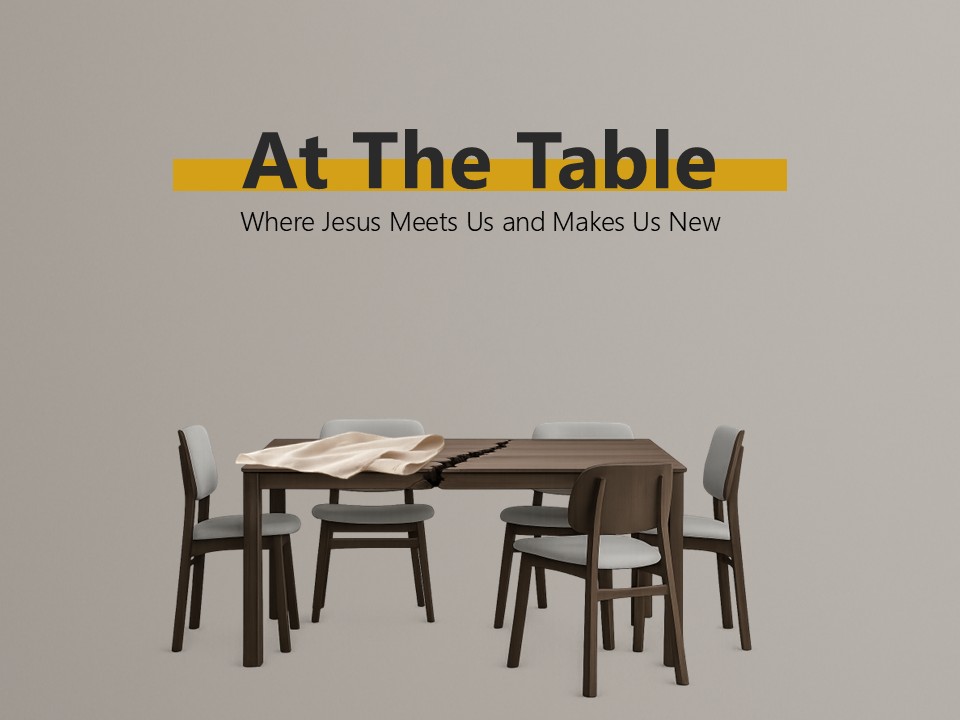
I have a little jewelry box. I think I got it when I was a girl. It sat on my dresser for years. Eventually it moved to a different bedroom. When I was organizing some things last year, I realized that it had fallen between the dresser and the wall. And it had broken. My husband was able to take the pieces I could find and glue them in. It’s usable now, but it’s still broken. You can see the lines and cracks in it still. Our word for the morning is broken. Say it with me once: BROKEN.
We all live under certain realities in this world—things that seem built into the fabric of life. We live under gravity—what goes up comes down. We live under time—everything moves forward, never back. We live under limits—energy runs out, bodies wear down. There are some things in this world that feel… UNbreakable. You know what I mean. We all live with a sense that there are rules to reality. Not just physical rules—like gravity or time—but deeper ones. Actions have consequences. Sin leaves a mark. And death… is final. And whether we use religious language or not, we all live with some version of this belief: That what we’ve done matters…and that we don’t always get to undo it. We feel it when we carry regret. We feel it when something we’ve done can’t be undone. We feel it when we come up against our limits…and realize we can’t fix… what’s been broken. It’s not just out there. It’s in here. (the heart)
The Bible speaks about this reality in different ways. It speaks of law—not just rules, but the deep structure of how things are meant to be. It speaks of sin—the ways we step outside of that structure. And it speaks of death—not just physical death, but the unraveling of relationships, of wholeness, of life as we know it. Scripture is honest about this: The law is good. It tells the truth. But it cannot save. Because once the law exposes what is broken…it has no power to make it whole again. Exodus describes the law that was given to Moses as being written with the finger of God.[1] The law…was written in stone. You don’t change that.
The law ordered daily life: what to eat, how to worship, how to treat others, how to live as a distinct people. It formed Israel into a community. But it also carried weight. Blessing and curse. Obedience and consequence. There was a seriousness to life with God—because this was a covenant—written in stone. The law named things clearly. What had been vague became specific. What had been hidden became visible. The apostle Paul says in Romans 3:20: “Through the law we become conscious of sin.” The law helped people see that they were—what? BROKEN. Before the law, people could feel something was wrong. After the law, they could see it. It was like turning on a light in a dark room. Nothing new was created—but everything was exposed. There was no pretending anymore. People begin to realize: “I don’t meet this.” “I can’t keep this.” “I fall short… again and again.” Yes, the law shaped how people lived in relationship with God. It preserved their identity. It formed worship.
It sustained hope. Those were good things! But it also—at times—became something else. It became a system people tried to master, a way to measure worth, and sometimes—a boundary to exclude others. Some people turned the law into a checklist, or a status marker—a way to prove righteousness. The problem wasn’t the law. The problem was that it was written on stone but not written within. Prophets began to speak of something new. In Jeremiah 31:33, God says,
The days are coming…when I will make a new covenant with the people of Israel and with the people of Judah. I will put my law in their minds and write it on their hearts. I will be their God, and they will be my people. 34 No longer will they teach their neighbor, or say to one another, ‘Know the Lord,’ because they will all know me, from the least of them to the greatest,” declares the Lord. “For I will forgive their wickedness and will remember their sins no more.’ Jeremiah 31:31, 33b-34
The law was written with the finger of God—true, holy, unchanging. But what it revealed… it could not repair. It left people waiting—for something MORE than stone. Jesus enters fully into that system. He doesn’t avoid it or dismantle it from a distance. He enters into it. He lives under the law. He experiences its weight. He knows its consequences. But then—He gets ready to do something no one expected. He offers Himself, not as a victim of circumstance, or someone caught in forces beyond His control, but as one who chooses. Jesus says in John 10:18, “No one takes my life from me, but I lay it down of my own accord.” This is not accidental. It’s not a tragic misfortune. This is intentional, self-giving love on behalf of the world, God’s creation!
Jesus’ disciples have been at tables with Him—again and again. Tables where He welcomed people. Tables where He forgave people. Tables where He turned everything upside down. And each time, He was inviting them into something that was new—but they don’t fully see it yet. Then comes the night of the Last Supper. One more table. Bread. Cup. Words they don’t quite understand. “This is my body—BROKEN for you.” And before they can make sense of it…everything starts to fall apart. Jesus is arrested. Betrayed by one of their own. Judas—who sat at the table—turns Him over. Peter—who swore he would never leave—denies even knowing Him. The rest of them? They run. They scatter. They hide. The women watch. They stay close enough to see what happens. They see the suffering. They see the cross. And ALL of them are…what? BROKEN. Yes, broken. Heartbroken.
That night…and the day that follows…it doesn’t just feel like loss. It feels like EVERYTHING has broken. Every hope they had. Every expectation. Every belief about what Jesus was going to do. Shattered. Jesus gave Himself over to the very system that condemned—and allowed it to do its worst. And on Friday, it looks like the system won. The table that once felt like invitation…now feels like the place where it all fell apart. What the disciples didn’t know…was that what felt like everything breaking…was actually the moment something deeper began to break open. When Jesus died…something happened that most people never saw. The gospel writer Matthew tells us: 50 …when Jesus had cried out again in a loud voice, he gave up his spirit. 51 At that moment the curtain of the temple was torn in two from top to bottom. Matthew 27:50-51
The curtain in the temple—thick, heavy, separating people from the presence of God—in the Holy of Holies. The barrier between God and His people…was torn in two. It was—say it with me—BROKEN. This is judgment on the old system of worship.[2] This is fresh access to God.[3] The veil is ripped from TOP to bottom! Not by human hands…but by God! The new order of God will no longer fit in the old system.[4] The temple wasn’t necessary anymore.[5] It is a foreshadowing of the more drastic events to come.[6] But then Jesus dies. He is put in a tomb. Pilate is suspicious. He doesn’t take any chances. He sends guards to put a seal on the stone and watch the opening. But the laughter of God roars through this story. What happens next is the religious leader’s worst nightmare[7]:
After the Sabbath, at dawn on the first day of the week, Mary Magdalene and the other Mary went to look at the tomb. 2 There was a violent earthquake, for an angel of the Lord came down from heaven and, going to the tomb, rolled back the stone and sat on it. 3 His appearance was like lightning, and his clothes were white as snow. 4 The guards were so afraid of him that they shook and became like dead men. 5 The angel said to the women, “Do not be afraid, for I know that you are looking for Jesus, who was crucified. 6 He is not here; he has risen, just as he said. Come and see the place where he lay. 7 Then go quickly and tell his disciples: ‘He has risen from the dead and is going ahead of you into Galilee. There you will see him.’ Now I have told you.” 8 So the women hurried away from the tomb, afraid yet filled with joy, and ran to tell his disciples. 9 Suddenly Jesus met them. “Greetings,” he said. They came to him, clasped his feet and worshiped him. 10 Then Jesus said to them, “Do not be afraid. Go and tell my brothers to go to Galilee; there they will see me.” Matthew 28:1–10
This isn’t a gentle transition. This is disruption! Upheaval! It’s a strange, crazy, wild story.[8] There was a great earthquake. An angel descended. The stone was rolled away. And what’s breaking is not just a stone in front of a tomb. The old order of the world is: BROKEN. Through Jesus’ death and resurrection, God was working at a deeper level than any of the disciples had previously understood. What looked like defeat…was actually the fulfillment of something older, deeper, and stronger. A love that did not ignore justice—but satisfied it. A grace that did not dismiss the law—but fulfilled it. And a power that did not avoid death—but went through it…and came out the other side.
Something happened that first Easter weekend that did not just change a moment…it changed the structure of reality itself. The structure that said, “death has the final word”…can no longer hold. Jesus rises. What God was doing in the resurrection is something that C.S. Lewis captures so beautifully in The Lion, the Witch, and the Wardrobe. How many of you have read that story, or seen the movie?
In Narnia, there is a law—a deep magic—written into the fabric of the world. It says that every traitor belongs to the White Witch. Betrayal leads to death. It is written into the structure of that reality. It is binding. So, when Edmund betrays…the law demands his life. It’s not something you negotiate with or revise. It stands. When Aslan offers himself in Edmund’s place, he is not dismissing the law…he is submitting to it. Just like Jesus. In the story, Aslan is killed on that Stone Table. The law is upheld. Justice is satisfied. The cost is paid. And for a moment…it looks like the table has won. Just like it did on Good Friday. But then comes the turning point. Lewis writes: “When a willing victim who had committed no treachery was killed in a traitor’s stead, the Table would crack…and Death itself would start working backward.” There was a deeper magic. Older than the law. Stronger than the law. Not canceling it—but fulfilling it…and going beyond it.
And that’s exactly what God was doing in Jesus. Jesus is the willing victim. Sinless. Without treachery. Standing in the place of traitors—and of us. When He dies…the law is satisfied. But when He rises…something even deeper is revealed. Death does NOT get the final word. The law that once defined everything has been—what? BROKEN. It didn’t fail—it was fulfilled in Jesus! And something greater has taken its place. The resurrection is not just proof that Jesus is alive. It is the beginning of a completely new reality. Paul says in 1 Corinthians 15 that death has been swallowed up in victory. Not delayed. Not managed. But defeated! Death has started working backward. Matthew says the women left the tomb with fear and great joy. And that makes sense. Because when the foundation of the world shifts…it is both terrifying and beautiful. Things that seemed permanent…are no longer permanent. Everything they thought was certain is no longer certain. And everything they thought was lost…is suddenly possible. Easter is the announcement that the world does not work the way it used to. The stone was rolled away…not to let the Lord out, but to let the women in![9], writes A.H. McNeile.
From this moment, women became the witnesses to the good news. They were commissioned as the ones to bring the resurrection news to the male disciples.[10] THAT was an upheaval to the old system! The gospel transcends gender restrictions.[11] The power of the resurrection texts gives women full ministry in the church.[12] The old system has been broken. This is part of what Easter is all about. God is doing a new thing. Easter puts everything upside down and inside out.[13] And, because of the resurrection, the earliest Christians began treating Sunday as a special day. Sunday became the Lord’s Day because of the empty tomb![14] Matthew also recounts some other amazing things that happen after the resurrection. He writes:
The earth shook, the rocks split 52 and the tombs broke open. The bodies of many holy people who had died were raised to life. 53 They came out of the tombs after Jesus’ resurrection and went into the holy city and appeared to many people. Matthew 27:51b-52
Earth shakes! Rocks split! Tombs open! It’s as if the whole system—everything that held the world in place—is starting to give way. All through this series, we’ve been talking about tables. Places where Jesus meets people. Welcomes people. Transforms people. But every one of those tables has been leading here. Because the resurrection is where the table itself changes. The old table was marked by law, separation, and the quiet knowledge that we do not measure up. But THAT table has broken.
Some of us are still living as if the old table is still standing, though. Still believing that we have to earn our place. Still carrying guilt as if it has the final word. Still assuming that what’s broken in us is permanent. Is that you? Easter tells a different story. The table you thought you were bound to…is—say it with me: BROKEN. The system you thought defined you…has already been overturned. And Jesus stands on the other side of that brokenness—alive, present, and inviting. There is a NEW table. And there is a place for you there. A table of grace. A table where sinners are welcomed, not condemned. A table where forgiveness is given, not earned. A table where life is offered, not withheld. THIS is the table Jesus invites us to now. Not because we’ve proven ourselves…But because HE has. Jesus’ death had grave opening power.[15] He has been raised from the dead, and the old world has cracked open, and a new world has been born.[16] God is doing new things![17]
N.T. Wright says, ‘Because of the resurrection, followers of Jesus don’t need to go to the Temple. They can go straight to Jesus. Jesus fulfilled the law by offering God the full love, obedience and devotion of heart, mind and soul to which Israel had been called. And in his death he reached out to the whole world, for whom he was dying. He was not just the teacher of a new, fulfilled Torah. He was the fulfilled Torah in person.’[18] Easter offers us the way to be the people we were made to be. God’s people. Jesus’ people. People of love.[19] At the beginning of this sermon, I noted that we all live under certain realities. Because of the resurrection…some of these realities have changed. Not all of them (gravity still works 😊), but the deepest ones—the ones underneath everything—have been transformed. Because of the resurrection…death is no longer the end of the story. The world does not work the way it used to.
Sin CAN be forgiven. Grace interrupts what we deserve. The barrier between God and us is gone. Hearts can be made new. and what was lost…can be restored. These are the truest things now—even if we’re still learning to live into them. Resurrection is not just something to believe. It is something to step into.
Jesus’ table didn’t fail when it broke—it fulfilled its purpose. And now…it’s the very place we’re invited to come. Just like my little jewelry box, God’s table is still broken. Jesus still bears the scars in his hands and his feet. It is a visible reminder of all that he went through. But it’s also beautiful. It’s at the broken table where the guilty are forgiven. The condemned are set free. The broken are made whole. The empty are filled! The weak are strong! The poor are rich! The dead are alive! We come to Jesus—the one who was—BROKEN…to be reminded again today that—Christ has died, Christ has risen, Christ WILL come again! Happy Easter everyone! He is risen! Let’s pray:
Prayer: Father, we thank you that your law is true and good—that it reveals what is right and just, even when it exposes what is broken in us. Jesus, we thank you that you gave yourself for us—that the table broke under the weight of your love, and that death did not have the final word. Holy Spirit, We ask that you would draw us now—to come, not striving, but receiving, trusting in what has already been done for us. Teach us to live in this new reality—where grace has the final word, and your love is stronger than death. Make us a people of grace, a people of resurrection, a people who know there is a place for us at your table, and who invite others to join us there. In the powerful name of our resurrected Savior, Jesus Christ, we pray, Amen.

Bibliography
- Bruner, Frederick Dale. Matthew: Volume 2 – The Churchbook, Matthew 13–28. Revised and Expanded Edition, Grand Rapids: William B. Eerdmans Publishing Company, 1990.
- France, R. T. Matthew. Tyndale New Testament Commentaries, Grand Rapids: William B. Eerdmans Publishing Company, 1985.
- Keener, Craig S. The Gospel of Matthew: A Socio-Rhetorical Commentary, Grand Rapids: William B. Eerdmans Publishing Company, 2009.
- Turner, David L. Matthew. Baker Exegetical Commentary on the New Testament, Grand Rapids: Baker Academic, 2008.
- Wright, N. T. Lent for Everyone: Matthew, Year A – A Daily Devotional, Louisville: Westminster John Knox Press, 2011.
—
Going Deeper Questions
Icebreaker
- Have you ever had something that broke but was still meaningful to you, like a keepsake, object, or even a tradition?
- Did it lose value—or gain something different?
The Table that Broke
In The Lion, the Witch, and the Wardrobe, Edmund betrays his siblings and falls under the Witch’s claim, because the law of Narnia demands that every traitor belongs to her. Aslan offers himself in Edmund’s place and is killed on the Stone Table. But in the morning, the Table cracks and Aslan rises again, revealing a deeper magic: that when an innocent, willing victim dies in place of a traitor, death itself is undone.
- What similarities do you see between Aslan’s sacrifice and Jesus’ sacrifice?
- The idea of a “deeper magic” suggests something older and stronger than the law. What do you think is “deeper” than the law in the gospel story—and why does that matter?
Breaking—At the Cross
Read Matthew 27:50-51
And when Jesus had cried out again in a loud voice, he gave up his spirit.
At that moment the curtain of the temple was torn in two from top to bottom.
- What are the two main things that happen in these verses?
- How is this different from the idea that Jesus was simply overpowered or defeated?
- The disciples experienced the cross as everything falling apart. When have you had a moment that felt like that—where things didn’t just go wrong, but broke?
- The curtain in the temple separated people from the presence of God. What might it mean that it was torn from top to bottom?
- What might the tearing of the curtain reveal about:
-God’s presence
-access to God
-the old system of worship
- If the curtain is torn and access to God is opened, what keeps people (including us) from drawing near?
Breaking—At the Resurrection
Read Matthew 28:1–10
- What details does Matthew include that make this moment feel intense or unusual?
- Is there a detail, image, or phrase you’ve never noticed before in this story?
- If you were there that morning, which part of the scene do you think would have stood out to you most? Why?
- Have you ever experienced something in your life that felt like everything was breaking or coming apart, that later revealed itself as the beginning of something new?
- The women experience both fear and great joy (v. 8). Why do you think those two emotions show up together? When have you experienced a moment that was both unsettling and joyful?
Breaking-Beyond the Cross
*Matthew groups the events of the curtain and the tombs together earlier to show how significant Jesus’ death was—but he also notes that the raising of the dead happens after the resurrection. The disruption begins at the cross…but the new life flows from the resurrection.
Read Matthew 27:51b-53
The earth shook, the rocks split 52 and the tombs broke open. The bodies of many holy people who had died were raised to life. 53 They came out of the tombs after Jesus’ resurrection and went into the holy city and appeared to many people.
- The curtain tearing, the earth shaking, and the tombs opening all point to something bigger happening. What might this moment communicate about:
-death
-resurrection
-God’s power
How does it expand our understanding of what was happening at the cross?
- Why do you think creation itself is described as reacting?
- How does this moment fit with the idea that “everything is beginning to break”?
- If tombs can open…what does that say about what God can do?
- How does this passage reshape your understanding of hope?
Breaking—of the Old System
The law was written in stone—true, clear, and unchanging. It helped people see clearly—what was right, and where they fell short. But it left them longing for something more, because it could not change the heart.
- The law “reveals but cannot repair.” Where do you see this play out in real life (not just religious settings)?
- Why do you think knowing what’s wrong isn’t enough to change us?
- There are certain realities we all live under: cause/effect, regret, limits, death. Which of those feels most real or present in your life right now?
- Why does it matter that the “old system” (law, separation, distance) was not just adjusted—but broken?
- The “new table” of Jesus is different from the “old table”. We get to live into new realities like:
- death is not final
- sin can be forgiven
- grace interrupts what we deserve
- what is lost can be restored
Which of these is hardest for you to truly believe? Why?
- In what ways do we still act like the “old table” is still standing?
Personal Reflection
- Do you have things in your life that feel “sealed,” final, or beyond change?
- What is one “old reality” in your life that you sense God might be breaking open or changing?
- What would it look like for you to actually live as if the resurrection has changed reality?
Closing Prayer: Lord, thank you that what feels broken is not beyond you, and that death does not have the final word. Help us to trust your grace, and to live in the hope of the resurrection this week. Amen.
[1] Exodus 31:18 When the Lord finished speaking to Moses on Mount Sinai, he gave him the two tablets of the covenant law, the tablets of stone inscribed by the finger of God.
[2] R.T. France, Matthew, Tyndale New Testament Commentaries, Grand Rapids: William B. Eerdmans Publishing Company, 1985, 400.
[3] Keener, 687.
[4] Craig S. Keener, The Gospel of Matthew: A Socio-Rhetorical Commentary, Grahd Rapids: William B. Eerdmans Publishing Co, 2009, 686.
[5] Frederick Dale Bruner, Volume 2: The Churchbook Matthew 13-28, Revised & Expanded Edition, Grand Rapids: William B. Eerdmans Publishing Company, 1990, 757.
[6] R. T. France, 400.
[7] David L. Turner, Matthew, Baker Exegetical Commentary on the New Testament, Grand Rapids: Baker Academic, 2008, 673.
[8] N.T. Wright, Lent for Everyone, Matthew, Year A, A Daily Devotional, Louisville: Westminster John Knox Press, 2011, 142.
[9] Bruner, 782.
[10] Keener, 699.
[11] Keener, 702.
[12] Bruner, 768.
[13] N.T. Wright, 143.
[14] Keener, 698.
[15] Bruner, 760.
[16] N.T. Wright, 144.
[17] N.T. Wright, 149.
[18] N.T. Wright, 161.
[19] N.T. Wright, 161.
 Preach it Sista