
About these posts
These posts grow out of sermons I’ve written for my local church community. You’re welcome to use them—for teaching, small groups, preaching, or personal reflection. If you share them elsewhere, please include a simple attribution. If you’d ever like to share how they’re being used, you’re welcome to reach out through the Contact button.
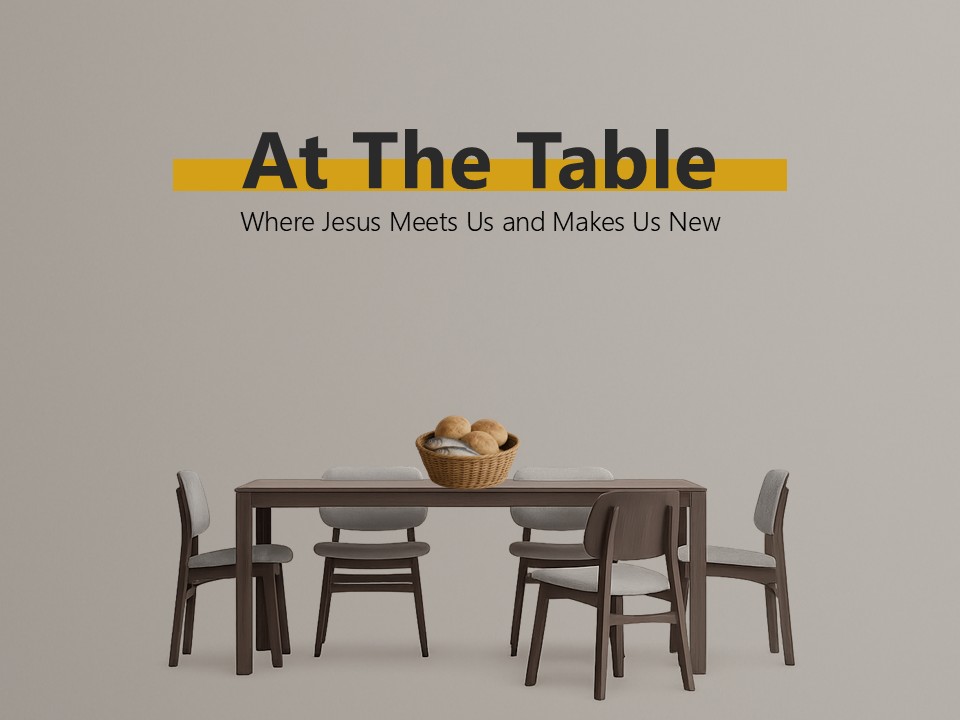
Whenever I watch the news lately, I’m often overwhelmed — not only by the needs that are out there, but by the noise…the anger…the fear…the way everything feels sharpened and divided. So much suffering gets blasted across the screen — and so much outrage. We live in a world where the need is constant and visible, and where the emotional temperature always feels high. It can leave us either deeply compassionate —or completely numb. That’s the emotional landscape the disciples are standing in when we come to today’s story. John the Baptist has just been executed. There is political violence, abuse of power, public fear. The disciples are exhausted from ministry and emotional burnout. The people are leaderless, vulnerable, searching. Sound familiar?
We turn to Mark 6: The apostles gathered around Jesus and reported to him all they had done and taught. Then, because so many people were coming and going that they did not even have a chance to eat, he said to them, “Come with me by yourselves to a quiet place and get some rest.” So they went away by themselves in a boat to a solitary place. But many who saw them leaving recognized them and ran on foot from all the towns and got there ahead of them. When Jesus landed and saw a large crowd, he had compassion on them, because they were like sheep without a shepherd. So he began teaching them many things. By this time it was late in the day, so his disciples came to him. “This is a remote place,” they said, “and it’s already very late. Send the people away so that they can go to the surrounding countryside and villages and buy themselves something to eat.” But he answered, “You give them something to eat.” They said to him, “That would take more than half a year’s wages! Are we to go and spend that much on bread and give it to them to eat?” “How many loaves do you have?” he asked. “Go and see.” When they found out, they said, “Five—and two fish.” Then Jesus directed them to have all the people sit down in groups on the green grass. So they sat down in groups of hundreds and fifties. Taking the five loaves and the two fish and looking up to heaven, he gave thanks and broke the loaves. Then he gave them to his disciples to distribute to the people. He also divided the two fish among them all. They all ate and were satisfied, and the disciples picked up twelve basketfuls of broken pieces of bread and fish. The number of the men who had eaten was five thousand. Mark 6:30-44 NIV
Just before this first feeding, the disciples have been sent out to preach the gospel, cast out demons and heal sick people. They have been VERY busy, working hard. They’ve seen God at work in miraculous ways. They have also just heard that John the Baptist was beheaded. They are emotionally drained. They gathered and reported everything that they had done to Jesus, and now, so many people were coming and going that they didn’t even have a chance to eat. Jesus knows they are tired and need a break and says…“Come with me by yourselves to a quiet place and get some rest.” Mark 6:31 NIV
But they don’t get any rest. The crowd of people see the boat take off and they run around to the other side of the lake-and meet Jesus and the disciples when they arrive. These people are hungry: hungry for truth-hungry to hear stories about God- hungry to know how to live and how to act-and hungry for love. Jesus sees that they have needs–even if they are disrupting his break time-and he sees that they are like sheep without a shepherd. So, he directs the disciples to have the people sit down in the green grass. Mark— wants you to notice that Jesus is the Good Shepherd. Think of the words of Psalm 23: “The Lord is my shepherd, I shall not want…he makes me lie down in green pastures…he restores my soul. Jesus has compassion on the people. He has them sit down in the green grass. This is a table scene before it ever becomes a miracle.
Jesus may well be aware of the desires of the men who are coming to him — their anxiety, the anger, the hope that something has to change, the sense that’ we can’t just sit still anymore’. That kind of energy isn’t hard for us to imagine. We see it in our own time —crowds gathering in cities, people raising their voices, longing for justice, longing for change, carrying both deep conviction and deep frustration. And what does Jesus do in the middle of all that charged expectation? He has them sit down. Before he feeds them, before he sends them out, before anything changes —he makes them be still long enough to receive. Jesus also knows what his disciples need. They’re tired themselves, and don’t want to deal with any of it. Their solution is to tell Jesus to send the group on their way. Jesus says to the disciples, ‘YOU give them something to eat.’ Surely we can understand their flabbergastness—is that a word? “Jesus, what? You just sent us on a missionary journey with NO money, NO extras, and told us to let the people take care of our needs. We haven’t got anything left to give! Make these people go away.” Jesus has something very different in mind.
‘How many loaves do you have’? he asked. ‘Go and see.’ Mark 6:38
The disciples walk around and gather up five loaves and two fish. And Jesus takes it and blesses it and breaks it- and gives it to the disciples to distribute to the people. There is more than enough left over. We might think: shouldn’t the disciples have recognized that God would provide? They had just come back from a mission where they had nothing—no money, no extra food—and God met them at every step. They had just stood in a circle with Jesus,
telling the stories of what they had seen God do. And now—faced with another need, another crowd, another impossible situation—they throw up their hands and say, “Send them away.” And if we’re honest…we understand that. Because we are living in a moment where everything feels urgent. Every headline demands a response. Every week there is another protest, another controversy, another public argument, another story that breaks our hearts. Even the things that are meant to entertain become places of tension and debate. And sometimes there are situations that just sit with us—a person missing, a family waiting, a community holding its breath. We carry all of that.
And after a while, the most honest prayer we have is: “Lord… it’s too much. Send them away. I don’t have anything left to give.” You can almost picture Jesus looking at the disciples—not with frustration, but with that steady, knowing compassion: Don’t send them away. You give them something to eat. Embody the kingdom. And then he looks at us. “Who, me?” Yes—us. Because Jesus sets a different kind of table. A Table of Possibility—where:
JESUS MEETS OUR NEED—AND MULTIPLIES OUR OFFERING
And this is not just a beautiful idea — it’s meant for the life we are actually living. Yes, life is demanding. Work is hard. Raising kids is hard. Relationships are hard. There are seasons of grief. Seasons of decision. Seasons where you show up for everyone else and wonder who is going to feed you. It is so easy—especially when we are tired—to dismiss the needs around us. To pray the most honest, but most distant prayer: “God… please take care of all that.” Because the needs are real. And they are large. And we feel small. The disciples felt that same way: “It’s late. We’re in the middle of nowhere. Send the people away.” And Jesus says: No. You give them something.
So, the question is not: “What don’t we have?” The question is: “What do we have?” What can YOU share? A text message that says, I’m praying for you. A meal. An hour. A listening ear. A ride. A small act of mercy. A refusal to add more anger to an already angry world. We are not responsible to do everything. But we are invited to be part of something. Possibility begins when we stop asking what we don’t have and start offering what we do.
In Mark 8 the whole thing happens again—another crowd, another shortage, another moment where the disciples cannot imagine there will be enough. And that’s not because the miracle wasn’t real. It’s because trust takes time to grow. Mark isn’t repeating the miracle to show us something new about Jesus. He’s repeating it to show us something unfinished in the disciples. They had seen abundance once—and they still struggled to believe that what they had could be enough. And so do we. Again, in Mark 8, once they found some fish and bread, they brought it to Jesus, and, what do you know?…it was enough, because JESUS took it, blessed it, broke it, and gave it to the people. It’s that beautiful pattern that is found in the gospels. Taken, Blessed, Broken, Given. We see it in this story, and then later, on the night that Jesus was betrayed -Jesus TAKES bread, BLESSES it, BREAKS it, and GIVES it to his disciples, saying
‘Take it; this is my body.” Jesus himself is the bread of life that was taken, blessed, broken and given for the world. It is through his sacrifice that there is hope! It is through his body and blood that we have access to God! He says, “I AM the bread of life!”
Bread was part of the common meal in first century life. It was picture of God’s provision, like the manna in the desert, where the people learned to be dependent on God. And bread isn’t just ‘bread’—it’s the language for FOOD.[1] When we pray to God and ask him to provide our daily bread—or our daily food it shows that we totally rely on God for the things we need. Bread is a metaphor for the Torah, the Words of God that were to be munched on, that provided life. Bread is the way that we commemorate Jesus, the crucified, the risen, and the returning one…[2]
Bread is a good metaphor for our common, ordinary lives, too. You may feel like your life is just ordinary. That you are not remarkable or influential, and that what you do could never make a difference. But Jesus calls us to participate in the bread—to sit around his table—and to become part of something that is extraordinary.
Henri Nouwen, in a book entitled’ Life of the Beloved’ uses this pattern to describe what God does with US. What Jesus did with bread, he does with people. God TAKES us – chooses us- he takes us as his own. Then he BLESSES us- He calls us his Beloved. Then he BREAKS us—through disappointments and struggles and sufferings-but he never lets those things destroy us, but works them for our good-because God is good—but life is hard, and sometimes we are broken because of the evil that is in it. God does not wish evil on us. He uses what the evil one means for harm, and makes us moldable and bendable to his will, so that he can work even more powerfully through us. And then, God graciously GIVES us—to our families, our neighbors, and to the world, and in our blessed and broken state, we give glory to God and testify to his greatness and goodness. God takes us, blesses us, breaks us, and gives us to the world, just as Jesus was taken, blessed, broken and given. It’s a pattern repeated throughout the gospels as Jesus feeds the disciples and the crowds. We, too, are taken, blessed, broken, and given.
This story isn’t about a miracle long ago—it’s about how Jesus still feeds people through ordinary faithfulness. We live in a loud, activated, emotionally charged moment. Jesus does not inflame it. Jesus does not dismiss it. Jesus shepherds people in the middle of it. Just like the early disciples, there are needs all around us. There are needs from our own people- the church. There are needs from people in our neighborhoods, our workplaces, our families, and our friends. What can WE share? These feedings in Mark help US to trust more fully in the possibilities.
Jesus meets our need—and multiplies our offering
It doesn’t begin with something large — it begins with what is already in our hands. Bread is a little thing. But many of the stories in the Gospels have to do with little things: Friends who lower a man through a roof. Birds of the air and flowers of the field that matter. One lost sheep. One lost coin. One lost son. Parents bringing children to Jesus. One leper who comes back to say thank you. A woman at a well who offers Jesus a drink—and carries good news to her whole village. Envision this, church—what it might look like if we followed our leader, Jesus, with confidence and expectation that He can take WHATEVER we have and use it for His glory: to help the hurting, to settle fear and unrest, and to deepen our trust.
Jesus never asks us to create abundance. He asks us to participate in it. He does not ask what we lack. He asks what we are willing to place in His hands. At the table of possibility, what we bring is never the end of the story. Because in His hands, it is always enough. So, here is the invitation for this week. It’s not big or dramatic. Just this: offer one thing that feels small to someone else. A moment of attention. A word of encouragement. A simple act of care. Not because it will fix everything—but because it’s something you can place in Jesus’ hands. And we trust Him to do the multiplying.
Prayer: Great God, you have the power to take bread and multiply it. We pray that your Word would be food for our hearts and that it would multiply in our lives, too.
Thank you for your provisions for us—every moment, every hour, every day, and every year. You are the bread of life. You are the good shepherd, and today we are reminded again of your grace and goodness to us. We confess that we get wrapped up in our own concerns, and we have become more isolated than involved, more callous than compassionate more obstinate than obedient, more legalistic than loving.
We clutch our fingers around our scarcity, forgetting that all of you is more than enough for all of our needs…Forgive us. Teach us again what it means to be your children. Empower us to offer what we have—our gifts and our talents, our resources, and our very lives—Use them for your kingdom purposes. Open our eyes again to the beauty of who you are that we may see your majesty, delight in your goodness, and share in the bounty of your table. May we dare to imagine the possibilities of what can happen when we simply trust you and reach out to each other with love, compassion, and faith. Take us, Lord. Bless us, Break us, And give us…for your glory—Amen.

Bibliography
- Gupta, Nijay, The Lord’s Prayer, Macon: Smyth & Helwys, 2017.
- Packiam, Glenn, Blessed, Broken, Given; New York: Multnomah, 2019.
—
Going Deeper Questions
Read Mark 6:30-44, Mark 8:1-10; Psalm 23
- In the Feeding of the 5,000, the disciples focus first on what they don’t have.
Where do you notice that same instinct in yourself right now? - Jesus says, “You give them something to eat.” What do you imagine the disciples felt in that moment—and what does that stir in you?
- Why do you think Jesus has the crowd sit down before the miracle happens?
What does that suggest about trust and readiness?
Scarcity, Offering, and Trust
- When you feel tired or stretched thin, what needs around you are easiest to dismiss—or avoid?
- The sermon named that Jesus doesn’t ask us to create abundance, but to participate in it. What is the difference between those two for you?
- What is one “small thing” you already have that you often overlook as insignificant?
Bread, Tables, and God’s Presence
- Psalm 23 says God prepares a table in the presence of enemies.
What does it look like for God to provide for you even when circumstances don’t feel peaceful or resolved? - How do meals—or shared moments—create space for connection, healing, or belonging in your own life?
- What might we miss about God if we only see meals in Scripture as background details instead of holy moments?
Living It This Week
- This week’s invitation is to offer one thing that feels small to someone else.
What might that look like for you—in your home, workplace, or neighborhood? - How might placing something small in Jesus’ hands change the way you see your role in God’s work?
Jesus meets our need—and multiplies our offering
—-
Facilitator Script for Men’s and Women’s Bible Studies as an option:
Bread Around the Table
(Following the Feeding of the 5,000)
- Bible verses printed (Matthew 14:13-21)
- Printed facilitator notes
- Paper towels / wipes
- Hand sanitizer
Food
- 1–2 bakery loaves (unbroken)
- Olive oil
- Dried herbs (optional)
- Salt
Serving Items
- Small bowls for oil/herbs
- Napkins
- Optional small plates (bring out after bread is passed)
Room Setup (before women arrive)
- Tables arranged so everyone can sit around them
- Bread in the center (unbroken)
- Small bowls with olive oil / herbs / salt
- Napkins nearby
- No plates yet (this slows things down intentionally), no individual place settings
Opening
Most weeks we sit in a circle, because conversation matters.
Today we’re doing something a little different.
Since this series is At the Table, we’re going to let a table help us listen.
Eating is optional. Participation isn’t about consuming food—it’s about being present together.
Prayer: God of abundance, we come to this table with open hands—some of us hungry, some of us tired, some of us carrying more than we know how to name. You are the one who sees what is offered, however small it feels, and blesses it for more than we imagine. As we gather around this table today, quiet our distractions, soften what is guarded in us, and help us receive what you are already giving. Meet us here—in the ordinary, in the shared, in the enough. We trust that you are present among us, and that there is grace for each one. Amen.
Scripture
Read the Feeding of the 5,000 passage.
Pause for a moment of silence after the reading.
Brief Reflection Question
Choose one (don’t rush):
- “What stands out to you in this story today?”
- “Where do you notice abundance—or scarcity—in yourself right now?”
No need for everyone to answer. Don’t rush. Don’t explain too much.
Let the table do the teaching. Silence is not failure—it’s space.
Bread Practice
“We’re going to share bread the way people often did—by tearing and passing.”
Break the bread slowly.
Pass pieces around the table.
Invite women to dip if they wish—or simply hold the bread.
As bread is passed, you may say: “There was enough.”
Let conversation be gentle and organic.
No teaching. No correcting. Just presence.
Closing prayer: God, thank you for your provision, your nearness, and the ways you meet us together. Amen.
Bible Reading Matthew 14:31-21
13 When Jesus heard what had happened, he withdrew by boat privately to a solitary place. Hearing of this, the crowds followed him on foot from the towns. 14 When Jesus landed and saw a large crowd, he had compassion on them and healed their sick. 15 As evening approached, the disciples came to him and said, “This is a remote place, and it’s already getting late. Send the crowds away, so they can go to the villages and buy themselves some food.” 16 Jesus replied, “They do not need to go away. You give them something to eat.” 17 “We have here only five loaves of bread and two fish,” they answered. 18 “Bring them here to me,” he said. 19 And he directed the people to sit down on the grass. Taking the five loaves and the two fish and looking up to heaven, he gave thanks and broke the loaves. Then he gave them to the disciples, and the disciples gave them to the people. 20 They all ate and were satisfied, and the disciples picked up twelve basketfuls of broken pieces that were left over. 21 The number of those who ate was about five thousand men, besides women and children. Matthew 14:13-21
“What stands out to you in this story today?”
“Where do you notice abundance—or scarcity—in yourself right now?”
[1] Nijay Gupta, The Lord’s Prayer, Macon: Smyth & Helwys, 2017, 92.
[2] Glenn Packiam, Blessed, Broken, Given; New York: Multnomah, 2019, 6.
 Preach it Sista