
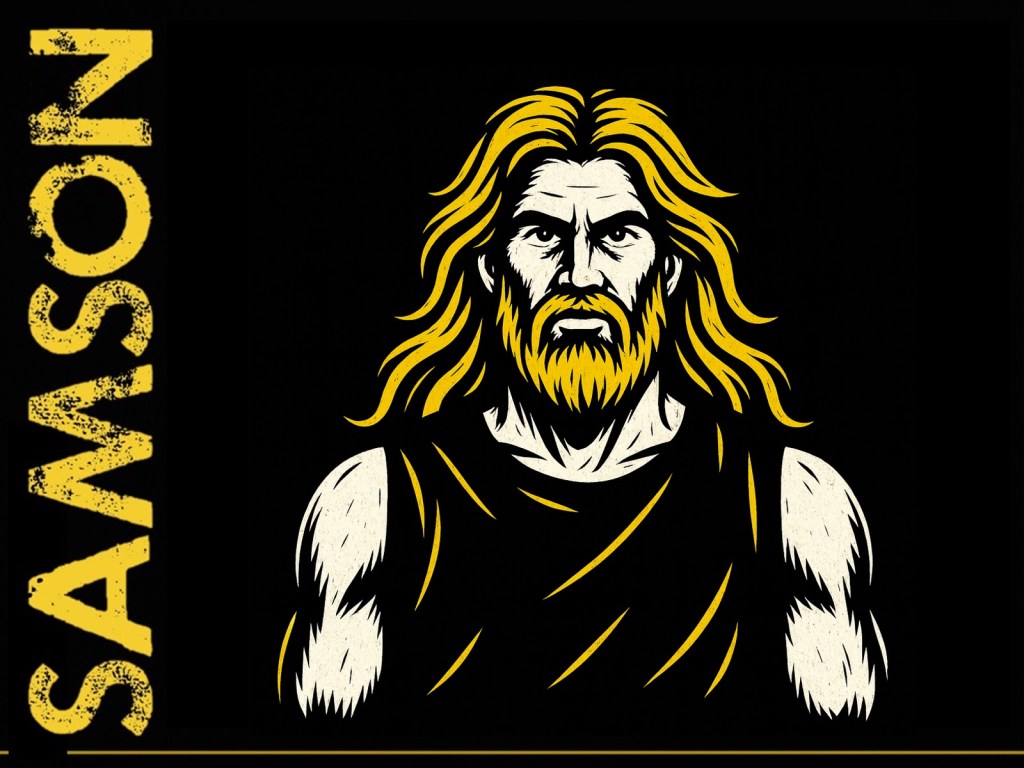
When we say someone “brought down the house,” we usually picture a BIG moment — applause, energy, a performance that shakes the room. But sometimes, “bringing down the house” looks more like Watergate—when hidden things finally collapse under the weight of the truth. And it might mean something far more painful—when a person’s choices, compromises, or patterns of living pull the whole structure of life down around them. In Judges 16, Samson does both. His story shows us the shadow side of human strength — how even someone with every advantage can still collapse under the weight of their own decisions. Samson had godly parents, a miraculous birth, a special calling, even supernatural strength — but what he didn’t have was a heart surrendered to the One who could save him. Every one of us needs more than gifts, more than potential, more than a strong beginning. We need Jesus. Because He alone brings down the house of sin and builds something new. Through Samson we will see the shadow-in Jesus we find the Savior.
We have been in a series about the Judges of Israel. The book of Judges has shown us a repeated pattern: Israel forgets God, falls into sin, cries out, and God raises an unlikely deliverer. Again and again we’ve watched a people blessed by God drift from God—and a God who refuses to abandon them.

We began with Othniel and Achsah. Othniel used his power to dominate the powers of evil[1], the king of double trouble. His name—Lion of God, points to Jesus—the lion of Judah. Achsah intercedes with her father on behalf of the man she has married[2],
and is given a double blessing of living water. This couple reminded us that we can ask for trouble if we turn aside to other gods like money, power, reputation—and then pass those crooked things on to the next generation, OR we can live in the knowledge that we are Sons and Daughters of the living God and ask for double blessing—on our worship, on our land, and in our relationships—We can ask for a spiritual inheritance, a deeper understanding of God’s Word, and a more profound experience of God’s grace.
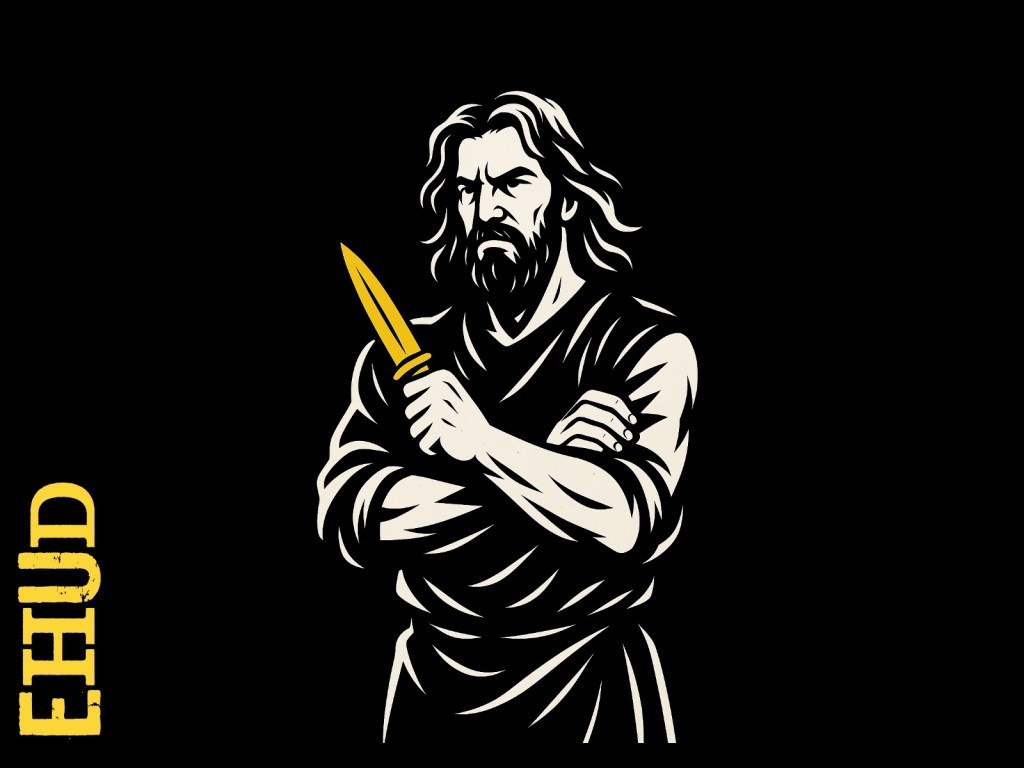
Then came Ehud, the surprising rescuer from the tribe of Benjamin. When no one else was “left”, Ehud made a double edged—or double mouthed sword, a tool with which to deliver the word of God[3] to wicked king Eglon. This enGROSSing tale was full of puns, but also a reminder about the ‘left-handed’ ways of God both to judge AND to deliver Israel.”[4]

With Deborah and Barak, we saw strength in partnership and courage found together, and Jael, a courageous woman, who drove a tent peg through the enemy and is praised for it, and just like Mary, she is called the most blessed of women. God is the real hero, who gets the glory, but he delivers his people through unlikely servants. And God calls His people not to be spectators, but to step up with faith, courage, and willingness. His kingdom advances through participation.

From Gideon, the fearful guy who became a mighty warrior, we learned how God meets us in our weakness. He used 300 men who did not bow the knee, and defeated Israel’s enemies. We said that Fear looks at the battle, but Faith looks at God. It was sad to see Gideon’s life spiral at the end—a good start doesn’t guarantee a faithful finish. His life was a warning.
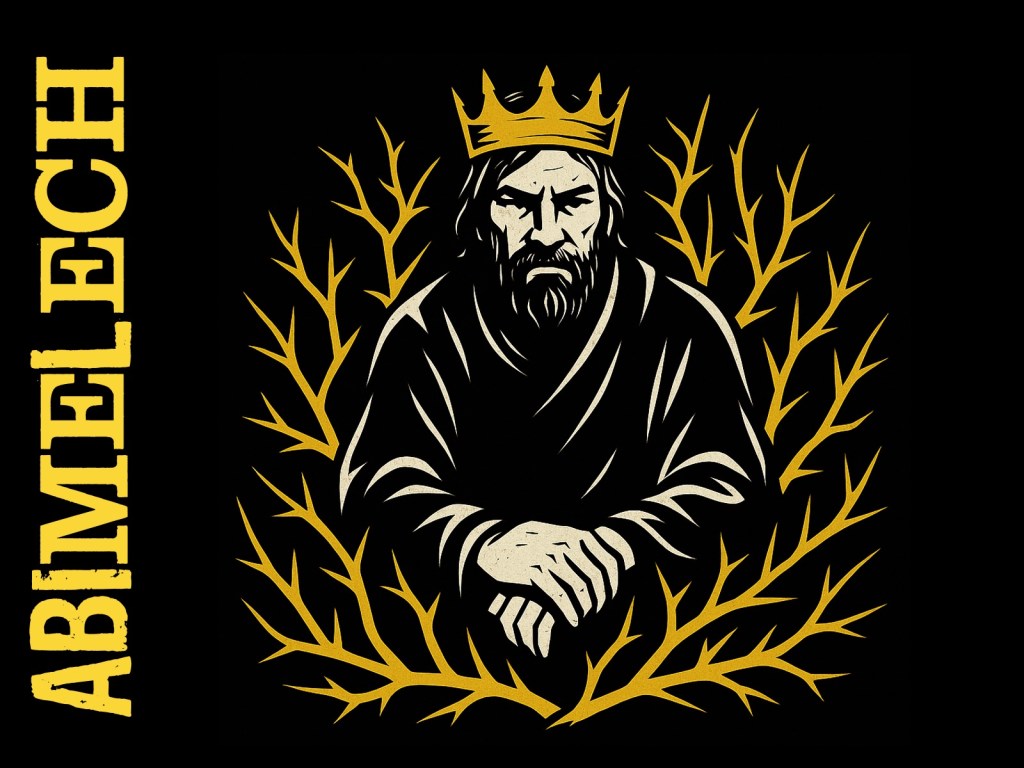
Abimelech brought ruin to the people as he ruled over them. His story warned us what happens when pride and power go unchecked. Abimelech was the toxic thornbush who ruled with force and brutality and would be crushed—by a woman. But his story also points us to Jesus—who invites us to stand under the shadow of the cross.
The thornbush king brings ruin, but the thorn-crowned King brings redemption.
Jesus, the seed of the woman, will be the one who will eventually crush the serpent’s head.
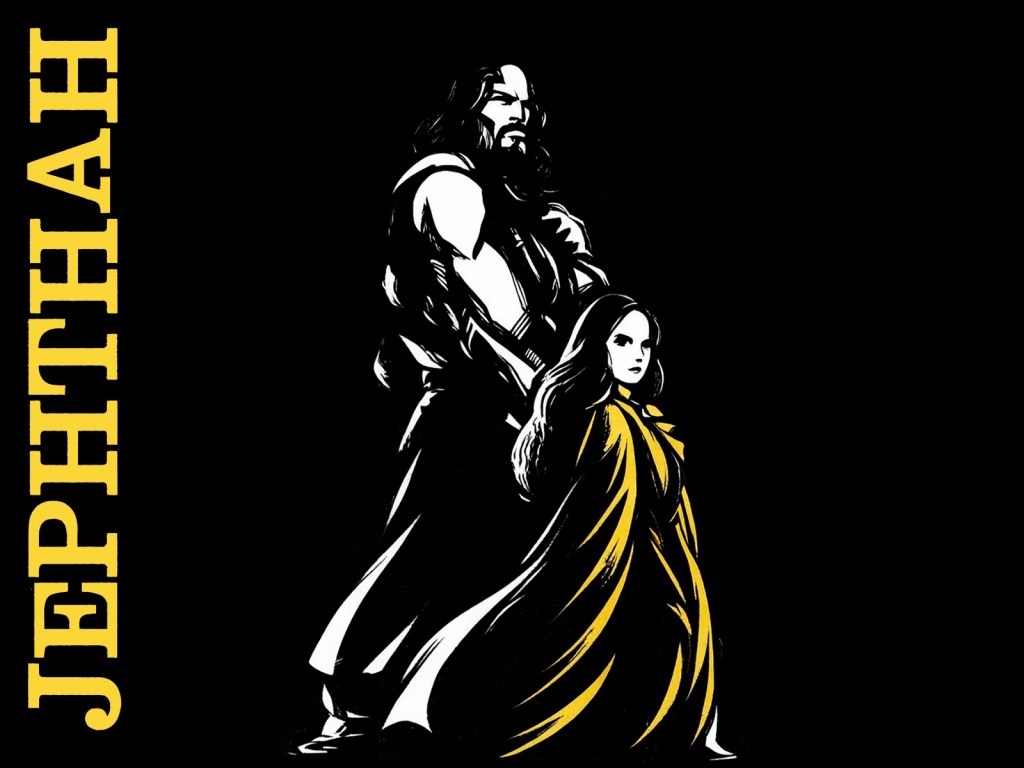
Jephthah’s story was a heroic tragedy. He was a mighty warrior like Gideon, but he didn’t trust God. He was empowered by the Holy Spirit for the task at hand, but he foolishly bargains with God in a vow that costs him his only daughter. Jephthah chose a culture of conflict. He spoke more words than any other judge[5], and yet his words became his undoing. Our words have the power to destroy us,[6] too. But God’s faithfulness stood firm. His grace was apparent in some of the darkest moments of Israel’s history.
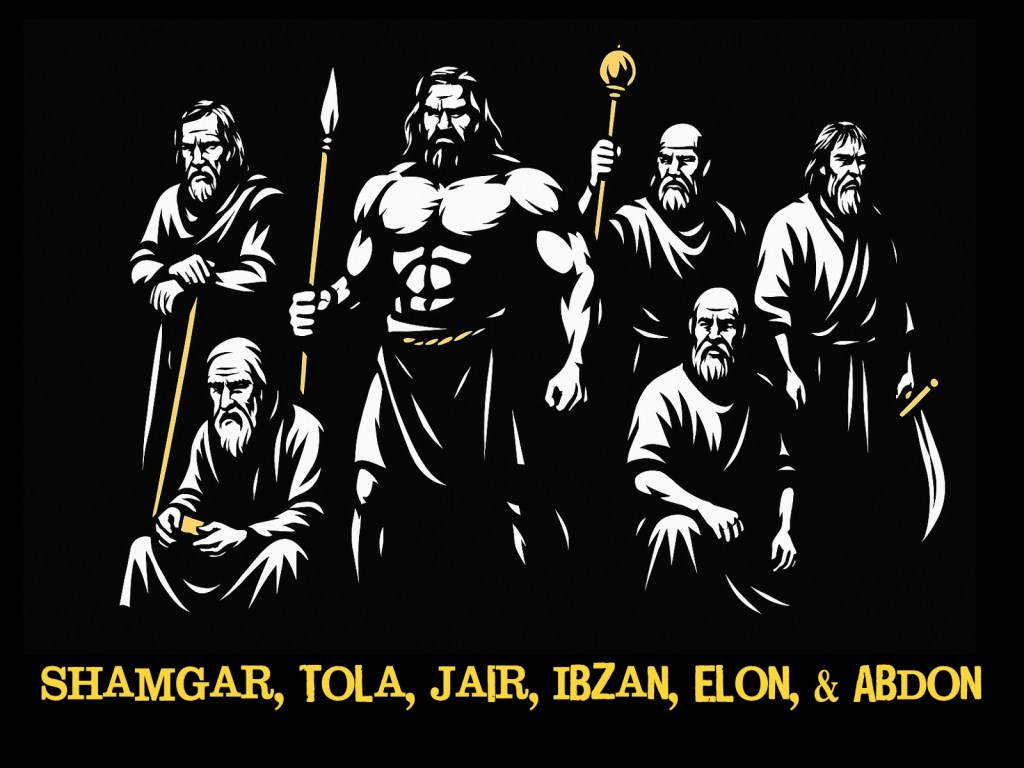
The stories of the minor judges are short—just quick glimpses—yet each one adds to the larger picture of God’s care. Shamgar, who used an oxgoad—an unlikely weapon to defeat the enemy. Jair provided some levity, as his boys rode their Burros into their Burroughs. Jair and then Tola, though quieter figures, showed us that God often stabilizes His people through steady, faithful leadership that never makes headlines.
Ibzan, Elon, and Abdon reminded us that God uses ordinary people and ordinary years to do his work—faithfulness in the background is still faithfulness.

We learned through Samson’s parents—that God Sets Apart the Ordinary to Accomplish the Extraordinary. When your life feels fruitless, God is not finished. God gives hope in the dark.
And last week we started to look at Samson, the strongest judge with the weakest self-control, a man who shows us the shadow side of human strength and the cost of compromise. But even in the riddles of life, God is still writing the story.

Across every judge—major and minor—we’ve seen the same truth rise to the surface:
God delivers his people through UNLIKELY servants. Human deliverers can begin the rescue, but only God can complete it. Judges has held up a mirror to our brokenness and a spotlight on God’s faithfulness. And today, as we close the series, Samson’s story points us toward what we’ve needed all along: a Savior who doesn’t just rescue for a moment, but who redeems forever. Let’s finish Samson’s story!
One day Samson went to Gaza, where he saw a prostitute. He went in to spend the night with her. 2 The people of Gaza were told, “Samson is here!” So they surrounded the place and lay in wait for him all night at the city gate. They made no move during the night, saying, “At dawn we’ll kill him.”3 But Samson lay there only until the middle of the night. Then he got up and took hold of the doors of the city gate, together with the two posts, and tore them loose, bar and all. He lifted them to his shoulders and carried them to the top of the hill that faces Hebron. Judges 16:1-3 NIV
According to wisdom literature, Samson is acting like a fool who is headed for destruction,[7] as he heads to visit a prostitute.
THROUGH SAMSON WE SEE THE SHADOW
A man called to be set apart keeps walking straight into places of temptation. His impulses lead; his calling—trails behind. This is the shadow side of Samson.
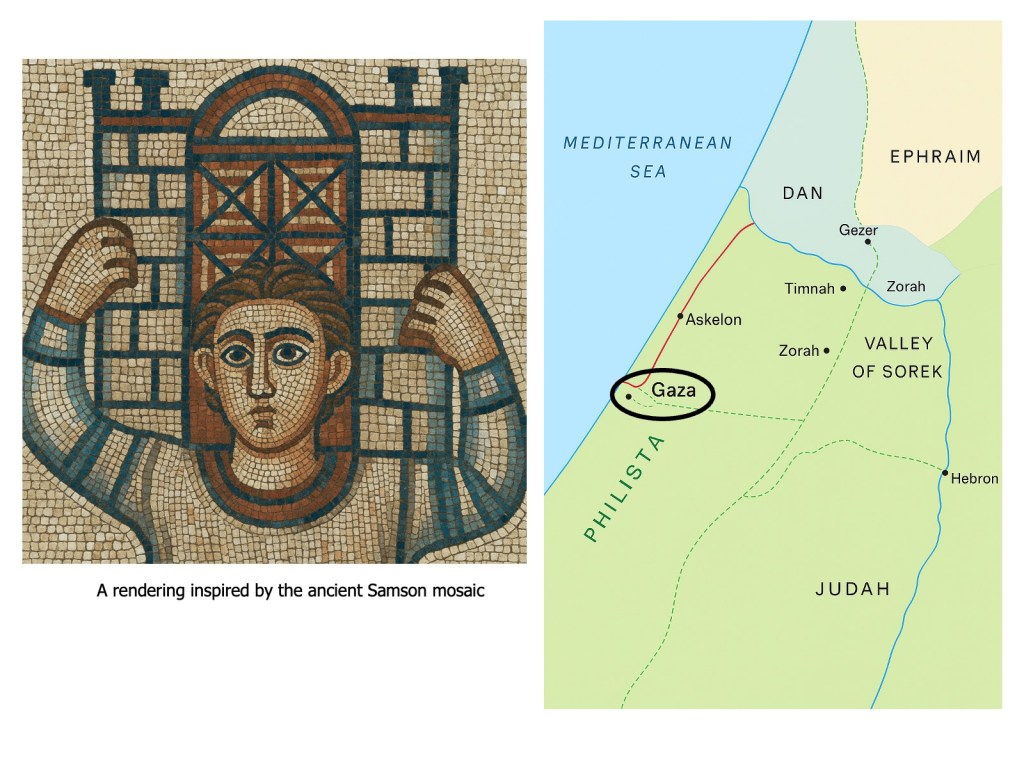
A mosaic depicting Samson was found in an ancient Jewish village in 2013. It shows him carrying the gate of Gaza on his shoulders.[8] Gaza is another Philistine city. While the Israelites were settling in the highlands, the Philistines in the southern coastal plain were building complex cultural and commercial centers in their Iron Age Pentapolis.[9] Samson’s parents might have called them ‘uncircumcised Philistines’, as a jab, but they had a very distinct cosmopolitan civilization—with art, pottery, and well-planned cities. Samson has a bounty on his head.[10] As soon as the Philistines hear he’s in Gaza, the ambushers gather—confident he’ll stay in the woman’s room until morning. But Samson gets up in the middle of the night. Then he takes the city gate and gateposts with him.
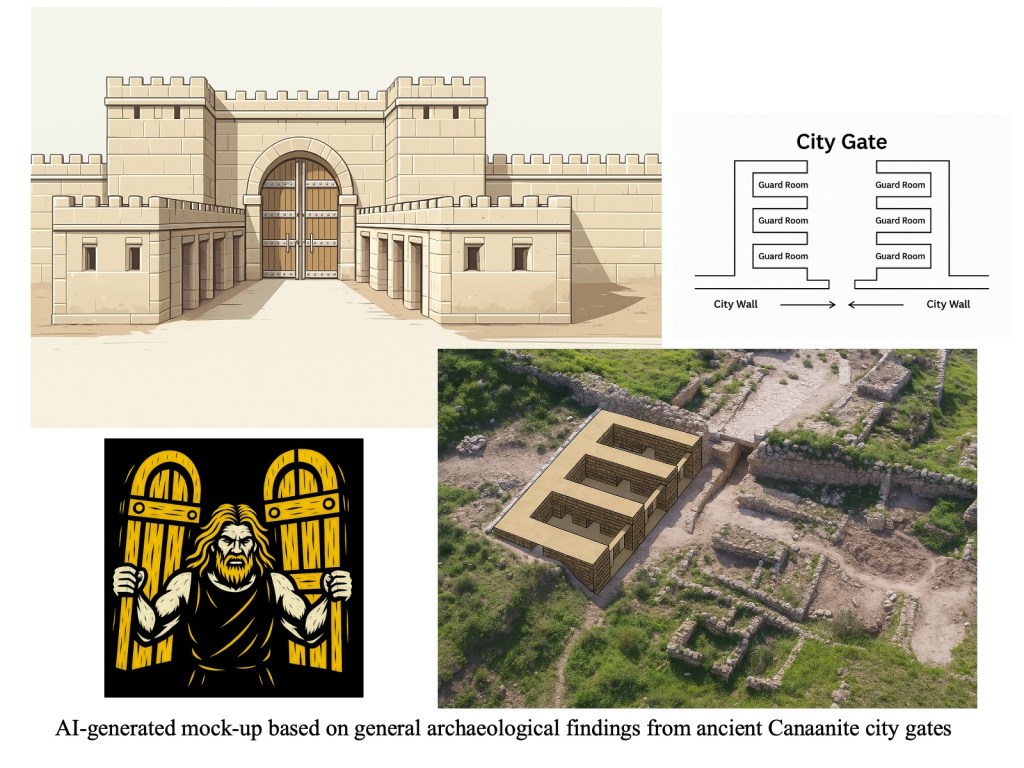
Most gates of this period were: large, double-leaf wooden doors, made from cedar, oak or sycamore, reinforced with bronze or iron bands.[11] Archaeologists estimate that each gate would be 400-800 pounds[12], the fittings—50-150 pounds, and the framework was massive. So when Judges 16:3 says: “He tore loose the doors of the city gate together with the two posts, and carried them on his shoulders…” This implies that Samson uprooted: the two doors, the hinge-posts, the locking bar, and the frame sockets, likely totaling well over 1,500–2,000 lbs![13] This was meant to be shockingly supernatural.
Daniel Block gives some more information: In a city gate structure in ancient Palestine, there were gate houses that were two or three stories high with guard rooms on the sides of the tunnel-like opening. To get to the gate of the city, Samson would have had to get past four or six groups of guards that were stationed there. He would have made a lot of noise unlocking the gate, lifting the doors and pulling the hinge posts out of their sockets. And how did he take ALL of this, put it on his shoulders and take it away without anyone noticing?[15] Samsons strength is evident: He carries the gates 40 miles uphill[16] brings them to the top of a hill overlooking Hebron—a climb of over three thousand feet![17] And he just leaves them there. Bringing the gates to Hebron could be a challenge to the Judahites, who had handed him over to the Philistines in the last episode. His act shames the Philistines AND the Judahites.[18] But Samson is only showing off—not doing anything to help his nation gain freedom from the Philistine oppressors.[19] There is no mention of God in this story, either—no Spirit of God enabling him to do this feat.[20]
Samson is SO physically strong—but he cannot withstand the wiles of a woman.[21] In this most famous story, Samson will be led into a trap, and he fails every test.[22]
4 Some time later, he fell in love with a woman in the Valley of Sorek whose name was Delilah. Judges 16:4 NIV
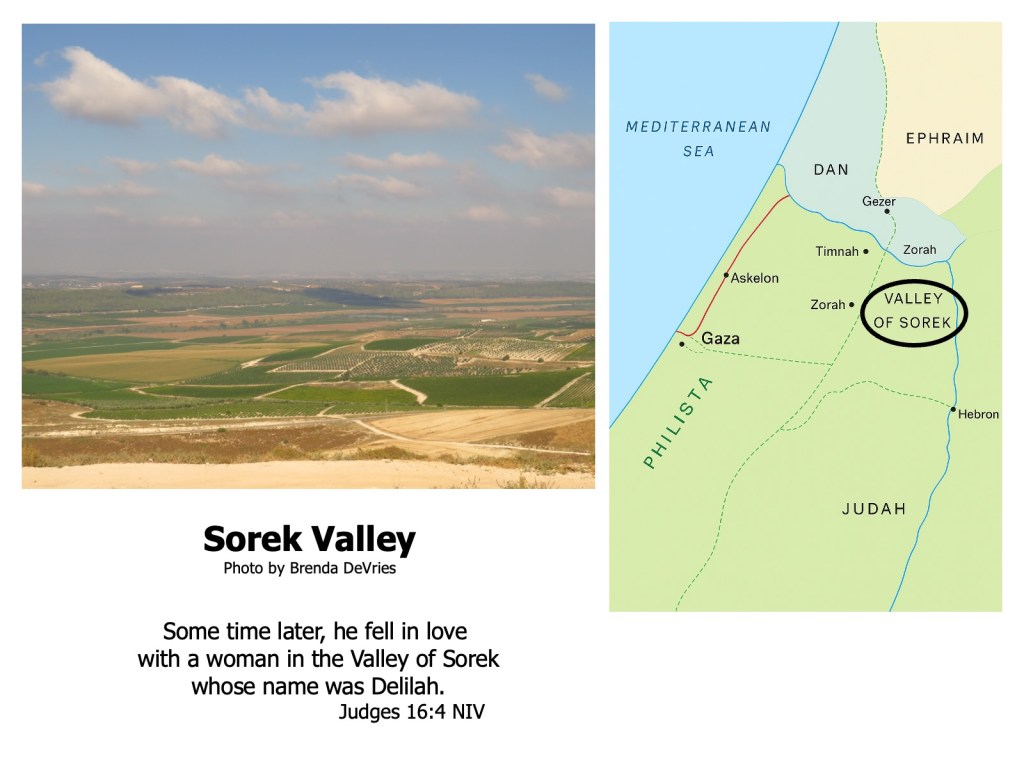
Delilah is from the Valley of Sorek, which is a wadi valley in the foothills of Judah and Dan and runs westward toward the Mediterranean coast.[24] I took this picture from the top of Zorah, Samson’s hometown, and overlooking the Sorek Valley. In the distance is the coastal plain. The Sorek Valley today has vineyards, orchards, crops and olive groves—something that Samson destroyed when he tied those jackals’ tails together in the last episode. We can’t tell if Delilah is a Philistine or an Israelite.[25] She is simply a “woman in the valley”. The Sorek Valley is Israelite territory,[26] under Philistine rule.
This may be similar to Samson’s first wife, the Timnite. Delilah is not defined by a relationship to a man.[27] She has no genealogy, no father, no brother, no other person that supports her. She stands alone.[28] Samson falls in love. And his love for her makes him more vulnerable than he was to his Timnite wife or to the prostitute.[29]
5 The rulers of the Philistines went to her and said, “See if you can lure him into showing you the secret of his great strength and how we can overpower him so we may tie him up and subdue him. Each one of us will give you eleven hundred shekels of silver.” Judges 16:5 NIV
This is an exorbitant amount of money! It represents 550 times—the average annual wage.[30] In today’s era, it would be over $15 million dollars![31] It would have taken a great person to resist that amount of money!
6 So Delilah said to Samson, “Tell me the secret of your great strength and how you can be tied up and subdued.” 7 Samson answered her, “If anyone ties me with seven fresh bowstrings that have not been dried, I’ll become as weak as any other man.” 8 Then the rulers of the Philistines brought her seven fresh bowstrings that had not been dried, and she tied him with them. 9 With men hidden in the room, she called to him, “Samson, the Philistines are upon you!” But he snapped the bowstrings as easily as a piece of string snaps when it comes close to a flame. So the secret of his strength was not discovered. Judges 16:6-9 NIV
These bowstrings, or cords, are sinews—parts of a corpse. Another object that would have been unclean for him as a Nazarite.[32] That doesn’t work. She tries again. Samson doesn’t seem suspicious. But he is not dumb. He plays along, thinking that he is invincible.
10 Then Delilah said to Samson, “You have made a fool of me; you lied to me. Come now, tell me how you can be tied.” 11 He said, “If anyone ties me securely with new ropes that have never been used, I’ll become as weak as any other man.” 12 So Delilah took new ropes and tied him with them. Then, with men hidden in the room, she called to him, “Samson, the Philistines are upon you!” But he snapped the ropes off his arms as if they were threads. Judges 16:10-12 NIV
Fail again.
13 Delilah then said to Samson, “All this time you have been making a fool of me and lying to me. Tell me how you can be tied.” He replied, “If you weave the seven braids of my head into the fabric on the loom and tighten it with the pin, I’ll become as weak as any other man.” So while he was sleeping, Delilah took the seven braids of his head, wove them into the fabric 14 and tightened it with the pin. Again she called to him, “Samson, the Philistines are upon you!” He awoke from his sleep and pulled up the pin and the loom, with the fabric. Judges 16:13-14 NIV
As these episodes continue, Samson is playing with fire, because now he is starting to talk about his hair, which is very close to the truth.[33] We begin to see that Samson is very susceptible to the combination of persistence and guilt.[34] Again,
THROUGH SAMSON WE SEE THE SHADOW
He knows Delilah is aligned with the Philistines. He’s been betrayed by them before. Yet he stays. This is the shadow side of Samson—foolish familiarity with danger.
15 Then she said to him, “How can you say, ‘I love you,’ when you won’t confide in me? This is the third time you have made a fool of me and haven’t told me the secret of your great strength.” 16 With such nagging she prodded him day after day until he was sick to death of it. 17 So he told her everything. “No razor has ever been used on my head,” he said, “because I have been a Nazirite dedicated to God from my mother’s womb. If my head were shaved, my strength would leave me, and I would become as weak as any other man.” 18 When Delilah saw that he had told her everything, she sent word to the rulers of the Philistines, “Come back once more; he has told me everything.” So the rulers of the Philistines returned with the silver in their hands. 19 After putting him to sleep on her lap, she called for someone to shave off the seven braids of his hair, and so began to subdue him. And his strength left him. 20 Then she called, “Samson, the Philistines are upon you!” Judges 16:15-20a NIV
The Bible tells us nothing about Samson’s size, nothing about his physical appearance, except one thing: He has never cut his hair, and he wears it in seven braids.[35] He breaks ALL the other rules of being a Nazirite, but not this one thing. Samson finally tells his secret to someone who is not trustworthy and should not be entitled to the truth.[36] Just as with his wife in the last episode, he cannot keep a secret for long. Maybe he has broken his other vows so many times without consequences that he figures he will be fine this time. Delilah can sense that he is telling the truth. She is so convinced this time, that the Philistines show up with the cash.[37]
There are certainly good women throughout the book of Judges: Deborah, a prophet AND a judge, a light that shines in the dark days of the judges.[38] Jael, an outsider of Israel, who became the instrument of God’s victory with a simple tent peg. The anonymous woman at Thebez kills Abimelech by dropping a millstone on his head. But Delilah…she destroys one of Israel’s heroes.[39]
He awoke from his sleep and thought, “I’ll go out as before and shake myself free.” But he did not know that the Lord had left him. Judges 16:20b
Samson’s shadow side has finally taken over. He doesn’t pray. He doesn’t seek the Lord. He assumes God will back him no matter how he lives. It is presumption dressed as confidence.
THROUGH SAMSON WE SEE THE SHADOW
Laura Smit reminds us: Samson’s hair is not the source of his strength. The hair is a sign of the vow that unites Samson to Yahweh. When it was taken away, there was nothing left.[40] Being abandoned by God has to be the worst feeling anyone can experience.[41] Samson’s whole life changes in an instant. Sadly, his spiritual blindness will turn into literal blindness. But all is not lost.
21 Then the Philistines seized him, gouged out his eyes and took him down to Gaza. Binding him with bronze shackles, they set him to grinding grain in the prison. 22 But the hair on his head began to grow again after it had been shaved. Judges 16:21-22 NIV
Did you catch it? Samson is back in Gaza, where he had torn out the city gates. He has finally been captured. Grinding grain was often a task given to prisoners. Samson was made to do tasks that were normally done by animals; this was to humiliate him.[42] We learned last week that Dagon was the god of grain. Samson dealt a big blow to their economy when he set fire to their crops. The people gather in droves to celebrate his capture.
23 Now the rulers of the Philistines assembled to offer a great sacrifice to Dagon their god and to celebrate, saying, “Our god has delivered Samson, our enemy, into our hands.” 24 When the people saw him, they praised their god, saying, “Our god has delivered our enemy into our hands, the one who laid waste our land and multiplied our slain.” Judges 16:23-24 NIV
These are rhymes—that were chanted and sung. Singing victory songs in a large group like this is something we saw in Exodus when Moses and Miriam led the people of Israel in victory song after crossing the sea.[43] The chants from those who are at the party reveal their angst towards Samson. Samson is their enemy, the one who destroyed their crops, the one who ruined their economy. In 1972, a Philistine temple was found at Tell Quasile, on the north side of Tell Aviv. Tell Qasile is considered the closest known architectural parallel to the “two pillars” coming up in the Samson story. It has an antechamber and main hall. There are two pillar bases left in place on the site[45]
25 While they were in high spirits, they shouted, “Bring out Samson to entertain us.” So they called Samson out of the prison, and he performed for them. When they stood him among the pillars, 26 Samson said to the servant who held his hand, “Put me where I can feel the pillars that support the temple, so that I may lean against them.” 27 Now the temple was crowded with men and women; all the rulers of the Philistines were there, and on the roof were about three thousand men and women watching Samson perform. Judges 16:25-27 NIV
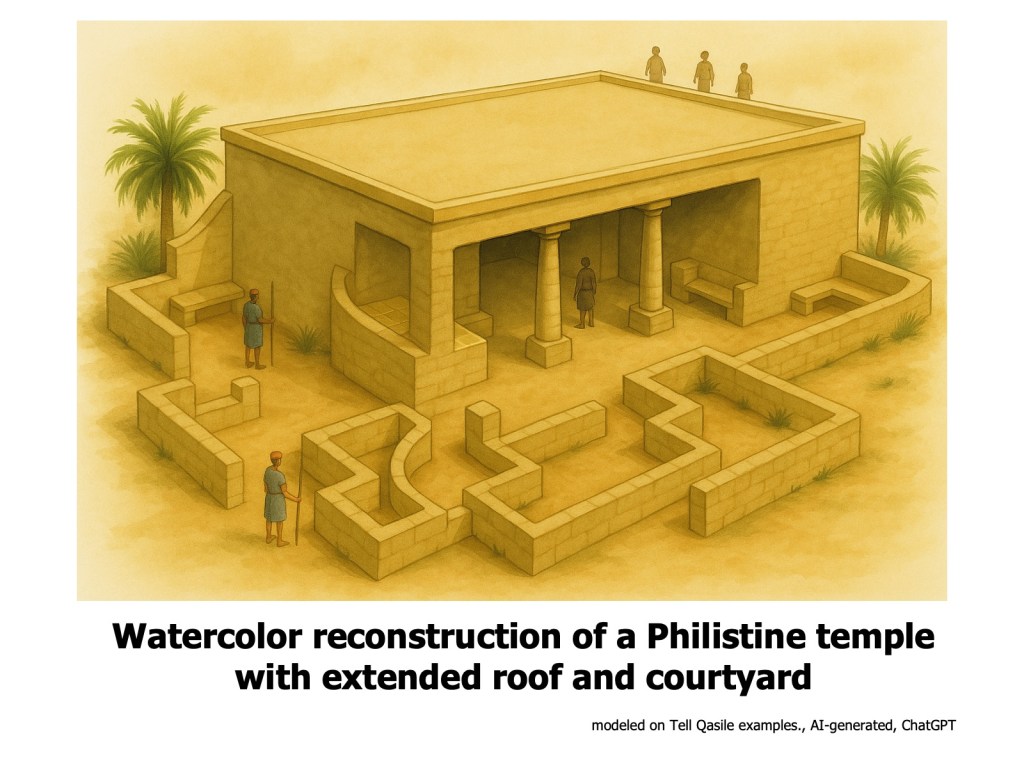
This is a smaller representation of what that temple may have looked like, based on archaeological evidence. The dignitaries would probably be sitting under cover, and the general public would be on the roof.[46] It is possible that they put Samson at the center by the pillars so that people would have a good view of him.[47] Previously in Gaza, Samson attacked the center of power by ripping out the city gates from their posts. It was a sign of military strength. The temple…is a sign of religious and political strength. And Samson is going to BRING THE HOUSE DOWN. The scene is set. Picture the party going on. The governors are there; three thousand men and women are there. Everyone wants to catch a glimpse of Samson. And the camera narrows in on him, as he utters the second prayer that we get to be privy to.[48]
28 Then Samson prayed to the Lord, “Sovereign Lord, remember me. Please, God, strengthen me just once more, and let me with one blow get revenge on the Philistines for my two eyes.” Judges 16:28 NIV
Samson’s’ prayer’… is a last-ditch cry for help so that he can have the last laugh.[49] It’s a self-centered, short-sighted prayer.[50] His first prayer for water was self-serving, and this one is for personal revenge.[51] He cries to a generic ‘god’—don’t be fooled by the ‘Sovereign Lord’ in the English —this is the same thing the Philistines cried out when they praised Dagon.[52] Samson isn’t thinking about the nation of Israel in his last moments, either. He says, Remember ME. Strengthen ME. Let ME get revenge. Let ME die.
THROUGH SAMSON WE SEE THE SHADOW
He prays…but still partly for himself. This is part of his shadow side again. He no longer has sight, or freedom, or a mission from God. And yet, Samson understands that God is the source of his strength. The author shows us here—that Samson’s HAIR wasn’t magical. It was through his PRAYER that Samson achieved his last victory against the Philistines.[53] But he cannot fulfill God’s purpose to destroy them—without also destroying himself.[54]
29 Then Samson reached toward the two central pillars on which the temple stood. Bracing himself against them, his right hand on the one and his left hand on the other, 30 Samson said, “Let me die with the Philistines!” Then he pushed with all his might, and down came the temple on the rulers and all the people in it. Thus he killed many more when he died than while he lived. Judges 16:29-30 NIV
What Watergate did to the White House, Samson did to the Philistine house. The two pillars are what hold up the temple to Dagon. When the hidden supports finally give way—the moment the pillars fall, the whole house comes down. With his last breath, Samson gets his revenge. He does the will of God—as we walked through in last week’s message—but it is not heroic. The beginning of the deliverance for Israel finally comes at the end of his misspent life.[55] Sadly, Samson accomplishes more for God dead than alive.[56]
31 Then his brothers and his father’s whole family went down to get him. They brought him back and buried him between Zorah and Eshtaol in the tomb of Manoah his father. He had ledIsrael twenty years. Judges 16:31 NIV
Our last look at Samson comes at his funeral. The story ends right where it began in chapter thirteen, when the Spirit of the Lord began to stir in him between Zorah and Eshtaol.[57] The man chosen from birth for God’s work has a life riddled with many things that are hard to understand. He is a strong man but is never labeled as a great judge.[58] In fact, he doesn’t even seem like a judge at all. He’s kind of an anti-type of a biblical leader.[59] He is immature, naïve, self-centered.[60] He doesn’t seem to care about God’s agenda, or his parents’ wishes, or for the women who are his companions.[61]
There could not be a more vivid contrast than that between Othniel the first judge—sand Samson the last: Othniel’s wife was his incentive to drive out the Gentiles, Samson’s women were his incentive to live among, rather than drive out, the Philistines.[62] Samson’s shadow side in Judges 16 is the story of a man called by God—but ruled by impulse — a man who treated holy things casually until the cost caught up with him. But, as we’ve learned so many times already, God does not wait until people are perfect before using them. The Book of Judges could be called ‘The Book of Saviors.’[63] But all of them are faulty. If anything positive comes from Samson’s life, it is because of the grace of God.[64] He gives opportunities and works through the least likely people to achieve his purposes.[65] And, oddly enough, God doesn’t deliver Israel IN SPITE of Samson’s failures, but actually BY MEANS of them.[66] Like many of the other unlikely judges, Samson is listed in the Hebrews 11 lineup of faith.[67] The people who get listed in the book of Hebrews are people who clung to God and His promises in the midst of dark times, even the times brought about by their own sin, from which they could not free themselves.[68]
At the darkest point of World War II, when Europe had been overrun, and the Nazis were raining tons of bombs every night on the city of London, Winston Churchill said to the British people, “This is not the end. It is not even the beginning of the end. But it is perhaps the end of the beginning.”[69] Judges can be a depressing book, as we see the cycles and spirals of sin and rebellion. But it is set in the grand narrative of Scripture. It is the moment in the first act when it seems like all is lost.[70] But it is only the first act, not the final act! Mark Boda and Mary Conway note that ‘the Samson story is part of a larger narrative that begins in Genesis and looks forward to Jesus, whose life, death, resurrection, and ascension will offer transformation for the entire cosmos!’[71] Judges demonstrates with stark clarity how deep is our need for a Savior who will rescue us from the effects of our sin, writes Laura Smit.[72] And she’s right. Judges has shown us shadows—broken deliverers, broken patterns, broken people. We need a Savior. One is coming. The long story of Scripture bends toward Him. We turn our eyes toward the Deliverer Samson could never be—the Savior who doesn’t just BEGIN rescue—but completes it. Not a shadow, but the Light of the world: Jesus.

Samson and Jesus are alike in many ways: Both births were announced by angels. The angel tells Manoah’s wife she’ll bear a deliverer (Judges 13). Gabriel announces Jesus’ birth to Mary (Luke 1). Both births signal that God Himself is stepping in to rescue His people. Samson was a Nazirite, consecrated before birth. Jesus was also set apart for God’s mission from the womb. Both were empowered by the Spirit. Both were sent to deliver God’s people. Both were rejected by their own people. Both were betrayed for money. Delilah sold Samson for silver, and Judas sold Jesus for silver. Each time, the deliverer is handed over by someone close to him. Both stretched out their arms and died defeating the enemy. Both won their greatest victory in their moment of apparent defeat. Both achieved victory through death. Both deliver in ways nobody expected. Samson was Flawed, impulsive, unpredictable—yet used by God. Jesus was a suffering Messiah, crucified, not the conquering king people expected.
They may be similar in many ways, but Samson is the flawed shadow; Jesus is the faithful Savior. Samson began deliverance through death, but Jesus completed deliverance through His death and resurrection. Samson died with outstretched arms and brought judgment on his enemies. But Jesus died with outstretched arms and brought salvation to His. Samson’s strength failed; Jesus’ strength never does. Samson’s death ended a life; Jesus’ death opened the way to eternal life. And where Samson’s final act was a collapse of stones, Jesus’ final act was the collapse of the powers of sin, shame, and death. Samson shows the shadow; Jesus shines as the Savior. The story of Samson doesn’t end with a strong man collapsing under his failures. It points us toward the Stronger One who takes our failures on Himself. Samson’s story exposes our need; Jesus’ story provides our rescue.
Samson was a failure. So are we. There is no such thing as a perfect person. Admit it. We are blind and chained without Jesus. To have true life, we must accept God’s forgiveness in Christ, and begin walking in the way of salvation. Pray. Read the Bible. Meet with other believers. Become a disciple. And trust God to use us.[73]
‘The seed that dies to bring forth life’ sets the pattern for every disciple[74]—shadowed in Samson, perfected in Jesus, and embodied in us. And the only reason that pattern is even possible is because the God who worked in Samson, the God who raised Jesus, is the SAME God who is working in us right now. The same God who met His people then—meets His people today. The same God who brought strength out of Samson’s weakness brings hope out of ours. The same God who brought life out of death in Jesus is still bringing life out of the broken places in us. So as we respond today, we’re not looking back at a God who used to move. We’re calling on the God who is faithful, present, and powerful—the Same God. And that’s what the book of Judges is all about.
PRAYER: Almighty God and King, You are the Same God who moved in the days of the judges, who strengthened Samson in his weakness, who brought life out of death through Jesus Christ our Savior. We confess today that we are no different from the people in this book. We drift, we compromise, we collapse under our own strength.
We need You. We need Your forgiveness, Your mercy, and Your rescue. Thank You that in Jesus we find what Samson could never give—a Savior who takes our failures on Himself, a Deliverer whose strength never fades, a Redeemer who brings life out of the places we thought were dead. Turn our eyes to the One who came to complete the rescue, who shines light into our shadows, and who invites us to walk as His disciples.
Holy Spirit, grow in us the life that comes from surrender. Let the seed that dies bring forth life in us—life marked by repentance, faith, and obedience. And now, God of Abraham, God of Deborah, God of Samson, God who raised Jesus from the dead—be the Same God who strengthens us as we go from here. Make us faithful, make us hopeful, make us courageous, until Christ is formed in us. We ask this in the strong name of Jesus, our Savior. Amen.
Bibliography
- Block, Daniel I. Judges, Ruth, Nashville: B&H Publishing Group, 1999.
- Boda, Mark J., Mary L. Conway, Daniel I. Block, general editor; Judges, Exegetical Commentary on the Old Testament, Grand Rapids: Zondervan Academic, 2022.
- Butler, Trent C., Word Biblical Commentary: Judges, Grand Rapids: Zondervan, 2009.
- Frymer-Kensy, Tikva, Reading the Women of the Bible: A New Interpretation of their stories, New York: Schocken Books, 2002.
- Garstang, John, The Foundations of Bible History: Joshua and Judges. London: Constable & Company Ltd., 1931,
- Goldingay, John, Joshua, Judges & Ruth for Everyone, Louisville: Westminster John Knox Press, 2011.
- Inrig, Gary, Hearts of Iron, Feet of Clay, Chicago: Moody Bible Institute, 1979.
- Matthews, Victor H., Judges & Ruth, Cambridge: Cambridge University Press, 2004.
- Mazar, Amihai, Archaeology of the Land of the Bible: 10,000–586 B.C.E. New York: Doubleday, 1990, 482–485.
- Wilcock, Michael, editor, J.A. Motyer, The Message of Judges: Revised Edition, Downers Grove: Illinois, 1992, 2021.
- Soggin, J. Alberto, Judges, Philadelphia: The Westminster Press, 1981.
- Smit, Laura A. and Stephen E. Fowl, Brazos Theological Commentary on the Bible: Judges and Ruth, Grand Rapids: Brazos Press, 2018.
- Articles
Bar, Shaul, “The Death of Samson”, Old Testament Essays (New Series), 33 no 1 2020, 162-174. - Begg, Christopher T., The end of Samson according to Josephus as compared with the Bible, Pseudo-Philo and rabbinic tradition, Biblische Notizen, 131 2006, 47-61.
- Blenkinsopp, Joseph, Structure and style in Judges 13-16, Journal of Biblical Literature, 82 no 1 Mar 1963, 65-76.
- Bowman, Richard G; Swanson, Richard W., Samson and the Son of God or Dead Heroes and Dead Goats: Ethical Readings of Narrative Violence in Judges and Matthew, Semeia, 77 1997, 59-73.
- Chisholm, Robert B Jr., Identity crisis: assessing Samson’s birth and career, Bibliotheca sacra, 166 no 662 Apr-Jun 2009, 147-162.
- Emanuel, Jeffrey P., ‘Dagon our god’: Iron Age I Philistine cult in text and archaeology, Journal of Ancient Near Eastern Religions, 16 no 1 2016, 22-66.
- Galpaz-Feller, Pnina, ‘Let my soul die with the Philistines’ (Judges 16:30), Journal for the Study of the Old Testament, 30 no 3 Mar 2006, 315-325.
- Halton, Charles, Samson’s last laugh: the Ś/ŠḤQ pun in Judges 16:25-27, Journal of Biblical Literature, 128 no 1 Spr 2009, 61-64.
- Herzberg, Bruce, Samson’s moment of truth, Biblical Interpretation, 18 no 3 2010, 226-250.
- Jones, Kirsty, Three Blind Vices?: Vision and Blindness in the Samson Cycle (Judges 13-16), Biblical Interpretation, 28 no 2 2020, 175-201.
- Lackowski, Mark, Victim, Victor, or Villain?: The Unfinalizability of Delilah, Journal of the Bible and Its Reception, 6 no 2 2019, 197-218.
- Leonard-Fleckman, Mahri S., Samson and our reactions to the strongman, Word & World, 37 no 3 Sum 2017, 217-225.
- Malan, Morné, Is Yahweh a divine Delilah?: An intertextual reading of 1 Kings 22 in light of Jeremiah 20 and Judges 16, Stellenbosch Theological Journal, 5 no 3 2019, 379-398.
- Mbuvi, Amanda Beckenstein, Samson’s body politic, Biblical Interpretation, 20 no 4-5 2012, 389-406.
- Noegel, Scott B. Evil Looms: Delilah—Weaver of Wicked Wiles, The Catholic Biblical Quarterly, Vol. 79, No. 2 (April 2017), 187-204.
- Paynter, Helen, ‘Revenge for My Two Eyes’: Talion and Mimesis in the Samson Narrative, Biblical Interpretation, 26 no 2 2018, 133-157.
- Peterson, Brian Neil, Samson: Hero or Villain? The Samson Narrative in Light of David and Saul, Bibliotheca sacra, 174 no 693 Jan-Mar 2017, 22-44.
- Roskoski, John, ‘I will be as weak as any other man’: The Theological Significance of Judges 16:7, 11, 13, and 17, Journal of Biblical Theology, 1 no 2 Apr-Jun 2018, 72-95.
- Roskoski, John, The Final Prayer of Samson: Judges 16:28-30, Journal of Biblical Theology, 6 no 1 Jan – Mar 2023, 111-133.
- Sasson, Jack M., Who cut Samson’s hair: (and other trifling issues raised by Judges 16), Prooftexts, 8 no 3 Sep 1988, 333-339.
- Schipper, Jeremy, What was Samson thinking in Judges 16,17 and 16, 20?, Biblica, 92 no 1 2011, 60-69.
- Segert, Stanislav, Paronomasia in the Samson narrative in Judges 13-16, Vetus testamentum, 34 no 4 Oct 1984, 454-461.
- Smith, Carol, Samson and Delilah: A Parable of Power?, Journal for the Study of the Old Testament, 22 no 76 Dec 1997, 45-57.
- Smith, Michael J., “The Failure Of The Family In Judges, Part 2: Samson”, Bibliotheca Sacra 162, October-December 2005, 424-36.
- Ulreich, John C., Samson’s Riddle: Judges 13-16 as Parable, Cithara, 18 no 2 May 1979, 3-28.
- Ussishkin, David, “The Megiddo City Gate,” in Megiddo III: The 1992–1996 Seasons, ed. Israel Finkelstein, David Ussishkin, and Baruch Halpern. Tel Aviv: Tel Aviv University, 2004, 199–204.
- van der Toorn, Karel, Judges 16:21 in the light of the Akkadian sources, Vetus testamentum, 36 no 2 Apr 1986, 248-253.
Websites
- https://archaeology.org/issues/september-october-2013/digs-discoveries/samson-mosaic-discovered-in-galilee/
- https://biblearchaeology.org/research/judges-united-monarchy/3800-between-the-pillars-revisiting-samson-and-the-house-of-dagon?highlight=WyJvbGQiLCInb2xkIiwib2xkJyIsIidvbGQnIiwib2xkJy1tb3VudGFpbnMiLCJ0ZXN0YW1lbnQiLCJ0ZXN0YW1lbnQnIiwib2xkIHRlc3RhbWVudCJd
Quote
Winston S. Churchill, The End of the Beginning (speech, London, November 10, 1942), in The Complete Speeches of Winston S. Churchill, ed. Robert Rhodes James (New York: Chelsea House, 1974), 6:7285.
—
Going Deeper Questions
–Share a time when you or someone you know “brought down the house”—
either in the fun sense (cheering, applause, a big win) or in the messy sense (a choice or mistake that made things fall apart). Why did that moment stand out to you?
Read Judges 16:1-3 NIV (Strength without Wisdom)
–How does verse 1 connect back to earlier patterns in Samson’s life?
-Where else has Samson followed what “seemed right in his eyes”? How does that recurring theme function in Judges?
-Samson walks straight into temptation at Gaza. Why do you think people sometimes stay close to things that harm them? Where do you tend to stay “familiar with danger” rather than fleeing it?
-What is surprising about Samson’s actions in verse 3?
-What do you notice about the silence of God in these verses? How is this different from earlier Samson episodes where “the Spirit of the Lord rushed upon him”?
-Samson performs a supernatural feat but uses it to show off rather than set people free. Can you see the tension between giftedness and godliness? How can you discern whether you’re using your gifts for God’s purposes—or your own?
Read Judges 16:4-5 NIV
–The narrator never tells us Delilah loves Samson—only that Samson loves her. How does that imbalance of affection shape the unfolding narrative?
-In verse 5, who approaches Delilah? Why is it significant that they come to her personally? What does that tell you about the political stakes?
-What would be the modern red flags in this situation if a friend said: “I fell in love with someone from the Valley of Sorek…” and then added, “Oh, and the city leaders came to her with a giant bag of money”?
-The rulers offer Delilah an absurd amount of money. If someone offered you the modern equivalent of $15 million, what silly thing might you be tempted to spend it on first?
Read Judges 16:6-14 NIV (Patterns of Compromise)
–Compare Delilah’s role here with the role of Samson’s Timnite wife in Judges 14. What similarities and differences do you see in: motive, technique, loyalties?
-Samson knows Delilah is aligned with the Philistines. He has been betrayed before. Yet he stays. Why do you think people return to relationships or habits that have proven harmful?
-Notice the pattern that keeps happening between Samson and Delilah: (ask → answer → attempt → failure). How do his answers change each time?
What direction is the pattern moving—toward safety or toward danger?
-What do these verses reveal about Samson’s inner life? What do they show about his confidence, assumptions, or spiritual dullness?
Read Judges 16:15-20 NIV
–Verse 15 introduces Delilah’s emotional manipulation. What rhetorical strategy does she use when she says, “How can you say ‘I love you’ when you won’t confide in me?” What effect might this have on Samson?
-In verse 17, Samson finally speaks the truth. What does he reveal? How is his explanation different from the earlier lies?
-According to v. 17, what is the real significance of Samson’s hair? Is the strength magical? Symbolic? Divine? Covenant-based?
-How does Delilah represent a different kind of threat than Samson faced earlier (lion, Philistines, soldiers)? What does this reveal about temptation, seduction, or spiritual deception?
-Verse 20 is a theological turning point. “He did not know that the LORD had left him.” What does this communicate about Samson’s spiritual condition?
-What does spiritual numbness look like today? How can someone tell when their heart has drifted—even if their life looks the same on the outside?
-In what ways does Samson resemble Israel in the book of Judges? Where do you see parallels between his slow spiritual drift and Israel’s?
Read Judges 16:21-27 NIV
–What ironic or literary echo do you see with verses 1–3 and verse 21?
-Does the growing hair in v. 22 signal repentance, divine mercy, narrative foreshadowing, or all three? Explain what you think the author intends.
-Does that small detail in verse 22 reveal about God’s character? Where do you need to remember that God may be quietly restoring what you thought was lost?
-Samson’s physical condition in these verses is: blind, bound, led by the hand.
How does the narrator use these physical details to convey his spiritual condition?
-Where do you see examples today of people or systems celebrating victory too soon, like the Philistines do?
Read Judges 16:28-30 NIV (Death that brings Victory)
–Samson prays for the second time in his life at his lowest moment. What might this reveal about his spiritual journey?
-How does Samson address God in his prayer in verse 28? (Look at the exact words: “Sovereign LORD… remember me… please strengthen me…”) What does each phrase communicate?
-How do these verses reveal both Samson’s weakness and God’s mercy? Where do you see human frailty? Where do you see divine faithfulness?
-In what ways is Samson an “unlikely” instrument of God’s justice here? How does his final act fit the book’s overall theme?
Read Judges 16:31 NIV
-Who comes for Samson at the end? Where is he buried? What does this reveal about his family or community? What isn’t said in verse 31 that might surprise you? No national mourning, no praise, no summary of his deeds.
-If Samson had a final epitaph written by his family, what might it say?
-The story begins and ends “between Zorah and Eshtaol.” (see Judges 13:25) Why might the author intentionally frame Samson’s life this way?
Through Samson we see the shadow; in Jesus we find the Savior.
Samson died with outstretched arms and brought judgment on his enemies.
But Jesus died with outstretched arms and brought salvation to His.
Samson’s strength failed; Jesus’ strength never does.
Samson’s death ended a life; Jesus’ death opened the way to eternal life.
Samson’s greatest victory came at the end of his life. Jesus’ greatest victory came at the end—but was vindicated by resurrection.
-How does the resurrection change everything?
-Why do you think God repeatedly uses deeply flawed people in Scripture to accomplish His purposes? What does this reveal about Him?
-What can we learn from Samson about the importance of finishing well in faith?
Application and Practice
-Where do you personally feel the “shadow side” at work in your life right now?
How does Jesus meet you in that place?
-Samson had godly parents, a powerful calling, and supernatural strength—but not a surrendered heart. What does a surrendered heart actually look like in daily life? What practices help keep you tethered to God?
Prayer
Pray for these things:
- areas where compromise needs to be surrendered
- places where God needs to restore strength or hope
- courage to walk in discipleship
- renewed confidence that the same God is at work in us today
Lord, thank You for meeting us in Your Word. Through Samson we’ve seen our need, and through Jesus we’ve seen our hope. Strengthen us where we are weak, guide us where we are blind, and help us walk in the light of our Savior this week. In Jesus’ name, Amen.
[1] Laura A. Smit, and Stephen E. Fowl, Brazos Theological Commentary on the Bible: Judges and Ruth, Grand Rapids: Brazos Press, 2018, 20.
[2] Laura A. Smit, and Stephen E. Fowl, Brazos Theological Commentary on the Bible: Judges and Ruth, Grand Rapids: Brazos Press, 2018, 20.
[3] Eric S. Christianson, “A Fistful of Shekels: Scrutinizing Ehud’s Entertaining Violence (Judges 3:12-30),” Biblical Interpretation: A Journal of Contemporary Approaches 11, no.1, 2003, 53-78, 53.
[4] Trent C. Butler, Word Biblical Commentary: Judges, Grand Rapids: Zondervan, 2009, 75, quoting D.T. Olson, Judges, NIB, Vol. 2, Nashville: Abingdon, 19988, 721-888, 772.
[5] Daniel I. Block, Judges, Ruth, Nashville: B&H Publishing Group, 1999, 387.
[6] Mark J. Boda, Mary L. Conway, Daniel I. Block, general editor; Judges, Exegetical Commentary on the Old Testament, Grand Rapids: Zondervan Academic, 2022, 573.
[7] Trent C. Butler, Judges, 345, Proverbs 6:26, 7:10, 23:27
[8] https://archaeology.org/issues/september-october-2013/digs-discoveries/samson-mosaic-discovered-in-galilee/
[9] Jeffrey P. Emanuel., ‘Dagon our god’- Iron Age I Philistine cult in text and archaeology’, Journal of Ancient Near Eastern Religions, 16 no 1 2016, 22-66, 25.
[10] Daniel I. Block, 451.
[11] Amihai Mazar, Archaeology of the Land of the Bible: 10,000–586 B.C.E. New York: Doubleday, 1990, 482–485.
[12] David Ussishkin, “The Megiddo City Gate,” in Megiddo III: The 1992–1996 Seasons, ed. Israel Finkelstein, David Ussishkin, and Baruch Halpern. Tel Aviv: Tel Aviv University, 2004, 199–204.
[13] John Garstang, The Foundations of Bible History: Joshua and Judges. London: Constable & Company Ltd., 1931, 168–170.
[14] AI-generated mock-up based on general archaeological findings from ancient Canaanite city gates
[15] Daniel I. Block, 450.
[16] Block, 451.
[17] Victor H. Matthews, Judges & Ruth, Cambridge: Cambridge University Press, 2004. 156.
[18] Boda, Conway, 663.
[19] Butler, 346.
[20] Block, 449.
[21] Block, 451.
[22] Block, 452.
[23] AI-generated reconstruction-style illustration of the Sorek Valley (not based on a copyrighted photograph). Created for educational use
[24] Daniel I. Block, 453.
[25] Trent C. Butler, 347.
[26] Smit, Fowl, 162.
[27] Boda, Conway, 669.
[28] Butler, 348.
[29] Smit, Fowl, 161.
[30] Butler, 349.
[31] Butler, 350.
[32] Block, 457-458.
[33] Block, 458.
[34] Tiva Frymer-Kensy, Reading the Women of the Bible: A New Interpretation of their stories, New York: Schocken Books, 2002, 82.
[35] Butler, 349.
[36] Based on Butler, 348.
[37] Block, 460.
[38] Block, 193.
[39] Tivka Frymer-Kensky, 84.
[40] Smit, Fowl, 164.
[41] Block, 462.
[42] Shaul Bar, “The Death of Samson”, Old Testament Essays (New Series), 33 no 1 2020, 162-174, 163.
[43] Shaul Bar, The Death of Samson, 166.
[44] This image is an AI-generated reconstruction created by ChatGPT based on the published excavation photo in Amihai Mazar, Archaeology of the Land of the Bible, Vol. I (New York: Doubleday, 1990), 336.
[45] https://biblearchaeology.org/research/judges-united-monarchy/3800-between-the-pillars-revisiting-samson-and-the-house-of-dagon?highlight=WyJvbGQiLCInb2xkIiwib2xkJyIsIidvbGQnIiwib2xkJy1tb3VudGFpbnMiLCJ0ZXN0YW1lbnQiLCJ0ZXN0YW1lbnQnIiwib2xkIHRlc3RhbWVudCJd
[46] Gary Inrig, Hearts of Iron, Feet of Clay, Chicago: Moody Bible Institute, 1979, 257.
[47] Shaul Bar, 167.
[48] Trent C. Butler, 353.
[49] Block, 467.
[50] Block, 468.
[51] Boda, Conway.
[52] Block, 468.
[53] Shaul Bar, “The Death of Samson”, 164.
[54] Smit, Fowl, 165.
[55] Butler, 354.
[56] Block, 469.
[57] Judges 13:25
[58] Butler, 358.
[59] Tivka Frymer-Kensky, 84.
[60] Butler, 359.
[61] Based on Block, 470.
[62] Michael J. Smith., “The Failure Of The Family In Judges, Part 2: Samson”, Bibliotheca Sacra 162, October-December 2005, 424-36, 430.
[63] J. Alberto Soggin, Judges, Philadelphia: The Westminster Press, 1981, 5.
[64] Block, 471.
[65] Based on Butler, 360.
[66] Boda, Conway, 687.
[67] Hebrews 11:32-34.
[68] Smit, 10.
[69] Winston S. Churchill, The End of the Beginning (speech, London, November 10, 1942), in The Complete Speeches of Winston S. Churchill, ed. Robert Rhodes James (New York: Chelsea House, 1974), 6:7285.
[70] Laura A. Smit, and Stephen E. Fowl, Brazos Theological Commentary on the Bible: Judges and Ruth, Grand Rapids: Brazos Press, 2018, 7.
[71] Boda, Conway, 694.
[72] Smit, 22.
[73] Gary Ingrig, 265.
[74] Smit, Fowl, 167.
 Preach it Sista