Riddles make us think — they hide truth in plain sight. Riddles can be frustrating, or they can be fun. Here is an ancient Sumerian riddle from about 4,000 years ago.[1] ‘I am a house you enter blind but come out of with sight, what am I?’ [Answer: A school] Here’s a more modern one: What comes once in a minute, twice in a moment, but never in a thousand years? [Answer: the letter ‘M’]
The phrase “Riddle me this” is famously associated with The Riddler, a Batman villain. The phrase is used as a challenge, as he poses riddles to Batman. The 2022 movie The Batman is a darker, more detective-focused film that is very different than older films. In it, the Riddler is a serial killer, targeting corrupt leaders in Gotham. He believes he’s on the same mission as Batman, but he writes puzzles that Batman has to decode. His riddles aren’t silly or comic, and the danger isn’t the riddle, it’s the heart behind it. They are clues that reveal deeper motives. He has a wounded heart—anger, envy, pride, and a desire to be seen and recognized. He looks brilliant. He sounds clever. He keeps everyone guessing. But behind all those puzzles is something broken—pain, obsession, and the longing to show the world how smart he is and how wrong they’ve been.

Samson’s story in Judges 14-15 is built around a riddle, too. Samson might have been called The Riddler of Israel. He was strong, clever, and full of contradictions — half hero, half enigma. He’s not wearing a green suit or leaving puzzles taped to crime scenes, but he does throw a riddle into the middle of his wedding feast. And just like the Riddler, Samson’s puzzle tells you more about him than about the riddle itself. Life is full of riddles — not the kind with clever wordplay, but the kind we live. Sometimes the things we hide behind — our cleverness, our image, our strength — reveal more about our heart than we intend.
Last week—we looked at the story of Samson’s parents. Before birth, Samson was given a God-appointed mission. He is to be set apart, in a world that is living in the darkness of idolatry. The beginning scenes in Samson’s family hold promise for a great change about to come.[2] The other people in the Bible who have similar birth narratives: Isaac, Samuel, John the Baptist, are patriarchs and mighty prophets, and Jesus! In the next chapter, we’ll jump immediately to Samson as a young man, and quite quickly we’ll notice that he has become disrespectful to his parents, he is not living by the vow of a Nazirite, and we begin this scene with him on the prowl for a woman, totally dominated by his senses.[3]
Samson went down to Timnah and saw there a young woman in Timnah, one of the daughters of the Philistines. 2 When he returned, he said to his father and mother, “I have seen a woman in Timnah; now get her for me as my wife.” 3 His father and mother replied, “Isn’t there an acceptable woman among your relatives or among all our people? Must you go to the uncircumcised Philistines to get a wife?” But Samson said to his father, “Get her for me. She’s the right one for me.” 4 His parents did not know that this was from the Lord, who was seeking an occasion to confront the Philistines; for at that time they were ruling over Israel.) Judges 14:1-4
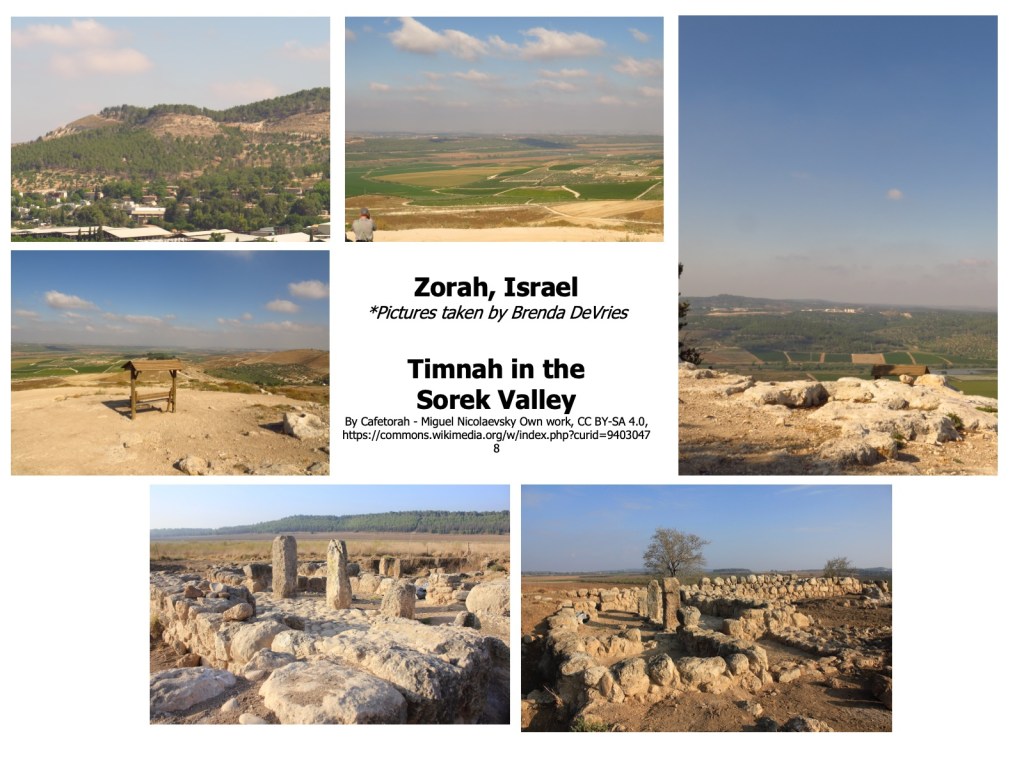
Samson was born in Zorah, sitting on a hill. Timnah is six miles west of there.[4] Timnah was a cosmopolitan town with a mixed population. It was controlled by the Philistines. Timnah was strategically valuable, both commercially and militarily, because it was located on the riverbed of Sorek, near Israel and Philistia. Samson would definitely ‘go down’ to Timnah, But he is also going down spiritually. I noticed a connection here between the ‘going down’ to Timnah, and the way that Judah ‘goes down’ in the story of Tamar in Genesis 38[5]. Quick side note: The words “to go down” are repeated in Genesis 37, 38, and 39, which weaves those passages together in reference to Jacob, Judah and Joseph.[6] Jacob says he will ‘go down’ in mourning for his son Joseph. Joseph is then ‘taken down’ to Egypt. And Genesis 38 notes that Judah ‘went down’ to ‘stay with a man of Adullam named Hirah’.[7] In all of these instances, they head away from what is good and ‘go down’ into sadness or a place outside of acceptable territory and lifestyle. Both Judah AND Samson ‘go down’ to Timnah. Hmm.
Samson wants a foreign woman for a wife. She is “pleasing in my eyes”, he tells his parents.[8] The word ‘pleasing’ can also mean, ‘straight’ or ‘upright.’[9] Samson wants what he wants. His parents do not remind him of his special Nazirite status—being set apart for God…[10]it’s only that they do not like the Philistines—uncircumcised people…and God did command his people not to intermarry with people from other nations.[11] It is not a certainty that this girl is a Philistine, though. The term ‘one of the daughters of the Philistines’ could simply mean a resident of a Philistine city, not necessarily a reference to her ethnicity. [12] The parents lump them all together, which is pretty normal. It will make more sense that she is NOT a Philistine as the story goes on. But, who are the Philistines?
(see biblemapper.com)
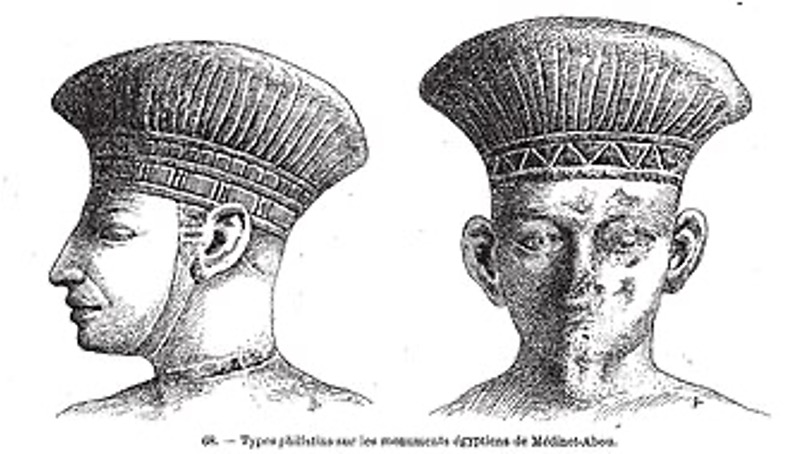
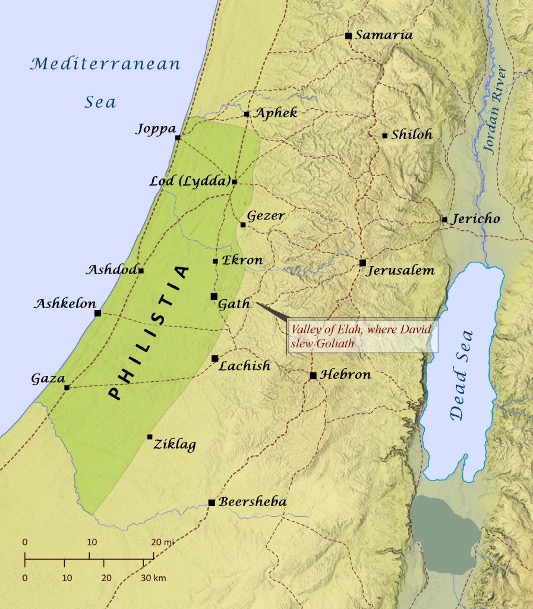
The Philistines are Sea Peoples who settled along the coastal plain. They had five major cities—Ashdod, Ashkelon, Gezer, Gath, and Ekron. They were a sophisticated urban culture, with an edge in military technology over the inland peoples. They had organized cities.[13] They are—most of the time—considered enemies of Israel and mentioned over 400 times in the Bible.[14] And yet, the people had come to accept the Philistines as their overlords, and they were no longer crying out to God for relief.[15] They liked and used the Philistine technology. They went to the Philistines to sharpen their plowshare, their axe, their sickle.[16] They are living peacefully with the Philistines.[17] They are good neighbors. There’s no problem, right?
At a deeper level, the narrator reminds us that God’s hand is in these events.[18] Samson is called to be set apart as holy to God![19] Unlike the other birth stories of prophets and patriarchs, with parents who offer prayers and desire a child, God acts on his own in the Samson story, to carry out his will.[20] He is willing to accomplish his purpose in the way that he chooses.[21] And God’s purpose in this dark time in Israel, which no one understands, is to rile up some action between the Philistines and Samson.[22] WHY? God doesn’t WANT the Israelites to get caught up in the Philistine culture and technology and lose their identity as worshippers of Him alone.[23] Stuart Foster writes, ‘Yahweh preferred conflict to assimilation.’[24]
Samson’s desire to marry this woman should be seen as God’s ‘allowance’ in order to accomplish his desired outcome.[25] Now, it’s not likely that the Philistines would enter a marital union with people who were their subjects. But the wedding WILL be a catalyst for the escalation between Samson and the Philistines.[26]
Samson’s parents are not just condoning an unwise move, they are participating in something that goes against God’s wishes for the general Israelite population.[27] Not only has Samson ‘gone down’ to Timnah, he is now taking his parents ‘down’ with him. They don’t understand what is behind all of this, but everyone heads to Timnah to make the wedding arrangements.
5 Samson went down to Timnah together with his father and mother. As they approached the vineyards of Timnah, suddenly a young lion came roaring toward him. 6 The Spirit of the Lord came powerfully upon him so that he tore the lion apart with his bare hands as he might have torn a young goat. But he told neither his father nor his mother what he had done. 7 Then he went down and talked with the woman, and he liked her. 8 Some time later, when he went back to marry her, he turned aside to look at the lion’s carcass, and in it he saw a swarm of bees and some honey. 9 He scooped out the honey with his hands and ate as he went along. When he rejoined his parents, he gave them some, and they too ate it. But he did not tell them that he had taken the honey from the lion’s carcass. Judges 14:5-9
Somewhere along the way back to Timnah, Samson is by himself, and a lion attacks him in a vineyard. First, what is he doing in a vineyard? He’s not allowed to eat the fruit of the vine. Hmm. At best, his presence here is suspicious. At worst, it is negligent.[28]

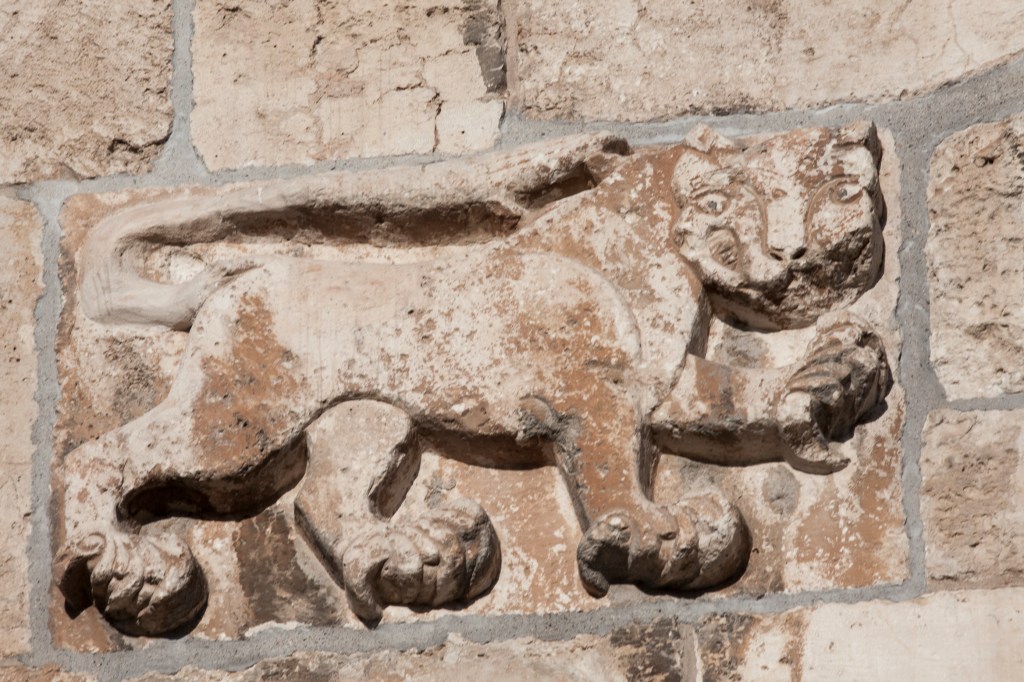
Lions were prevalent in ancient Israel but went extinct in Medieval times. It was a mighty thing to kill a lion. The Spirit of God enables Samson to tear the lion to pieces. And if it wasn’t impressive enough that Samson killed the lion—“like you tear a young goat”—because you know, everyone can do that—the text tells us that he does it barehanded.[30] It is also a ‘roaring’ lion—not just something he came upon lying in a field, but one that is intent on doing harm. Based on a study of African lions by George Shaller[31], this lion is a full-grown, young, nomadic lion, which is perhaps the most dangerous instance of the world’s dominant land predator that one could possibly encounter.[32]
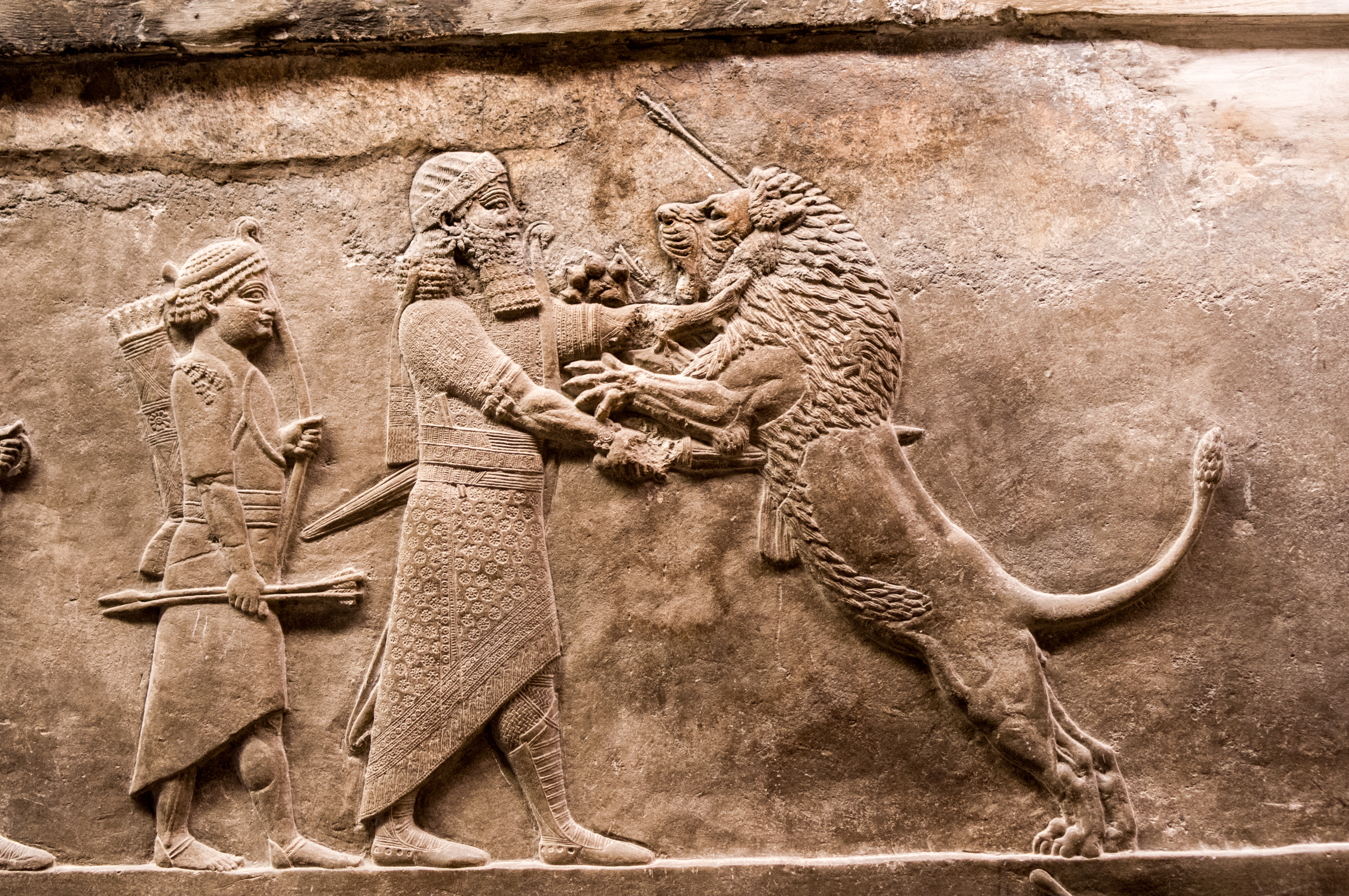
In this period, courageous encounters with animals are told—so that the hero is put in a powerful light.[35] It is a compelling visual, where the animals seem like playthings and the hero stays upright and seems to overpower the creature with ease.[36] Lions appear in many Ancient Near Eastern carvings. From a palace at Nimrud, an individual is depicted as struggling with a single lion, and a shield from Egypt shows Tutankhamun grasping two lions by the tail.[37] In Persian artistry, the hero might be the king, or just a hero type:[38] the “Master of Lions.”[39] This happens in Greek iconography as well.[40] This generic “hero” identity resonates with the Samson story.[41]
In 2012, there was a discovery of an 11th-century B.C.E. seal found at Beth Shemesh—very close to Zorah, Samson’s birthplace. It has a representation of a person next to a lion—and has sparked associations between this discovery and Samson’s lion fight.[42] Samson fights this lion, but where were his parents? And he says nothing to them?! Then they go to Timnah—and he talks to the woman—for the first time? (so many questions) Now, when Samson heads back into town for the wedding, he finds the honey in the dead lion. This animal is dried out so much that a community of bees has moved in.[43] Normally flies and maggots would be flying around a dead carcass, not bees. Honey was believed to bring poetic and rhetorical abilities.[44] This is a test. Will he be true to his calling? And…no.[45] He takes the honey out of the dead carcass. A no-no for a Nazirite. He also gives some to his parents without telling them.
10 Now his father went down to see the woman. And there Samson held a feast, as was customary for young men. 11 When the people saw him, they chose thirty men to be his companions. Judges 14:10-11
This seems to be a wedding according to Philistine custom, with a seven-day festival of eating and drinking and games.[46] Samson’s stag party breaks the rules of his vow yet again. The feast is a seven-day drinking bout at the home of the bride’s parents.[47] A groom could not be alone during wedding preparations. He needed male companions.[48] When Samson arrives, they respond in fear—(so says the Septuagint) and he is immediately surrounded with 30 bodyguards, 30 “companions”—yeah, right—because they don’t want to take any chances.[49] Samson decides to have a little fun with the guards. It’s his wedding, and he gets to determine the games.
12 “Let me tell you a riddle,” Samson said to them. “If you can give me the answer within the seven days of the feast, I will give you thirty linen garments and thirty sets of clothes. 13 If you can’t tell me the answer, you must give ME thirty linen garments and thirty sets of clothes.” 14 He replied, “Out of the eater, something to eat; out of the strong, something sweet.” For three days they could not give the answer. Judges 14:10-14
Riddles were used for amusement at weddings, banquets, feasts, and intellectual gatherings of the ancient world.[50] This riddle has rhymes and repetition in the Hebrew. Samson is pictured as a trickster who tries to trap his opponents with his riddle.[51] It is a way to show off his strength, but his riddle exposes his pride. It looks clever on the surface —but underneath it, something deeper is going on. Samson is impulsive. Samson is driven by ego. Samson is playing games with the gift God gave him. He believes he can outsmart everyone. He believes his strength makes him untouchable. He believes he can play around not be burned. As the groom, Samson may be deliberately trying to shame the other Philistines and achieve honor, as well as get new clothes and status for himself.[52] A new set of clothes is high stakes, because a person would probably have only had one such set of clothing.[53] Something that is very hard for us to fathom.
In the context of a wedding, one of the possible answers to his riddle could have to do with overindulgence in food and alcohol that would lead to vomiting. [54] The word for “eater” is code-word for ‘a lion’ as well as—’bridegroom’ and… ‘one who vomits’ because all three are considered strong in terms of their appetite.[55] Vomiting would be a very common byproduct of wedding indulgence![56] The most probable answer to this statement…would have been love.[57] Love could be seen as both bitter and sweet.[58] Another solution to the riddle could have some sexual innuendo.[59] But no one can guess it, because it is not set in the context of the wedding, and no one was there when Samson killed the lion. The riddle contains an omen of things to come…[60] It’s a symbolic prelude to his upcoming confrontations with the Philistines.[61] Who is stronger than a lion? No one. Except…Samson is—as the Philistines will soon discover.[62]
15 On the fourthday, they said to Samson’s wife, “Coax your husband into explaining the riddle for us, or we will burn you and your father’s household to death. Did you invite us here to steal our property?” 16 Then Samson’s wife threw herself on him, sobbing, “You hate me! You don’t really love me. You’ve given my people a riddle, but you haven’t told me the answer.” “I haven’t even explained it to my father or mother,” he replied, “so why should I explain it to you?” 17 She cried the whole seven days of the feast. So on the seventh day he finally told her, because she continued to press him. She in turn explained the riddle to the sons of her people. Judges 14:15-17a
Samson’s new wife is in a tough spot. After repeated attempts to get the answer, she is threatened with death! She presses harder. Even though Samson has the strength enough to tear a lion limb from limb, he melts like honey in a woman’s hand,[63] and he tells her the meaning. She tells it to the Philistine men who were part of the wedding feast.
Before sunset on the seventh day the men of the town said to him, “What is sweeter than honey? What is stronger than a lion?” Samson said to them, “If you had not plowed with my heifer, you would not have solved my riddle.” 19 Then the Spirit of the Lord came powerfully upon him. He went down to Ashkelon, struck down thirty of their men, stripped them of everything and gave their clothes to those who had explained the riddle. Burning with anger, he returned to his father’s home. 20 And Samson’s wife was given to one of the companions who had attended him at the feast. Judges 14:17b-20
Samson has been tricked. The Philistines found out the right answer, and present Samson with a new riddle that demands a different answer, and in so doing lets him know he was betrayed.[64] The new riddle demonstrates their victory, and shames Samson in the process.[65] He knows that they cheated. There’s no other way they could have gotten the information. In his anger, he makes derogatory comments about his new wife. He has been made to look like a fool.[66] In his anger, he goes to the coast, kills thirty men and takes their belongings—their clothes and equipment—like weapons and tools—consider how much THAT would have weighed! …[67] and he carries the items all the way back to Timnah to fulfill his promise. After he goes home, his wife is given to another man, unbeknownst to him. In the traditions of that period, there would not be permanent cohabitation for a bit after the marriage. The wife would live at her home, and the husband would visit her regularly, bringing gifts.[68] Samson had left the wedding in a huff but hopes to soften her mood with a gift.[69]
Later on, at the time of wheat harvest, Samson took a young goat and went to visit his wife. He said, “I’m going to my wife’s room.” But her father would not let him go in. 2 “I was so sure you hated her,” he said, “that I gave her to your companion. Isn’t her younger sister more attractive? Take her instead.” Judges 15:1-2
How’s that for a reception? The woman’s father has done nothing wrong. Yes, they were married, but it looked like Samson had rejected her.[70] He offers her his younger daughter, which is a normal practice—we might be horrified, but in that day, it’s a reasonable compromise.[71] In the time of the Judges there was no centralized form of government, and there was a belief that every wrong must be balanced out by a reciprocal act.[72]
3 Samson said to them, “This time I have a right to get even with the Philistines; I will really harm them.” So he went out and caught three hundred foxes and tied them tail to tail in pairs. He then fastened a torch to every pair of tails, lit the torches and let the foxes loose in the standing grain of the Philistines. He burned up the shocks and standing grain, together with the vineyards and olive groves. Judges 15:3-5
The wedding and wheat harvest could have taken place in May[73], as durum wheat is harvested in Israel, usually in May or early June. Samson wants to get even with the Philistines. He isn’t looking for revenge on the father-in-law, which is another indication that this man is not a Philistine, but may simply be under pressure from the Philistine overlords who control the city of Timnah.[74] Samson is sick of the system, sick of the injustice. He goes on what he thinks is a justified rampage, and he rounds up some animals.

Our Bibles call the animals ‘foxes’, but the Hebrew word was used for both foxes and jackals. Foxes are more solitary animals, and jackals[75] were more common in Palestine, so he was probably dealing with jackals.[76] The Hebrew word for this animal also carries the word for ‘torches’ in Arabic. It has a sense of fire and fury, and the anger in one’s bosom.[77] How Samson tied them together is an impressive mystery. He may have done it so that the animals would keep stopping to try and separate themselves, which would make the fire actually light the crops.[78]
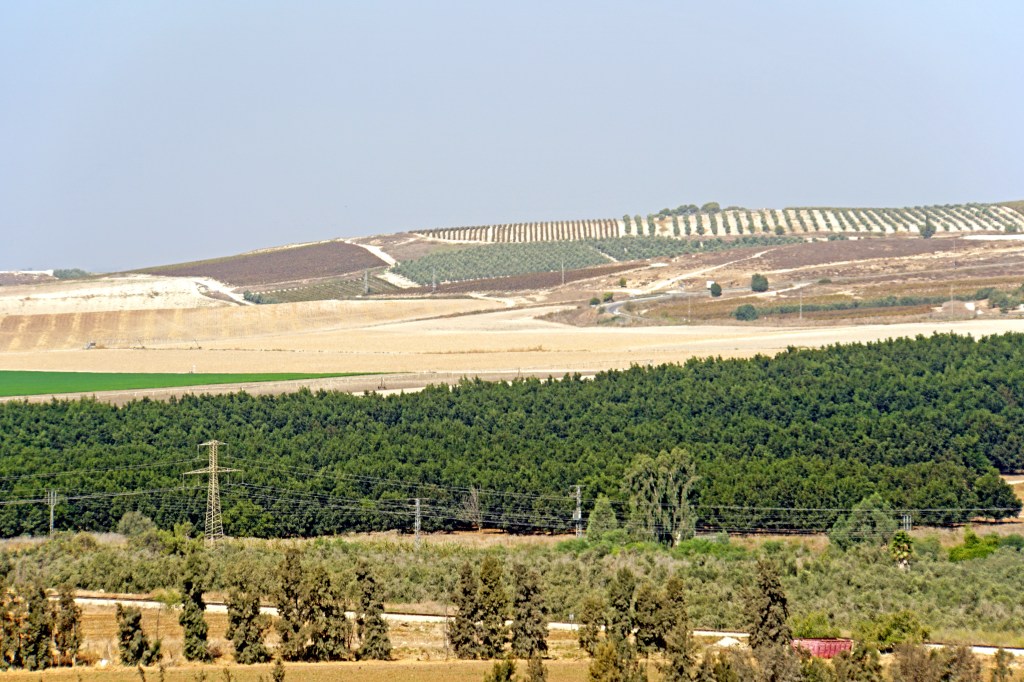
These are some aerial views of the Sorek Valley. The Sorek River winds through the valley and runs into Timnah. The Israelite towns of Zorah and Eshtaol would be in the foothills of the mountains.[80] Philistia was grain country, and Samson’s actions strike at the heart of the Philistine economy.[81] Grain, grapes and olives were the economic and dietary staples![82] Samson destroys people’s livelihood, and creatures of God in the process. To burn these items…would mean an economic disaster for the Philistine people…who were already trying to regain economic and military power after a devastating war with Egypt. This would have also dealt a major blow to overseas trade agreements. THIS act was the act that prompted the Philistines to mobilize against Samson.[83] It was an act of national magnitude![84] And it was an act against their god—Dagon—who was said to be the god of grain![85] As in the days of the Israelites’ slavery in Egypt, God uses Samson’s actions to show that HE is sovereign over all gods! And he is unwilling to share his glory with anyone![86]
6 When the Philistines asked, “Who did this?” they were told, “Samson, the Timnite’s son-in-law, because his wife was given to his companion.” So the Philistines went up and burned her and her father to death. 7 Samson said to them, “Since you’ve acted like this, I swear that I won’t stop until I get my revenge on you.” 8 He attacked them viciously and slaughtered many of them. Then he went down and stayed in a cave in the rock of Etam. Judges 15:6-8
Maybe it was easier for them to go after who was closest and most accessible, but the retribution is confusing.[87] They go after Samson by burning his wife—who is no longer married to him? And her father? The very thing she tried to avoid by telling them the meaning of the riddle has happened to her.
Now Samson is out for revenge. He attacks them—’leg on thigh’ says the Hebrew. This term could refer to an early form of combat called Pankration—that was also known in combat sports in that time in Greece and Egypt,[88] a combination of Boxing and Wrestling which included blows to the lower extremities.[89] Then he goes and hides.
9 The Philistines went up and camped in Judah, spreading out near Lehi. 10 The people of Judah asked, “Why have you come to fight us?” “We have come to take Samson prisoner,” they answered, “to do to him as he did to us.” 11 Then three thousand men from Judah went down to the cave in the rock of Etam and said to Samson, “Don’t you realize that the Philistines are rulers over us? What have you done to us?” He answered, “I merely did to them what they did to me.” 12 They said to him, “We’ve come to tie you up and hand you over to the Philistines.” Samson said, “Swear to me that you won’t kill me yourselves.” 13 “Agreed,” they answered. “We will only tie you up and hand you over to them. We will not kill you.” So they bound him with two new ropes and led him up from the rock. Judges 15:9-13
The key word here is ‘bind.’ Samson in bondage- is a symbol of a nation that is in bondage to the Philistines.[90] God is the only source of strength—for Samson, and for the nation, and if they come back to the worship of Yahweh, they will find freedom from that bondage—IF they live the way that God wants them to.[91] Samson’s flight has escalated the feud into an international crisis—which is exactly what God wants.[92] But the people of Israel see him as a threat to their national security and their peace.[93] The Judahites have been fierce in battle before, but now, instead of rallying their troops, or calling on Samson to lead the way in fighting their oppressors, as we’ve seen with the other judges, they make a deal with the enemy.[94] They plan to turn Samson over.
14 As he approached Lehi, the Philistines came toward him shouting. The Spirit of the Lord came powerfully upon him. The ropes on his arms became like charred flax, and the bindings dropped from his hands. 15 Finding a fresh jawbone of a donkey, he grabbed it and struck down a thousand men. 16 Then Samson said, “With a donkey’s jawbone I have made donkeys of them. With a donkey’s jawbone I have killed a thousand men.” Judges 15:14-16
This is the only time we see Samson using a weapon of sorts. It’s an unlikely weapon for an unlikely judge. The scene reminds us of Shamgar with his oxgoad in Judges 3.[95] He grabs a fresh jawbone…which is considered part of a corpse—another violation of his Nazirite vows.[96] God has been looking for an opportunity against the Philistines,[97] but even though it is the Spirit of God giving him strength, Samson takes all the credit.[98] His little victory hymn never mentions God.[99] But the conflict takes its toll.
17 When he finished speaking, he threw away the jawbone; and the place was called Ramath Lehi. 18 Because he was very thirsty, he cried out to the Lord, “You have given your servant this great victory. Must I now die of thirst and fall into the hands of the uncircumcised?” 19 Then God opened up the hollow place in Lehi, and water came out of it. When Samson drank, his strength returned and he revived. So the spring was called En Hakkore, and it is still there in Lehi. 20 Samson led Israel for twenty years in the days of the Philistines. Judges 15:17-20
Samson is now in a place of barrenness. His wife is dead. He has no children. He has no water. And ye has not conquered the Philistines.[100] He looks up and offers a prayer. Not a good prayer, but a prayer, nonetheless. This is the first time he has shown the slightest awareness of the God of Israel.[101] And yet, Samson recognizes that he is dependent on God and cries out for help, something that Israel has not done in a long time. His prayer is still self-centered, and narcissistic.[102] He renames the spring in a way that focuses on him, rather than the grace of God in providing water.[103] En Hakkore—means ‘the spring of the namer.’[104] This scene is very reminiscent of the earlier scene with the lion, though. There, Samson scooped honey out and ‘sweetness came forth from the eater’ -as in his riddle. Here, God split open the hollow place near the dead donkey, and gives life-giving water.[105]
For twenty years, Samson led, or ‘judged’ Israel. The “judge” has a wide range of functions.[106] There is another famous set of stories that we’ll get into in the next chapter, but THIS… marks the recognition of Samson as a judge—both by Israel and by the Philistines.[107]
These stories are only a small snippet of the tales in the life of this unlikely judge. Samson would begin to deliver Israel. The incident with the lion foreshadowed Israel’s deliverance, even though Israel had failed in carrying out God’s command to conquer their enemies. Samson began the war with the Philistines, which David completed later.[108] David’s success was built on Samson, the powerful national enemy of Philistia.[109]
In Samson, God remains faithful to his promise, despite his flawed character— and continues with his mission.[110] God shows us that He works even through lives full of contradiction and confusion. Samson’s story in Judges 14–15 begins with a riddle, but it ends with revelation:
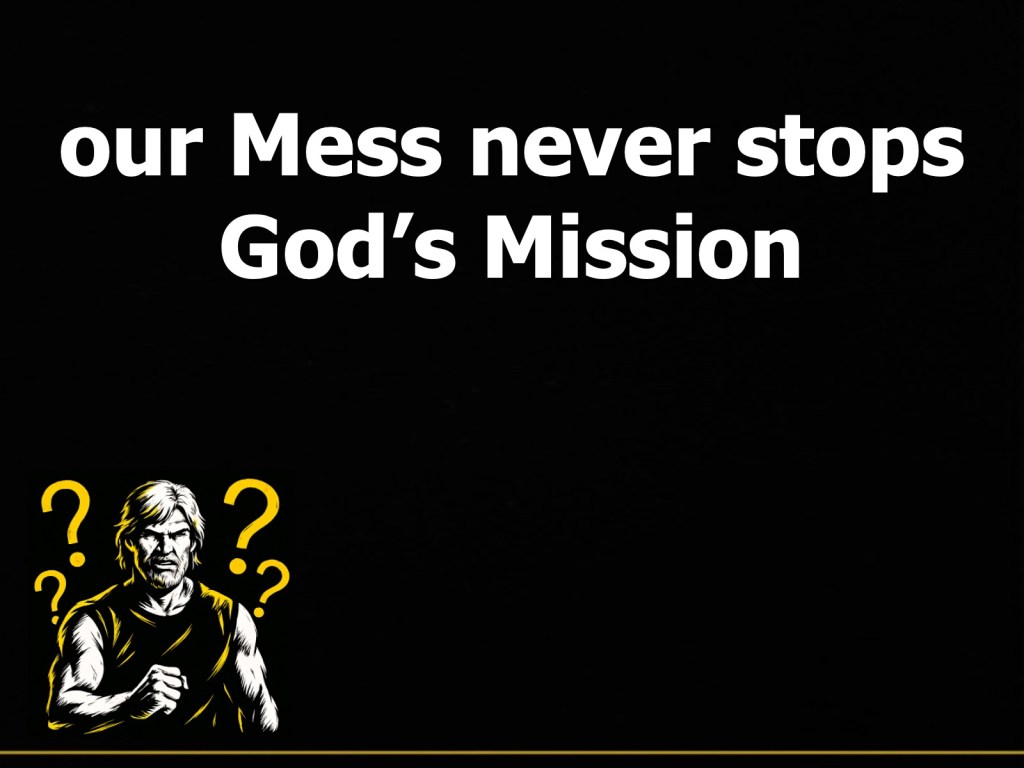
Even in our confusion, God’s purposes are never defeated. Even in the riddles of life, God is still writing the story. If Samson lived today, he might remind us of The Riddler from the Batman stories — sharp-witted, unpredictable, powerful, and always playing games no one else fully understands. But in this story, Samson isn’t just giving a riddle — he IS one. Samson was set apart to God, he was given strength by the Holy Spirit,
he was given the gift of physical strength.[111] Instead, he did what was pleasing in his own eyes. He pursued his own desires, in places of uncleanness and death.[112] Samson may have been the strongest man who ever lived, but when it came to discipline and his desires, he was weak.[113] He defeats lions with his bare hands…and yet melts under pressure from the people around him. He wages war against the Philistines…but can’t wage war against his own desires. His life looks like strength, but underneath it is confusion, contradiction, and chaos. And yet — “Out of the eater, something to eat; out of the strong, something sweet.” It’s more than a riddle about honey and lions — it’s a riddle about God’s grace. Because only God can draw sweetness out of strength misused, purpose out of pride, and redemption out of rebellion. Through Samson’s pride…through Samson’s anger…through Samson’s terrible decisions…through his victories and his failures…God is still working. God is still weaving. God is still accomplishing His will.
How can God use someone like Samson? How can God work through a man who is so self-centered, so impulsive, so inconsistent? How can God keep advancing His mission when His people are confused, compromised, or completely checked out? It feels impossible. But that is the riddle of grace: Our mess never stops God’s mission. God works with Samson to accomplish HIS purposes. He empowers him with the Holy Spirit, and gives him superhuman strength, but he does NOT override his flaws or his deficiencies. He gives Israel a leader who reflects their desire to do what is’ right in their own eyes’, and yet, he gives them some form of deliverance.[114]
If we’re honest, Samson isn’t just a riddle —he exposes ours. Because God has given us resources too: We have the Holy Spirit. We are set apart for a mission. We are called to discipline and purpose. We have gifts, influence, strength, and opportunities. And the question we must wrestle with is —Will we comply with God’s mission or go against it?
Will we use our strength for His purposes—or spend it on our own desires? Will we live by what is pleasing in HIS eyes—or what is pleasing in our eyes? God may nudge people into making choices that accomplish his plans, but every human still has freedom and responsibility for the choices they make.[115] Samson shows us that God can work through deeply flawed people…but he also warns us of what happens when we treat God’s gifts like games.
In our lives, the pieces don’t always seem to fit. The story doesn’t seem to make sense. But hear this: Life may be a riddle, but God’s purpose is never in question. Your confusion does not mean God is absent. Your inconsistency does not mean God has stopped working. He was faithful in Samson’s contradictions…and He will be faithful in yours. Here’s the hope: Even in confusion and failure…God’s purposes are never defeated. So the real question today is not, “Do I have strength like Samson?”
The question is: “What will I do with the strength God has already given me?” Let’s ask God to take the strength He has already placed in us—the Spirit, the grace, the calling, the gifts—and use them for more than we imagine. May God align our desires with His purposes, and may we trust that His mission will stand—even when we stumble.
PRAYER: Lord God, thank You that in a world full of riddles and questions, You are not confused and You are never defeated. We see ourselves in Samson sometimes—set apart, gifted, empowered by Your Spirit, and yet so often pulled by our own desires,
drawn toward what is pleasing in our own eyes. Forgive us for the ways we have treated Your gifts like games, for the times we have used Your strength to chase our own agendas instead of Your mission. Today we confess our weakness and our wandering, and we ask You to meet us in the middle of our contradictions. Where our lives feel like a riddle, bring Your wisdom. Where we are enslaved by habits and sin, bring Your freedom. Where we have made a mess, bring Your mercy and Your redeeming power. Holy Spirit, teach us to cooperate with Your purposes. Take the strength, influence, and opportunities You’ve given us and aim them toward Your kingdom. Help us to live not by what is right in our own eyes, but by what is right in Yours. And as we go from this place, remind us again and again: our mess never stops Your mission. Even in our confusion, Your purposes stand firm. So, we trust You with the parts of our story that don’t make sense yet, believing that You are still writing, still weaving, still at work. In the strong name of Jesus we pray, Amen.
—
Bibliography
- Arnold, Bill T. and H.G.M. Williamson, eds, Dictionary of the Old Testament Historical Books, Downers Grove: InterVarsity Press, 2005.
- Block, Daniel I. Judges, Ruth, Nashville: B&H Publishing Group, 1999.
- Boda, Mark J., Mary L. Conway, Daniel I. Block, general editor; Judges, Exegetical Commentary on the Old Testament, Grand Rapids: Zondervan Academic, 2022.
- Brown, F; S. Driver, and C. Briggs, The Brown-Driver-Briggs Hebrew and English Lexicon, Peabody: Hendrickson Publishers, 2010.
- Butler, Trent C., Word Biblical Commentary: Judges, Grand Rapids: Zondervan, 2009.
- Frolov, Serge, Judges, Grand Rapids: William B. Eerdmans Publishing Company, 2013.
- Frymer-Kensy, Tikva, Reading the Women of the Bible: A New Interpretation of their stories, New York: Schocken Books, 2002.
- Goldingay, John, Joshua, Judges & Ruth for Everyone, Louisville: Westminster John Knox Press, 2011.
- Inrig, Gary, Hearts of Iron, Feet of Clay, Chicago: Moody Bible Institute, 1979.
- Keller, Timothy, Judges for You, Charlotte: The Good Book Company, 2013.
- Matthews, Victor H., Judges & Ruth, Cambridge: Cambridge University Press, 2004.
- McCann, J. Clinton, Judges, Louisville: John Knox Press, 2002.
- Wilcock, Michael, editor, J.A. Motyer, The Message of Judges: Revised Edition, Downers Grove: Illinois, 1992, 2021.
- Soggin, J. Alberto, Judges, Philadelphia: The Westminster Press, 1981.
- Smit, Laura A. and Stephen E. Fowl, Brazos Theological Commentary on the Bible: Judges and Ruth, Grand Rapids: Brazos Press, 2018.
Articles
- Adar-Bunis, Mattat, “Samson and the Bees as a Myth: An Anthropological Reading”, Journal for the Study of Religion, Nature and Culture, 14 no 3 2020, 351-369.
- Brenna, Christopher, “The Lion, the Honey, and the New Timnite Woman: Joseph and Aseneth and the Samson Cycle”, Journal for the Study of the Pseudepigrapha, 26 no 2 Dec 2016, 144-163.
- Emmrich, Martin, “The symbolism of the lion and the bees: another ironic twist in the Samson cycle”, Journal of the Evangelical Theological Society, 44 no 1 Mar 2001, 67-74.
- Foster, Stuart J., “Judges 14:4: Yahweh uses Samson to provoke the Philistines”, Old Testament Essays (New Series), 25 no 2 2012, 292-302.
- Greenberg, Blu, “Marriage in the Jewish tradition”, Journal of Ecumenical Studies, 22 no 1 Wint 1985, 3-20.
- Johnson, Benjamin J. M., “What Type of Son is Samson?”, JETS 53/2 (June 2010), 269–286.
- Johnson, Dylan R., “The ‘Spirit of Yhwh’ and Samson’s Martial Rage: A Leitmotif of the Biblical Warrior Tradition”, Vetus testamentum, 72 no 2 2022, 214-236.
- Margalith, Othniel, “The legends of Samson/Heracles”, Vetus testamentum, 37 no 1 Jan 1987, 63-70.
- Margalith, Othniel, “Samson’s foxes”, Vetus testamentum, 35 no 2 Apr 1985, 224-229
- Freedman, David Noel, “Note on Judges 15:5”, Biblica, 52 no 4 1971, 535.
- McDaniel, Karl, “Samson’s riddle”, Didaskalia, 12 no 2 Spr 2001, 47-57.
- Menn, Esther Marie, “Judah and Tamar (Genesis 38) in ancient Jewish exegisis: studies in literary form and Hermeneutics”, Koninklijke Brill, NV, 1997.
- Naufal, Tony P., “Samson, the Lion, and Honey: How Arabic Unlocks Mysteries of the Hebrew Bible”, Theological Review, 39 no 1 2018, 22-38.
- Roskoski, John, “The Length of Samson’s Judgeship: Comparing Judges 15:20 and 16:31”, Journal of Biblical Theology, 7 no 3 Jul-Sep 2024, 123-144.
- Roskoski, John, “The Importance of Judges 15:3-5 in the Samson Narratives”, Journal of Biblical Theology, 4 no 2 Apr-Jun 2021, 123-144.
- Roskoski, John, “Judges 15:8: ‘And He Attacked Them Hip and Thigh with a Great Slaughter’”, Journal of Biblical Theology, 4 no 4 Oct-Dec 2021, 5-21.
- Ross, Jillian L., “The Philistines’ Worship As A Foil: Worship In Judges 15-16”, Trinity Journal, 44 no 2 Fall 2023, 109-130.
- Schipper, Jeremy, “Narrative obscurity of Samson’s ḤYDH in Judges 14.14 and 18”, Journal for the Study of the Old Testament, 27 no 3 Mar 2003, 339-353.
- Smith, Michael J., “The Failure Of The Family In Judges, Part 2: Samson”,
- Bibliotheca Sacra 162, October-December 2005, 424-36.
- Strawn, Brent A., “kĕpîr ʼărāyôt in Judges 14:5”, Vetus testamentum, 59 no 1 2009, 150-158.
- Walker, M Justin, “Samson’s Lion Encounter (Judges 14:5-6) and Persian Period Leonine Iconography”, Vetus testamentum, 72 no 4-no 5 2022, 769-820.
- Weitzman, Steven, “The Samson story as border fiction”, Biblical Interpretation, 10 no 2 2002, 158-174.
- Yadin-Israel, Azzan, “Samson’s ḥîdâ”, Vetus testamentum, 52 no 3 2002, 407-426.
- Yates, Gary E.; Ross, Jillian L., “Does Yahweh Approve Of Samson’s Marriage In Judges 14?: An Analysis Of ‘From Yahweh’ (מיהוה)”, Journal of the Evangelical Theological Society, 66 no 1 Mar 2023, 33-52.
Websites (accessed between November 10-14, 2025)
- https://citydays.com/articles/riddle-me-this-our-top-25-riddles-with-answers/
- https://biblediscoverytv.com/history/2022/lions-kings/
- https://persepolistablets.blogspot.com/2007/07/seals-in-archives-persepolitan.html
- https://www.biblicalarchaeology.org/daily/biblical-artifacts/artifacts-and-the-bible/lion-seal-from-beth-shemesh-sparks-samson-discussion/
- https://library.biblicalarchaeology.org/article/rising-from-the-ashes-israel-and-the-dawn-of-the-iron-age/philistine-beer-jug-and-other-vessels_bp23an/
- https://www.gotquestions.org/riddles-in-the-Bible.html
- https://www.jewishencyclopedia.com/articles/8378-jackal
- https://ashleydfarmer.wordpress.com/tag/timnah/
- https://www.britannica.com/topic/Dagan
—
Going Deeper Questions
-What do you enjoy (or hate!) about riddles?
-Have you ever heard a “riddle” or quote that stuck with you for years? What was it and why?
Read Judges 14:1–4 (Getting into the Story)
–Samson chooses a wife based solely on what looks good to him. What’s a time when you made a choice based mainly on attraction or impulse? How did it go?
-Where do you see the tension in your own life—between what you want, what wise people say, and what God might be doing?
-Israel had become comfortable living under Philistine rule. What are some ways comfort, ease, or fitting in with culture can slowly reshape our values or priorities without us even noticing?
-What do you notice about Samson’s desires, his parents’ concerns, and God’s hidden purpose in verse 4?
-Samson doesn’t see what God is doing, but God sees everything Samson is doing. How do you live differently when you remember that your choices fit into a much larger story God is writing?
Read Judges 14:5–9
–Samson is in a vineyard (already suspicious for a Nazirite), kills a lion by the Spirit’s power, and later takes honey from the carcass. What parts of this scene seem heroic… and what parts feel compromised or careless?
-Samson went back to look at the lion’s carcass, which is how small compromises often start. What’s a “little detour” in life that tends to derail your focus — maybe a distraction, a habit, or a mindset shift — even when you didn’t mean for it to?
-Why do you think people sometimes return to habits or patterns they know aren’t helpful? What makes those things so magnetic?
-Samson tears the lion apart but tells no one and then takes the honey and gives it to his parents without telling them where it came from. Why do you think he kept such a dramatic moment to himself?
-When have you seen someone hide a part of their story—good or bad—because they didn’t want others to know what they were doing?
-Verse 4 told us all this was “from the Lord,” but Samson’s behavior here is hardly righteous. How do you reconcile God accomplishing His purpose through Samson’s dysfunction?
Read Judges 14:10–20 (Samson’s riddle)
–What do Samson’s actions at the feast (the bet, the riddle, the anger) reveal about his character?
-The bet is 30 sets of clothes—wildly expensive in that culture. What’s the riskiest bet, dare, or challenge you’ve ever taken? Did it pay off or backfire?
-Why do people (even today) gamble their reputation or dignity to impress others?
-His wife tells the answer to save her life—and her father’s life. Do you think she betrayed Samson, or was she cornered?
-How do you react when someone sees through your image, game, or defense mechanisms?
Read Judges 15:1-8
–Samson thought he could just show up with a goat and resume married life. What’s a time you totally misread someone’s signals or intentions? (Serious or funny!)
–Where do you see unhealthy entitlement in Samson’s behavior? In what ways do we sometimes expect relationship privileges without doing relationship work?
-Samson responds with, “This time I have a right to get even…” Samson acts impulsively out of humiliation and wounded pride. When you feel deeply hurt or embarrassed, what’s your first instinct—to withdraw, retaliate, or bargain?
-How does the gospel reshape our instinctive reactions?
-Samson’s act destroys grain, vineyards, and olive groves—people’s livelihoods. If you were a farmer in that region, how would Samson’s act have affected your daily life? Your trust? Your sense of safety? What does imagining yourself in their shoes help you understand about the cost of someone else’s sin?
Read Judges 15:9–20 (Between a Rock and a Hard Place)
–Samson picks up a fresh jawbone of a donkey—an unclean object—and defeats a thousand men. Why do you think God often chooses unlikely tools and unlikely moments to accomplish His work?
-What’s the most “unlikely” way God has provided for you or moved in your life?
-Samson, exhausted and dying of thirst, finally cries out to God. What does his prayer tell you about the state of his relationship with God? Can you recall a moment when exhaustion, frustration, or desperation finally pushed you to pray?
-Where do you see both Samson’s failure and God’s faithfulness in this section?
Our mess never stops God’s mission.
-Where do you see that in Samson’s story?
-Where have you seen that in your own story—or in someone you know?
–God sovereignly directs the story, and at the same time, He calls us to make choices that truly matter within it. How does that keep you from despair on one hand (“I’m such a mess”) and from laziness on the other (“God will do it anyway”)?
-Think about these “life riddles” (you can pick one to think through):
-Why do we know what’s good for us and still not do it?
-Why do our greatest strengths so often become our greatest weaknesses?
-Why do we repeat the same mistakes and expect different results?
Which of these feels most true for you right now, and why?
Application and Practice
Samson was set apart, empowered by the Spirit, and given physical strength—but he often used it for himself.
-What are one or two gifts or strengths God has given you (skills, influence, opportunities, personality)?
-In what ways are you tempted to use those primarily for yourself instead of for God’s mission?
-Pick one concrete, practical step you could take this week to aim your strength, gifts, or opportunities more directly at God’s mission (at home, at church, at work, in relationships).
Prayer: Lord, thank You that our mess never stops Your mission. Give us eyes to see the story You’re writing, wisdom to choose what is right in Your eyes, and strength to use our gifts for Your purposes and not our own. Shape our hearts, redirect our desires,
and lead us this week in the power of Your Spirit. Amen.
[1] https://citydays.com/articles/riddle-me-this-our-top-25-riddles-with-answers/
[2] Michael J. Smith., “The Failure Of The Family In Judges, Part 2: Samson”, Bibliotheca Sacra 162, October-December 2005, 424-36, 425.
[3] Trent C. Butler, Word Biblical Commentary: Judges, Grand Rapids: Zondervan, 2009, 332.
[4] Daniel I, Block, Judges, Ruth, Nashville: B&H Publishing Group, 1999. 424.
[5] Genesis 38:1, 14. In verse one of chapter 38, Judah ‘goes down’ which is a symbolic step, just as Samson ‘goes down’ in these stories in Judges.
[6] Esther Marie Menn, Judah and Tamar (Genesis 38) in ancient Jewish exegisis: studies in literary form and Hermeneutics, (Koninklijke Brill, NV, 1997), 76
[7] Genesis 38:1
[8] Mark Boda, Mary L. Conway, Daniel I. Block, general editor; Judges, Exegetical Commentary on the Old Testament, Grand Rapids: Zondervan Academic, 2022, 616.
[9] John Roskoski Roskoski, John, “The Importance of Judges 15:3-5 in the Samson Narratives”, Journal of Biblical Theology, 4 no 2 Apr-Jun 2021, 123-144, 126.
[10] Daniel I. Block, 425.
[11] Butler, 333.
[12] Roskoski, John, The Importance of Judges 15-3-5 in the Samson Narratives, 126.
[13] Stuart J. Foster, “Judges 14:4: Yahweh uses Samson to provoke the Philistines”, Old Testament Essays (New Series), 25 no 2 2012, 292-302, 294.
[14] Victor H. Matthews, Judges & Ruth, Cambridge: Cambridge University Press, 2004, 149.
[15] Stuart J. Foster, 293, 294.
[16] 1 Samuel 13:20
[17] Stuart J. Foster, 299.
[18] Daniel I. Block, 426.
[19] Benjamin J. M. Johnson, 284.
[20] Benjamin J.M. Johnson, 274.
[21] Trent C. Butler, 333.
[22] Mark J. Boda, Mary L. Conway, 621.
[23] Stuart J. Foster, 293.
[24] Stuart J. Foster, 300.
[25] Gary E. Yates, Jillian L. Ross, 47.
[26] Roskoski, John, The Importance of Judges 15-3-5 in the Samson Narratives, 129.
[27] Michael J. Smith., “The Failure Of The Family In Judges, Part 2: Samson”, Bibliotheca Sacra 162, October-December 2005, 424-36, 430.
[28] Mark J. Boda, Mary L. Conway, 618.
[29] https://biblediscoverytv.com/history/2022/lions-kings/
[30] Brent A. Strawn, kĕpîr ʼărāyôt in Judges 14vs5, Vetus testamentum, 59 no 1 2009, 150-158, 151.
[31] Strawn, 155.
[32] Strawn, 158.
[33] https://persepolistablets.blogspot.com/2007/07/seals-in-archives-persepolitan.html
[34] Justin M. Walker, “Samson’s Lion Encounter (Judges 14:5-6) and Persian Period Leonine Iconography”, Vetus testamentum, 72 no 4-no 5 2022, 769-820, 785.
[35] Justin M. Walker, 785.
[36] Walker, 786.
[37] Walker, 787.
[38] Walker, 790.
[39] Walker,
[40] Walker, 793.
[41] Walker, 813.
[42] https://www.biblicalarchaeology.org/daily/biblical-artifacts/artifacts-and-the-bible/lion-seal-from-beth-shemesh-sparks-samson-discussion/
[43] Trent C. Butler, 335.
[44] Mattat Adar-Bunis, Adar-Bunis, Mattat, “Samson and the Bees as a Myth: An Anthropological Reading”, Journal for the Study of Religion, Nature and Culture, 14 no 3 2020, 351-369, 360.
[45] Based on Daniel I. Block, 429.
[46] Daniel I. Block, 437.
[47] Daniel I. Block, 431.
[48] Trent C. Butler, 336.
[49] Daniel I. Block, 432.
[50] https://www.gotquestions.org/riddles-in-the-Bible.html
[51] Victor Matthews, 147.
[52] Mark J. Boda, Mary L. Conway, 626.
[53] Trent C. Butler, 337.
[54] Karl McDaniel, “Samson’s riddle”, Didaskalia, 12 no 2 Spr 2001, 47-57, 51-52.
[55] Schipper, Jeremy, “Narrative obscurity of Samson’s ḤYDH in Judges 14.14 and 18”, Journal for the Study of the Old Testament, 27 no 3 Mar 2003, 339-353, 341.
[56] Justin M. Walker, 780.
[57] Justin M. Walker, “Samson’s Lion Encounter (Judges 14:5-6) and Persian Period Leonine Iconography”, Vetus testamentum, 72 no 4-no 5 2022, 769-820, 780.
[58] Jeremy Schipper, 342.
[59] Karl McDaniel, 51-52.
[60] Martin Emmrich, “The symbolism of the lion and the bees: another ironic twist in the Samson cycle”, Journal of the Evangelical Theological Society, 44 no 1 Mar 2001, 67-74, 71.
[61] Martin Emmrich, 71.
[62] Jeremy Schipper, 351.
[63] Daniel I. Block, 435.
[64] Karl McDaniel, 54.
[65] Mark J. Boda, Mary L. Conway, 635.
[66] Boda, Conway, 636.
[67] Daniel I. Block, 436.
[68] Daniel I. Block, 437.
[69] Daniel I. Block, 439.
[70] Mark J. Boda, Mary L. Conway, 637.
[71] Daniel I. Block, 440.
[72] Boda, Conway, 642.
[73] Block, 439.
[74] Roskoski, John, The Importance of Judges 15-3-5 in the Samson Narratives, 134.
[75] https://www.jewishencyclopedia.com/articles/8378-jackal
[76] Block, 441, footnote 368.
[77] Tony P. Naufal, “Samson, the Lion, and Honey: How Arabic Unlocks Mysteries of the Hebrew Bible”, Theological Review, 39 no 1 2018, 22-38, 25.
[78] Daniel I. Block, 441.
[79] https://ashleydfarmer.wordpress.com/tag/timnah/
[80] https://ashleydfarmer.wordpress.com/tag/timnah/
[81] Daniel I. Block, 441.
[82] Victor Matthews, 151.
[83] Roskoski, John, The Importance of Judges 15-3-5 in the Samson Narratives, 123.
[84] Roskoski, John, The Importance of Judges 15-3-5 in the Samson Narratives, 142.
[85] https://www.britannica.com/topic/Dagan
[86] https://ashleydfarmer.wordpress.com/tag/timnah/
[87] Daniel Block, 442.
[88] John Roskoski, Roskoski, John, “Judges 15:8: ‘And He Attacked Them Hip and Thigh with a Great Slaughter’”, Journal of Biblical Theology, 4 no 4 Oct-Dec 2021, 5-21, 6.
[89] John Roskoski, Roskoski, John, “Judges 15:8: ‘And He Attacked Them Hip and Thigh with a Great Slaughter’”, Journal of Biblical Theology, 4 no 4 Oct-Dec 2021, 5-21, 18.
[90] Victor Matthews, 153.
[91] Victor Matthews, 153.
[92] Daniel I. Block 443.
[93] Daniel I. Block, 444.
[94] Daniel I. Block, 443.
[95] Judges 3:31
[96] Daniel I. Block 445.
[97] Mark J. Boda, Mary L. Conway, 621.
[98] Block, 446.
[99] Trent C. Butler, 343.
[100] Laura A. Smit and Stephen E. Fowl, Brazos Theological Commentary on the Bible: Judges and Ruth, Grand Rapids: Brazos Press, 2018, 159.
[101] Boda, Conway, 657.
[102] Daniel I. Block, 447.
[103] Daniel I. Block, 447.
[104] Daniel I. Block, 447.
[105] Martin Emmrich, 72-73.
[106] Roskoski, John, “The Length of Samson’s Judgeship: Comparing Judges 15:20 and 16:31”, Journal of Biblical Theology, 7 no 3 Jul-Sep 2024, 123-144, 125.
[107] Roskoski, John, The Length of Samson’s Judgeship, 128.
[108] Roskoski, John, The Importance of Judges 15-3-5 in the Samson Narratives, 138.
[109] Roskoski, John, The Importance of Judges 15-3-5, 140.
[110] Martin Emmrich, 74.
[111] Based on Gary Inrig, Hearts of Iron, Feet of Clay, Chicago: Moody Bible Institute, 1979, 220.
[112] Smit, Fowl, 157.
[113] Gary Inrig, 219.
[114] Gary E. Yates, Jillian L. Ross, “Does Yahweh Approve Of Samson’s Marriage In Judges 14?: An Analysis Of ‘From Yahweh’ (מיהוה)”, Journal of the Evangelical Theological Society, 66 no 1 Mar 2023, 33-52, 51.
[115] Yates, Ross, 52.
 Preach it Sista