
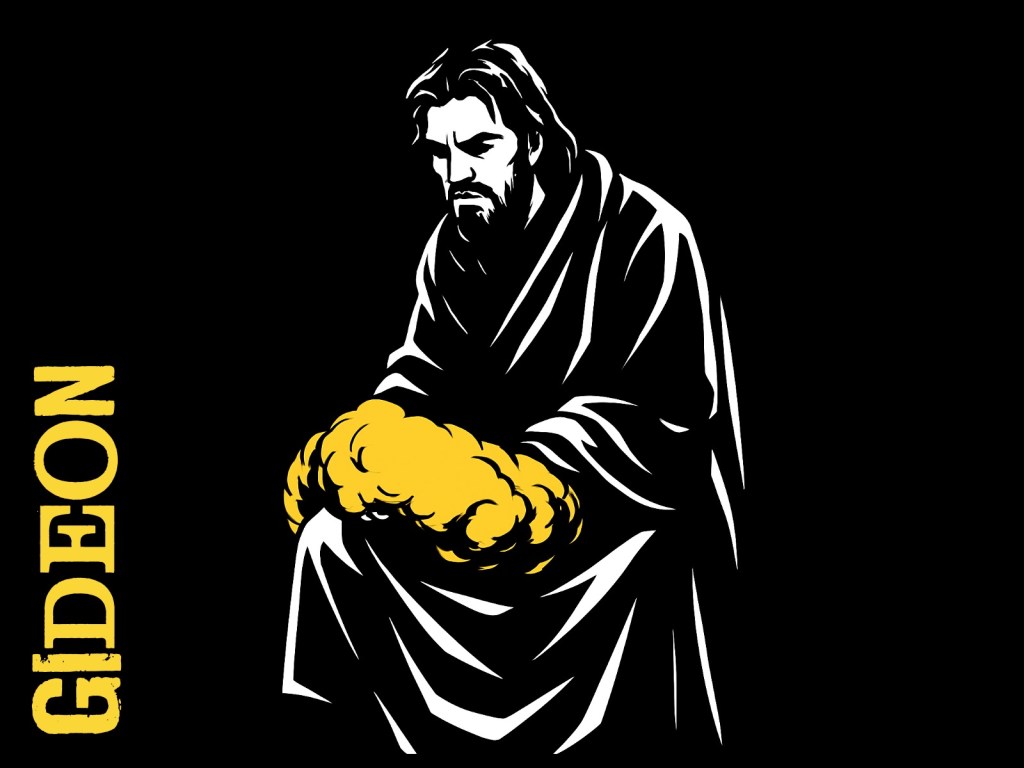
As we come to Judges 8, we are faced with a story of compromise, defeat, and backsliding—the last chapter in the life of a man who knew the greatest victory of faith set down in the Word of God.[1]
Now the Ephraimites asked Gideon, “Why have you treated us like this? Why didn’t you call us when you went to fight Midian?” And they challenged him vigorously. 2 But he answered them, “What have I accomplished compared to you? Aren’t the gleanings of Ephraim’s grapes better than the full grape harvest of Abiezer? 3 God gave Oreb and Zeeb, the Midianite leaders, into your hands. What was I able to do compared to you?” At this, their resentment against him subsided. Judges 8:1-3
The disgruntled Ephraimites come to Gideon because they weren’t in on the prizes of war, and their reputation could have suffered because of their lack of participation.[2] Gideon doesn’t say anything about his own call or his empowerment by the Spirit of God,[3] to win an amazing battle that only God could have accomplished! Has he forgotten? Does he really believe what he’s spouting off? Or is it posturing?
He offers only a question in return, which expects a positive answer. He gives them sweet words: “the best the Abiezrites can produce is less than the scraps off the Ephraimite’s table.” The proverb has the ring of a clever political slogan.[4] It may be humble tact—or a highly successful example of manipulation. But the flattery has its intended effect.[5] Worse yet, he will spend the rest of chapter 8 swaggering about the neighborhood as a military bully.[6]
A Good Start Doesn’t Guarantee A Faithful Finish
4 Gideon and his three hundred men, exhausted yet keeping up the pursuit, came to the Jordan and crossed it. 5 He said to the men of Sukkoth, “Give my troops some bread; they are worn out, and I am still pursuing Zebah and Zalmunna, the kings of Midian.” 6 But the officials of Sukkoth said, “Do you already have the hands of Zebah and Zalmunna in your possession? Why should we give bread to your troops?” 7 Then Gideon replied, “Just for that, when the Lord has given Zebah and Zalmunna into my hand, I will tear your flesh with desert thorns and briers.” 8 From there he went up to Peniel and made the same request of them, but they answered as the men of Sukkoth had. 9 So he said to the men of Peniel, “When I return in triumph, I will tear down this tower.” 10 Now Zebah and Zalmunna were in Karkor with a force of about fifteen thousand men, all that were left of the armies of the eastern peoples; a hundred and twenty thousand swordsmen had fallen. 11 Gideon went up by the route of the nomads east of Nobah and Jogbehah and attacked the unsuspecting army. 12 Zebah and Zalmunna, the two kings of Midian, fled, but he pursued them and captured them, routing their entire army. Judges 8:4-12
Gideon’s story is a change in the pattern of the judges.[7] He threatens these citizens with physical violence…no mention of troops, and the references are now singular: Gideon has launched out on his own,[8] in a rampage of gratuitous violence against his own people.[9]
13 Gideon son of Joash then returned from the battle by the Pass of Heres. 14 He caught a young man of Sukkoth and questioned him, and the young man wrote down for him the names of the seventy-seven officials of Sukkoth, the elders of the town. 15 Then Gideon came and said to the men of Sukkoth, “Here are Zebah and Zalmunna, about whom you taunted me by saying, ‘Do you already have the hands of Zebah and Zalmunna in your possession? Why should we give bread to your exhausted men?’” 16 He took the elders of the town and taught the men of Sukkoth a lesson by punishing them with desert thorns and briers. 17 He also pulled down the tower of Peniel and killed the men of the town. Judges 8:13-17
Gideon has a personal vendetta to fulfill in his war with Midian.[10] Because they had dared to taunt him, he comes back to show them a lesson. If this was a Canaanite city, it might have felt like justified action, but these were fellow Israelites! He acted like a general out of control, no longer bound by rules of civility, let alone national loyalty.[11] Instead of “hacking” and “contending” with the enemy, Gideon “contends” and “hacks” his own people.[12]
18 Then he asked Zebah and Zalmunna, “What kind of men did you kill at Tabor?” “Men like you,” they answered, “each one with the bearing of a prince.” 19 Gideon replied, “Those were my brothers, the sons of my own mother. As surely as the Lord lives, if you had spared their lives, I would not kill you.” 20 Turning to Jether, his oldest son, he said, “Kill them!” But Jether did not draw his sword, because he was only a boy and was afraid. 21 Zebah and Zalmunna said, “Come, do it yourself. ‘As is the man, so is his strength.’” So Gideon stepped forward and killed them, and took the ornaments off their camels’ necks. Judges 8:18-21
Gideon is beginning to lose control and progresses further down a road of violence and revenge… This personal motive out of ‘thin air’ is used by the narrator as a literary device to indicate the selfish narrowing of Gideon’s focus. The military campaign has become all about Gideon, his family, and his priorities—a campaign of personal revenge to address personal insults and personal grievances.[13] His ruthless pursuit has been motivated less by a desire to complete the deliverance of God’s people than by a drive for personal vengeance—for the honor of his own family.[14] Unlike the story before, God is not involved at all, except in Gideon’s glib comments. His oath, “as surely as the Lord lives”, might sound pious…but it is an empty exploitation of God’s name in order to sanctify his personal vendetta.[15] He tries to give his son a lesson in family loyalty, solidarity, and responsibility, but the son can’t stomach it,[16] so Gideon does it himself. The timid man in earlier chapters is now a brutal aggressor.[17] Zebah and Zalmunna are probably not the real names of these men, either. Here they mean “Victim” and “Protection Refused.” Rather than agreeing with Gideon that these are enemies, the readers, and narrator actually has sympathy for them.[18]
22 The Israelites said to Gideon, “Rule over us—you, your son and your grandson—because you have saved us from the hand of Midian.” 23 But Gideon told them, “I will not rule over you, nor will my son rule over you. The Lord will rule over you.” Judges 8:22-23
Gideon has certainly acted more and more like a king.[19] His fellow countrymen are impressed (or terrified) with his achievements. They respond…by offering him and his descendants a dynastic ruler over the nation.[20] The verb ‘masal’ means “to rule” and is often used of royal and divine dominion.[21] Their suggestion that his son rule after he would, implies a dynastic kingship.[22]
But Gideon is not the one who saved the people…it was God! Their perception of victory is misplaced, and God is pushed into a back corner. To his credit, Gideon turns them down. It’s a bright spot in all of this mess. Perhaps he was only interested in the fame and fortune associated with the victory, and not the hard work it would take to be an actual king. But still, he should have said, “I will not be king over you because I am not the one who rescued you from the Midianites. It was the Lord!”[23] His response it may seem humble and faithful…but it has echoes of his previous persona, characterized by helplessness, insecurity, and a sense of inadequacy,[24] instead of being secure in his calling and in the power of God. With his newfound fame and admiration, he asks for some of the glamor and goodies to enhance his status.
24 And he said, “I do have one request, that each of you give me an earring from your share of the plunder.” (It was the custom of the Ishmaelites to wear gold earrings.) 25 They answered, “We’ll be glad to give them.” So they spread out a garment, and each of them threw a ring from his plunder onto it. 26 The weight of the gold rings he asked for came to seventeen hundred shekels, not counting the ornaments, the pendants and the purple garments worn by the kings of Midian or the chains that were on their camels’ necks. 27 Gideon made the gold into an ephod, which he placed in Ophrah, his town. All Israel prostituted themselves by worshiping it there, and it became a snare to Gideon and his family. Judges 8:24-27
Gideon refused the offer of a throne in Israel but demanded all the trappings of judge. This in turn explains why he is nowhere said to have “judged” Israel.[25] Gideon is reluctant to accept the responsibility he is offered. However, he is quick to assume the rights and privileges of a monarch and demonstrate that he is no longer the same meek young man grinding his grain in a winepress. He shows his new desire for power by (1) requesting a portion of the spoil from his army, (2) keeping for himself the symbols of wealth and authority held by the Midianite kings (camel crescents, purple robes, and pendants of office), and (3) serving as the sponsor of cultic activity by authorizing the creation of an “ephod”.[26] These are the trappings of kingship, specifically the trappings that were forbidden in Deuteronomy.[27] By requesting gifts from each of his men, Gideon demanded a symbolic gesture of submission. Gladly surrendering a share of their loot, they confirmed their status as his vassals….and the amount of gold Gideon received takes on the character of a royal treasure.[28] Seventeen hundred shekels of gold amounts to 43 pounds. This is indeed a treasure fit for a king![29]
He asks the people to sacrifice a portion of the spoil as an offering to Yahweh, the divine warrior who had brought them the victory. It compares to the making of the golden calf, which may have seemed like an act of worship, but was an act of idolatry.[30] Maybe he had the best of motives, but the ephod became spiritually disastrous. It would have been better had he reformed or reestablished the tabernacle,[31] so that the people could worship God the way he had commanded them. The man who had once torn down the altar of Baal now creates a new form of apostasy, and picks up a role of priest, one he is not entitled to and has not been asked to perform.[32] His self-interest leads the people astray, and so will the next judges, as the spiral continues.
A Good Start Doesn’t Guarantee A Faithful Finish
28 Thus Midian was subdued before the Israelites and did not raise its head again. During Gideon’s lifetime, the land had peace forty years. 29 Jerub-Baal son of Joash went back home to live. 30 He had seventy sons of his own, for he had many wives. 31 His concubine, who lived in Shechem, also bore him a son, whom he named Abimelek. 32 Gideon son of Joash died at a good old age and was buried in the tomb of his father Joash in Ophrah of the Abiezrites. 33 No sooner had Gideon died than the Israelites again prostituted themselves to the Baals. They set up Baal-Berith as their god 34 and did not remember the Lord their God, who had rescued them from the hands of all their enemies on every side. 35 They also failed to show any loyalty to the family of Jerub-Baal (that is, Gideon) in spite of all the good things he had done for them. Judges 8:28-35
The narrator again refers to him as Jerubbaal son of Joash, recalling the early days of Gideon’s leadership.[33] His “seventy sons” could just be an idealized number for a royal household.[34] Respectful burial by the family does not prove a life well lived and pleasing to God. His true achievements are summarized by these verses.[35] Gideon’s life is a mystery. None of the judges received as much from Yahweh as Gideon (except perhaps Samson), but none of them does more harm to Israel.[36] He leaves his people no better off,[37] and they return to their Vicious Cycle.
Some of his life is commendable, and Gideon is remembered as a great hero, showing up in the list of faith in Hebrews 11:32. His story is a cautionary tale to help us see how important it is not just to start well, but to finish well!
A Good Start Doesn’t Guarantee A Faithful Finish
How often do we face our own temptations to exchange God’s agenda for our own personal ambition? Success can make us think that we can save ourselves. The office of judge was fraught with problems, and the future hope was not for a better judge, but a king who would rule in righteousness and true peace.
Therefore, since we are surrounded by such a great cloud of witnesses, let us throw off everything that hinders and the sin that so easily entangles. And let us run with perseverance the race marked out for us, 2 fixing our eyes on Jesus, the pioneer and perfecter of faith. For the joy set before him he endured the cross, scorning its shame, and sat down at the right hand of the throne of God. 3 Consider him who endured such opposition from sinners, so that you will not grow weary and lose heart. Hebrews 12:1-3
Prayer: Lord, keep us from trading Your agenda for our ambition. Teach us to remember Your salvation, to finish well, and to walk in the peace of the Lord who saves. Amen.
Bibliography
- Block, Daniel I. Judges, Ruth, Nashville: B&H Publishing Group, 1999.
- Boda, Mark J., Mary L. Conway, Daniel I. Block, general editor; Judges, Exegetical Commentary on the Old Testament, Grand Rapids: Zondervan Academic, 2022.
- Butler, Trent C., Word Biblical Commentary: Judges, Grand Rapids: Zondervan, 2009.
- Frolov, Serge, Judges, Grand Rapids: William B. Eerdmans Publishing Company, 2013.
- Goldingay, John, Joshua, Judges & Ruth for Everyone, Louisville: Westminster John Knox Press, 2011.
- Inrig, Gary, Hearts of Iron, Feet of Clay, Chicago: Moody Bible Institute, 1979.
- Keller, Timothy; Judges for You; The Good Book Company, 2013.
- Soggin, J. Alberto, Judges, Philadelphia: The Westminster Press, 1981.
- Smit, Laura A. and Stephen E. Fowl, Brazos Theological Commentary on the Bible: Judges and Ruth, Grand Rapids: Brazos Press, 2018.
- Matthews, Victor H., Judges & Ruth, Cambridge: Cambridge University Press, 2004.
- McCann, J. Clinton, Judges, Louisville: John Knox Press, 2002.
Articles
- Auld, A Graeme, “Gideon: hacking at the heart of the Old Testament”, Vetus testamentum, 39 no 3 Jul 1989, 257-267.
- Begg, Christopher T., “The denouement of the story of Gideon according to Josephus”,
- Antonianum, 83 no 1 Jan-Mar 2008, 9-23.
- Derby, Josiah, “Gideon and the Ephraimites”, Jewish Bible Quarterly, 30 no 2 Apr-Jun 2002, 118-120.
- Goswell, Greg, “The Attitude To Kingship In The Book Of Judges”, Trinity Journal, 40 no 1 Spr 2019, 3-18.
- Haag, Herbert, “Gideon–Jerubbaal—Abimelek”, Zeitschrift für die alttestamentliche Wissenschaft, 79 no 3 1967, 305-314.
- Koopmans, William T., “Guile and grief in Gideon’s gold: a sermon on Judges 8:27”, Calvin Theological Journal, 37 no 1 Apr 2002, 99-102.
- Whitley, Charles Francis, “Sources of the Gideon stories”, Vetus testamentum, 7 no 2 Apr 1957, 157-164.
- Yoder, Nathan Howard, “The descent into fear and ascent into trust of Judges 7:9-15”, Lutheran Forum, 46 no 4 Wint 2012, 15-18.
Going Deeper Questions
—What’s something you’ve started with enthusiasm but struggled to finish well (a project, hobby, or challenge)?
Read Judges 8:1–3 (Ephraim’s Complaint & Gideon’s Response)
—Why do you think the men of Ephraim were so upset with Gideon after the battle?
—What do the their words reveal about their hearts (status, recognition, “booty,” reputation)?
—When have you felt overlooked or under-appreciated in service to God? How did you respond?
—Gideon’s reply sounds humble—yet may be calculated flattery. Where’s the line between peacemaking and manipulation?
—What do these verses teach us about handling criticism when we feel misunderstood?
Read Judges 8:4–12 (Gideon Pursues the Kings of Midian)
—Gideon and his men are “exhausted yet keeping up the pursuit” (v. 4). When have you felt spiritually exhausted yet still pursuing obedience? What sustained you?
—Why is it sometimes hardest to get support from those who should be closest to us?
Come up with what you think are the top 3 excuses people use for not helping others? *Have you ever used any of these?
—What healthy accountability could have checked Gideon’s emerging “military bully” posture?
Read Judges 8:13–21 (Revenge on Fellow Israelites)
—What shifts in Gideon’s motivation (from deliverance —>personal vendetta) do you see? Where do we feel that shift in our own lives?
—Are there aspects of your life and work you think you should get more recognition and honor for?
—Gideon’s violence targets Israelites, not Midianites. How does “mission drift” make Christ’s body turn on itself today?
—Gideon’s oath “As the Lord lives…” sounds pious but masks personal revenge. Where might we baptize our grudges with religious language?
Read Judges 8:22–27 (Gideon Refuses Kingship but Makes an Ephod)
—Israel says, “Rule over us…because you saved us.” How does mis-attributing victory to human leaders set the stage for idolatry?
—Why do you think Gideon declined the kingship, yet still created the ephod?
—As a group, come up with “good gifts” that could become an idol if we’re not careful (success, influence, a tool, a tradition).
—Have you ever seen a project/program that eclipsed the person of Jesus?
—How do we guard against turning victories or blessings into stumbling blocks?
Read Judges 8:28–35 (Israel’s Forgetfulness)
—After Gideon’s death, Israel quickly turned away from God. What does this show about the human heart and spiritual drift?
—The people forgot Gideon’s family and all God had done. How often are we guilty of spiritual ingratitude? Do we praise God and acknowledge what he has done in our lives?
—What are some creative ways that families and churches can practice “remembering” God’s faithfulness?
Read Hebrews 12:1–3 (Finishing Well)
—Who are the “witnesses” you look to for inspiration in finishing well? (biblical, historical, or personal examples)
—What would it look like for you (personally) to “finish well” in this season of life?
Application and Practice
—If chapter 6 Gideon met chapter 8 Gideon, what would they say to each other?
—What do we learn from Gideon’s life about starting strong vs. finishing well?
—Identify one subtle “ephod” (good thing turned snare) and take a concrete step to dethrone it.
—Unlike Israel in Judges 8, we can build habits of remembering God’s deliverance so that we don’t drift. Choose one “remembering” habit to implement daily.
[1] Gary Inrig, Hearts of Iron, Feet of Clay, Chicago: Moody Bible Institute, 1979, 147.
[2] Mark J. Boda, Mary L. Conway, Zondervan Exegetical Commentary on the Old Testament: Judges, Grand Rapids: Zondervan Academic, 2022, 374.
[3] Block, 286.
[4] Daniel I. Block, Judgest, Ruth, Nashville: B&H Publishing Group, 1999,285.
[5] Boda, Conway, 374.
[6] Smit, Laura A. and Stephen E. Fowl, Brazos Theological Commentary on the Bible: Judges and Ruth, Grand Rapids: Brazos Press, 2018, 103.
[7] Boda, Conway, 375.
[8] Boda, Conway, 376.
[9] Smit, Laura A. and Stephen E. Fowl, Brazos Theological Commentary on the Bible: Judges and Ruth, Grand Rapids: Brazos Press, 2018, 103.
[10] Smit, Fowl, 104.
[11] Block, 293.
[12] Block, 287, citing Cf. Klein, Triumph of Irony, 62.
[13] Boda, Conway, 385.
[14] Timothy Keller, Judges for You, The Good Book Company, 2013, 95.
[15] Block, 295.
[16] Boda, Conway, 388.
[17] Block, 287, citing Cf. Klein, Triumph of Irony, 62.
[18] Robert G. Boling, Judges, Garden City: Doubleday and Company, Inc., 1969, 155.
[19] Butler, 221.
[20] Block, 296.
[21] Block, 297.
[22] Boda, Conway, 393.
[23] Block, 299.
[24] Boda, Conway, 394.
[25] Boling, 161.
[26] Victor H. Matthews, Judges and Ruth, Cambridge: Cambridge University Press, 2004, 97.
[27] Smit, Fowl, 106.
[28] Block, 299.
[29] Block, 300.
[30] Smit, Fowl, 109.
[31] Inrig, 153.
[32] Boda, Conway, 396.
[33] Mark J. Boda, Mary L. Conway, Zondervan Exegetical Commentary on the Old Testament: Judges, Grand Rapids: Zondervan Academic, 2022, 401.
[34] Victor H. Matthews, 99.
[35] Butler, 223.
[36] Block, 301.
[37] Smit, Fowl, 110.
 Preach it Sista